

An early payment discount is a percentage reduction a supplier offers on an invoice when the customer pays before the standard due date, commonly written as a term such as 2/10 net 30. It rewards the customer with a lower bill and gives the supplier faster cash flow.
An early payment discount is a percentage reduction a supplier offers on an invoice when the customer pays before the standard due date, most often written as a term such as 2/10 net 30. It is also called a prompt payment discount or a cash discount. The supplier gives up a small slice of the invoice in return for the cash arriving days or weeks earlier, and the customer pays less for settling promptly.
Early payment discount terms are usually written in shorthand such as 2/10 net 30, meaning the customer gets a 2% discount if they pay within 10 days, or owes the full amount within 30 days. The discount is calculated on the invoice total and only applies inside the shorter window; miss it and the standard terms apply instead. On a $1,000 invoice:
| Term | Pay by day 10 | Otherwise pay |
|---|---|---|
| 2/10 net 30 | $980 (2% off) | $1,000 by day 30 |
| 1/10 net 30 | $990 (1% off) | $1,000 by day 30 |
| 2/10 net 60 | $980 (2% off) | $1,000 by day 60 |
Businesses offer early payment discounts because faster payment improves cash flow, cuts the time spent chasing invoices, and rewards customers who pay reliably. The main reasons:
The discount has a real cost. A 2% discount for payment 20 days early costs the supplier the same as borrowing at roughly 36% a year (2% multiplied by 365 divided by 20), so the rate should be set against what faster cash is worth to the business, not copied from a template.
Early payment discounts are recorded as a sales discount, a contra revenue account that reduces total invoice income when the customer takes the discount. The invoice is first raised at its full value in accounts receivable. If the customer pays within the discount window, the discount amount is deducted from accounts receivable and posted to the sales discount account. If they miss the window, the full invoice amount is collected instead and no discount entry is needed. For the double-entry steps and the wording to put on invoices and contracts, see early payment discount terms and conditions.
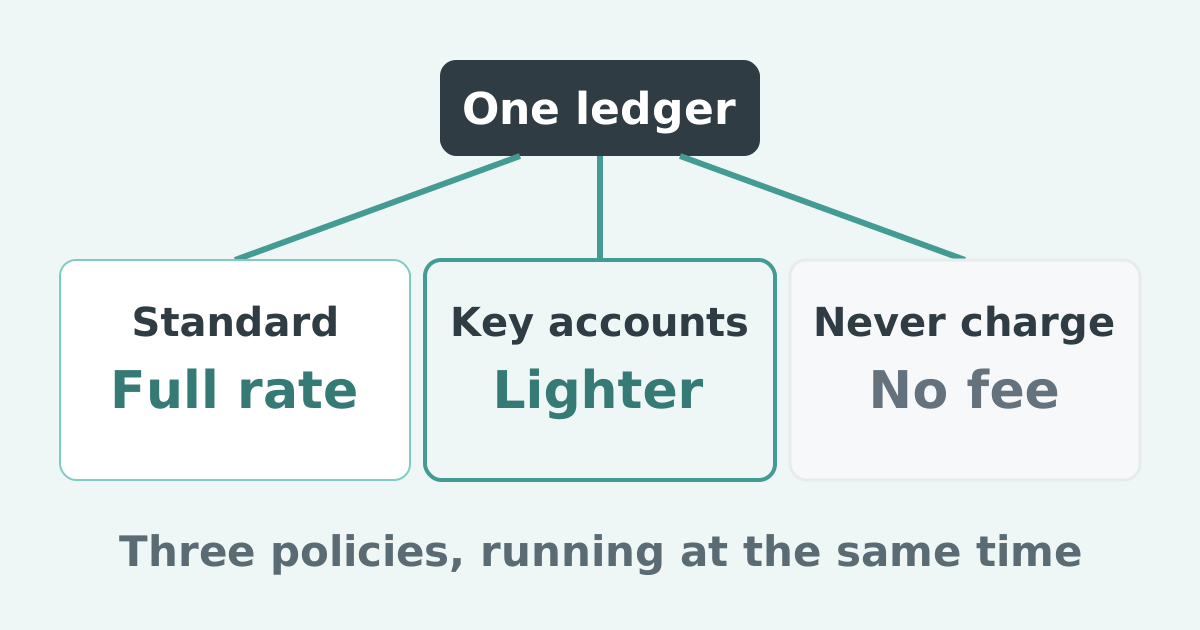
Xero and QuickBooks Online have no native setting that applies an early payment discount and removes it when the window closes, so the discount is either added by hand as a line item on each invoice or applied by a connected app. Paidnice includes prompt payment discounts as a built-in policy type on both platforms: it adds the discount line, removes it when the period ends, and returns the invoice to its original total. The same gap and the same fix apply to both ledgers, so a business running Xero and a business running QuickBooks Online set the policy up the same way. For the setup walkthrough with screenshots, see how to apply early payment discounts automatically in Xero.
Paidnice is accounts receivable automation that enforces your payment terms, trusted by thousands of businesses on Xero and QuickBooks. Credit control and debtor management, run for you.
Try it Now - It's FreeNo card required.
Optimize your cash flow with our suite of financial tools designed for AR professionals. Calculate DSO, aging analysis, late fees, and more.