



Summary
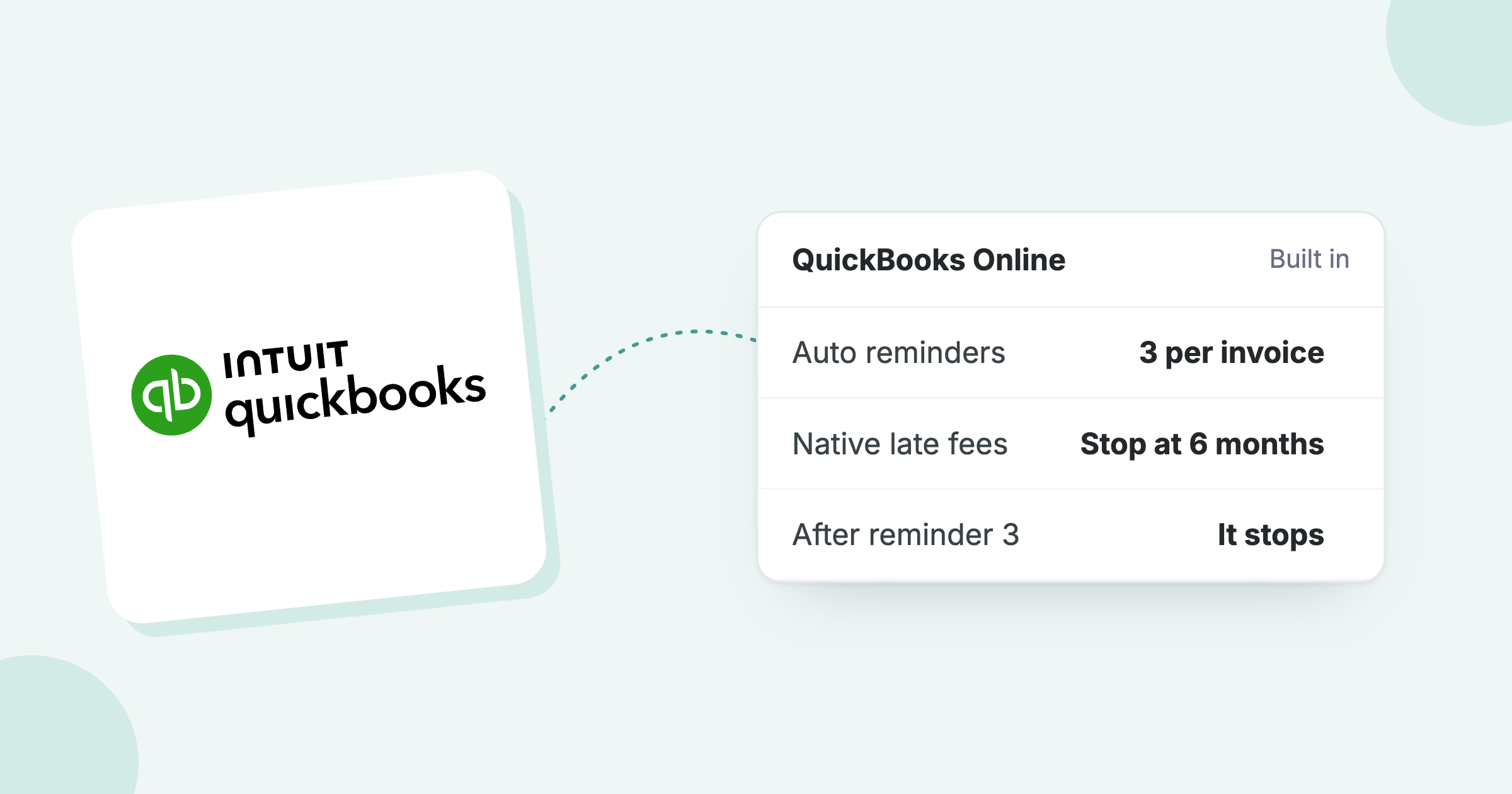
QuickBooks Online in the United Kingdom has no automatic late fee feature: the Late fees setting exists in the US product only. A UK business adds a late fee manually as a line item on the overdue invoice, or connects Paidnice, which applies UK statutory interest and the fixed compensation sum to overdue QuickBooks invoices automatically.
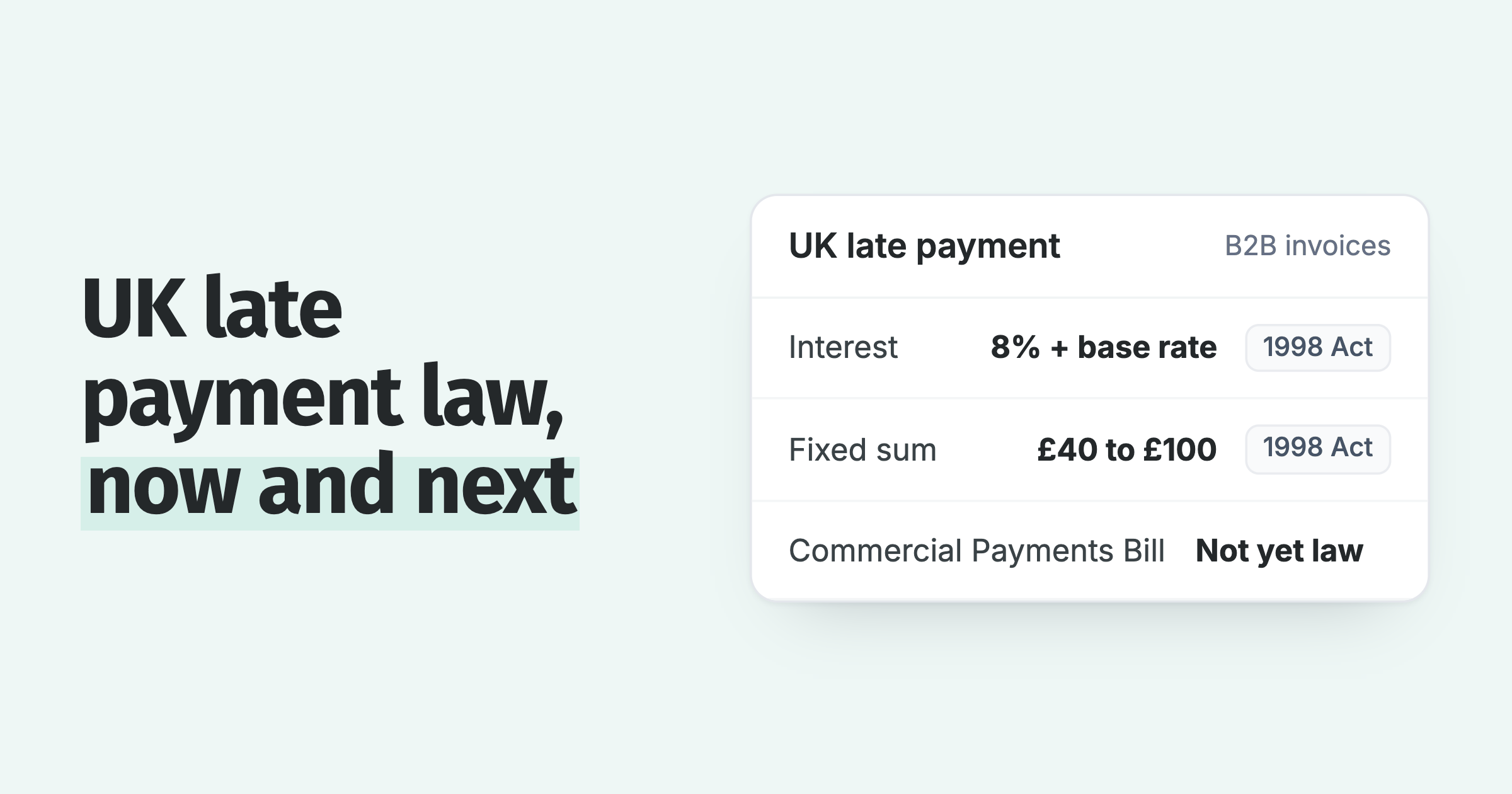
- The statutory rate: Under the Late Payment of Commercial Debts (Interest) Act 1998 a UK business can charge 8% plus the Bank of England base rate, which is 11.75% a year for invoices falling overdue between 1 July and 31 December 2026.
- The fixed sum: £40 on a debt under £1,000, £70 from £1,000 to £9,999.99 and £100 at £10,000 or more, per overdue invoice, on top of the interest.
- The fix: Paidnice indexes the interest to the Bank of England base rate, either locked for each six-month period as the Late Payment Order sets it or following the rate as it changes, and posts the fee to the QuickBooks ledger.
Does QuickBooks Online UK have automatic late fees?
No. QuickBooks Online UK has no late fee setting. Intuit's "Turn on automatic late fees" option, under Settings, Account and settings, Sales, is in the US edition of QuickBooks Online only. The same applies to QuickBooks Online in Canada and Australia.
A UK organisation has two ways to charge for late payment: add the fee manually, or connect an app that raises it on the ledger for you.
| Option | How the fee is applied | Base rate tracking | Customer told |
|---|---|---|---|
| QuickBooks Online US (native) | Flat or percentage fee added as a line item after a grace period | No | No, the fee is silent |
| QuickBooks Online UK (manual) | You add a late fee line to the overdue invoice or raise a separate invoice | You look it up each time | Only when you send the invoice |
| Paidnice on QuickBooks Online UK | Interest and the £40 to £100 fixed sum raised automatically on the ledger, per customer group | Yes, locked per half-year or followed live | Yes, by email with the invoice |
How do you add a late fee to a QuickBooks UK invoice manually?
A late fee is added to a QuickBooks Online UK invoice as a product or service line, because there is no fee setting to switch on.
- Go to Settings, then Products and services, and create a service called Late payment interest with its own income account.
- Work out the interest owed for the days overdue (the calculation is in the next section) and add the fixed compensation sum.
- Open the overdue invoice, add the late fee line and save, or raise a separate invoice for the fee so the original stays as issued.
- Send the updated invoice to the customer. QuickBooks does not send it for you.
The manual route holds for a handful of invoices a month and breaks when the base rate changes or a customer part-pays.
What is the UK statutory interest rate on late invoices?
The UK statutory interest rate on a business-to-business invoice is 8% plus the Bank of England base rate, under the Late Payment of Commercial Debts (Interest) Act 1998. With the base rate at 3.75%, held by the Bank of England on 17 September 2026, the statutory rate is 11.75% a year for interest that starts to run between 1 July and 31 December 2026.
The base rate used is the one in force on 30 June or 31 December, and it applies for the following six months, under article 4 of the Late Payment of Commercial Debts (Rate of Interest) (No. 3) Order 2002. On top of the interest, GOV.UK sets a fixed compensation sum per overdue invoice:
- £40 for a debt up to £999.99
- £70 for a debt from £1,000 to £9,999.99
- £100 for a debt of £10,000 or more
On a £5,000 invoice, 11.75% a year is £1.61 a day, so 30 days late comes to £48.29 in interest plus the £70 fixed sum: £118.29. The full UK late payment fee guide has a calculator and the rules for consumer invoices.
How does Paidnice add late fees to QuickBooks UK?
Paidnice is accounts receivable automation for QuickBooks Online that raises UK statutory interest and the fixed compensation sum on overdue invoices automatically, and posts each fee to the QuickBooks ledger as a Draft or Approved invoice.
The interest policy has a Bank of England base rate toggle, which applies the base rate plus your percentage. Paidnice runs it in one of two modes: lock the base rate for each six-month period as the Late Payment Order sets it, or follow the base rate as it changes (see the base rate guide). The £40, £70 or £100 compensation is a fixed amount line item with its own description and income account.
Policies live under customer groups, so key accounts can have a 30-day grace period while everyone else has 7. Interest compounds by default, with a toggle for simple interest, and a fee can be waived or credited inside Paidnice.
The fee is a lever: paired with email and SMS reminders, automatic statements and escalation workflows, a customer who reads "a late fee of £118.29 will be charged in 7 days" pays before it is raised.
Fixed fees get paid more often. About 8 in 10 fixed late fees get paid. Only about 6 in 10 percentage-based fees do, and percentage fees are the ones waived most often.
How do you connect Paidnice to QuickBooks UK?
Connecting Paidnice to QuickBooks Online UK takes four steps, and Paidnice picks up invoices that were already open at connection, not only new ones.
1. Sign up. Signing up is free, needs no credit card, and the first 20 actions are free with no time limit.
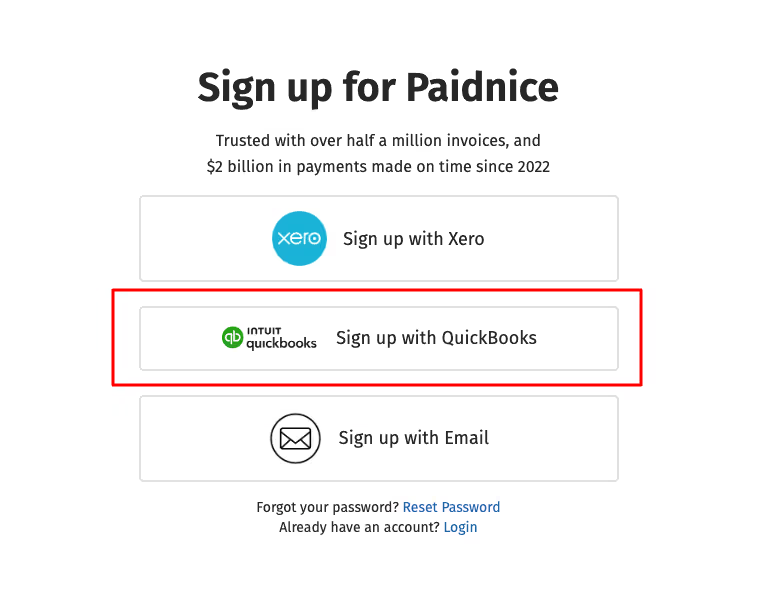
2. Connect QuickBooks. Authorise your QuickBooks Online UK organisation with one click.

3. Set the late fee policy. Choose the Bank of England base rate plus 8%, set the grace period, add the fixed compensation line, and pick Draft or Approved for the fee invoice.

4. Add reminders and escalation. Set the reminder schedule, statements and escalation steps so the fee is announced before it lands.
What mistakes cost a UK business money on a late fee?
Charging 8% and leaving out the base rate. GOV.UK sets the rate at 8% plus the Bank of England base rate. On a £5,000 invoice 30 days late, 8% is £32.88 (£5,000 × 0.08 × 30 ÷ 365) and 11.75% is £48.29. That is £15.41 less.
Fix: charge 8% plus the base rate.
Adding the statutory sum to a consumer's invoice. The Act covers contracts where buyer and seller each act in the course of a business (section 2). On the £5,000 example, the £118.29 may then rest on your own terms alone.
Fix: check the customer is a business first.
Never starting the fee. In the UK, when a business starts charging late fees, about 2 more invoices in every 100 get paid on time, compared with similar businesses that do not charge them. Source: our analysis of invoice data from over 1,000 Paidnice customers. See our late fee data.
Fix: charge it on one rule, manually or with Paidnice.
Common questions
Can a UK business charge interest with no late fee clause in the contract? Yes. Statutory interest under the 1998 Act applies to business-to-business invoices without a clause, unless the contract sets its own substantial remedy.
Does QuickBooks UK tell the customer about a late fee? No. QuickBooks Online UK has no fee to send. Paidnice emails the fee invoice and can name the coming fee in a reminder before it is raised.
Start using Paidnice to apply late fees in QuickBooks United Kingdom, or book a demo.
Paidnice features in this article
About the editorial team
Denym started Paidnice in 2022 after customers paying late left his own business short on payroll. He has led it to $1 billion collected on time across more than 1 million invoices, and writes about credit control, late fees and getting paid on Xero and QuickBooks.
 App of the Year
