

February 2026 Update – As of January 1, 2026, significant changes to California's alcoholic beverage payment regulations are now in effect. These updates, driven by Assembly Bill 2991 (2024), modernize how wholesalers and retailers handle transactions while preserving longstanding tied-house restrictions designed to prevent undue influence in the industry.
If you're a wholesaler, importer, or retailer dealing in beer, wine, or distilled spirits in California, these rules directly impact your cash flow, administrative workload, and compliance obligations. At Paidnice, we help beverage businesses automate accounts receivable processes, and these changes make tools like ours more valuable than ever.
Yes, absolutely. Business and Professions Code §§ 25509 and 25509.1 apply exclusively to transactions involving beer, wine, and distilled spirits between licensed wholesalers (or manufacturers/importers) and retail licensees (on-sale or off-sale).
This is not a general wholesale payment law. It falls under Division 9 of the Business and Professions Code (Alcoholic Beverages) and Chapter 15 (Tied-House Restrictions). Payments for non-alcohol products, even from the same wholesaler to the same retailer, remain governed by standard commercial credit terms and do not trigger these mandatory EFT rules or specific delinquency penalties.
The goal is to maintain fair competition in the highly regulated three-tier alcohol system while bringing payment practices into the digital age.
The core rules are now split across two sections:
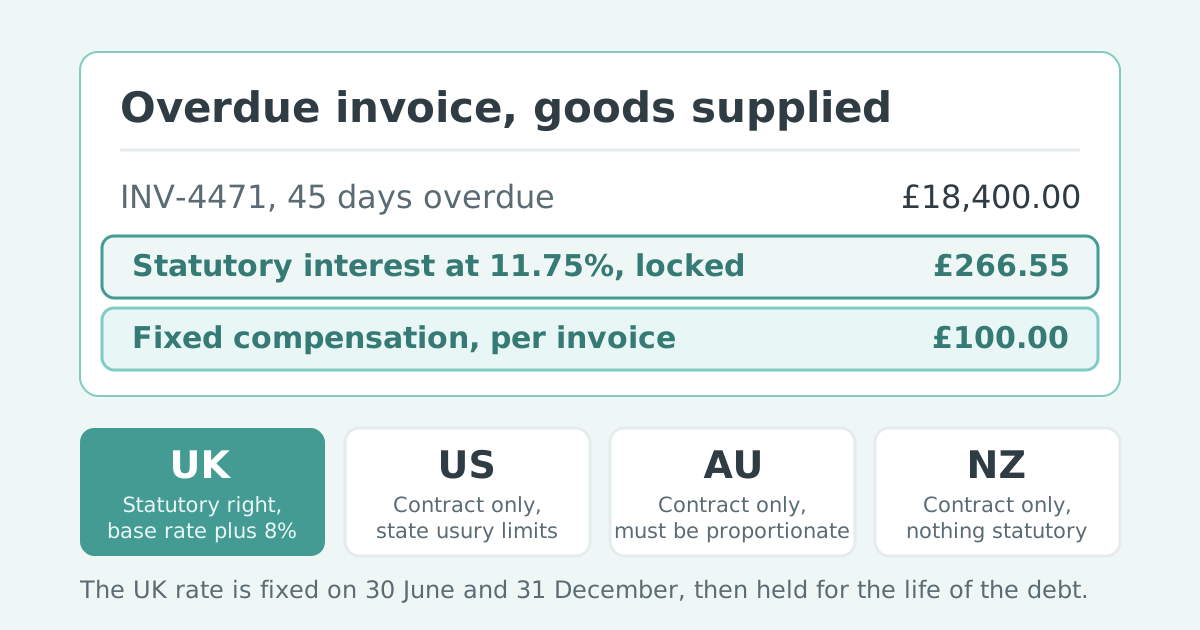
Whether that rate should compound is covered in compound or simple interest, and you can work out what a specific invoice is owed with our free late fee calculator.
These penalties are mandatory, wholesalers cannot waive them without risking their own license compliance.
Credit cards are optionally allowed (with the retailer covering processing fees).
For wholesalers:
For retailers:
Both sides benefit from reduced check-processing hassles and bad-payment risks, but the transition requires reliable systems.
At Paidnice, we built our AR automation platform specifically for businesses using Xero or QuickBooks, and many alcohol wholesalers already rely on us to manage invoicing, reminders, and collections.
Here's how Paidnice makes the new § 25509 rules practically effortless:
While Paidnice focuses on automation and payment facilitation, pairing us with your chosen EFT processor ensures the wholesaler-initiated pulls required under § 25509.1 happen smoothly. Many of our customers report dramatically fewer late payments and less administrative overhead.
California's updated alcohol payment rules are a win for modernizing the industry while protecting its regulatory framework. The shift to mandatory EFT and strict delinquency penalties rewards wholesalers who invest in solid AR processes, and puts pressure on those relying on spreadsheets or manual tracking.
If you're ready to turn compliance into a competitive advantage (faster cash, fewer disputes, happier retailer relationships), Paidnice is here to help. Book a demo today and see how quickly we can get your delinquency rules, reminders, and collections running on autopilot.
Questions about the law or how automation fits your workflow? Contact us to learn more, we're happy to help.
This post is for informational purposes only and not legal advice. Consult your attorney or the California Department of Alcoholic Beverage Control for specific guidance.
Paidnice is accounts receivable automation that enforces your payment terms, trusted by thousands of businesses on Xero and QuickBooks. Credit control and debtor management, run for you.
Try it Now - It's FreeNo card required.
![An image featuring a vintage red rotary dial telephone on the right side, with the handset lifted off and angled to suggest it's ready for use. The background is a solid teal color. On the left side, there's white text that reads "8 Call Scripts For Payment & Collection Reminders" and below in brackets "[FREE CALL SCRIPTS]". The overall design suggests a promotional or informational graphic related to telephone communication strategies in financial contexts.](/assets/wf/67c598f1ee8aa243f89da1b6_8_Effective_Call_Scripts_For_Payment_-_Collection_Reminders.avif)

Optimize your cash flow with our suite of financial tools designed for AR professionals. Calculate DSO, aging analysis, late fees, and more.