
![An image featuring a vintage red rotary dial telephone on the right side, with the handset lifted off and angled to suggest it's ready for use. The background is a solid teal color. On the left side, there's white text that reads "8 Call Scripts For Payment & Collection Reminders" and below in brackets "[FREE CALL SCRIPTS]". The overall design suggests a promotional or informational graphic related to telephone communication strategies in financial contexts.](/assets/wf/67c598f1ee8aa243f89da1b6_8_Effective_Call_Scripts_For_Payment_-_Collection_Reminders.avif)

An accounts receivable collection call script is a short, structured talk track for phoning a customer about an overdue invoice: confirm the invoice number and amount, ask what is holding payment up, listen, then close on a specific payment date. The eight scripts below cover the situations that come up most, and download as a PDF or Word file.
A collection call script is a structured talk track for a phone call about an unpaid invoice: an opening line that names the invoice, the points to cover, and a clear ask for payment by a date. It keeps the conversation calm, professional and focused on the commitment.
A script is not a word-for-word reading. It is a safety net. You follow the structure, keep your own voice, and adapt to what the customer says. Used well, scripts make your whole team sound consistent, stop calls turning awkward, and make sure every call ends with a concrete next step rather than a vague "I'll look into it".
The same idea is sometimes called a payment script, a payment reminder call script, or a debt collection call script. They all describe the same thing: a plan for what to say when you ask to be paid.
A phone call works on an overdue invoice because a live conversation is harder to ignore than an email, confirms the invoice reached the right person, and surfaces a dispute or a missing purchase order on the spot instead of over days of email tag. When a reminder email has gone unanswered, a short, polite call does three things an email cannot:
You do not need to be aggressive for a call to work. You need to be prepared, friendly and clear about the next step.
A collection call takes two minutes of preparation, five steps on the phone, and one email afterwards. Pull up the invoice, decide the outcome you want, open by naming the invoice, listen, ask for a date, and confirm it in writing the same day.
Spend two minutes getting ready. Pull up the invoice number, the amount, the issue and due dates, and the account history (have they paid late before, is there an open dispute). Decide the outcome you want, usually a payment date, and the fallback you can accept, such as a part payment today plus a plan for the rest. Set a calm, solution-focused tone before you pick up the phone.
Almost every good collection call follows the same five steps:
Keep the opening friendly and specific. "Hi [name], I'm calling about invoice [number], which was due on [date], just to check everything is in order." A specific, calm opener sets a collaborative tone and avoids putting the customer on the defensive before you have even asked.
The eight scripts cover the first overdue-invoice call, a disputed invoice, an invoice that never arrived, internal approval delays, an absent decision-maker, a customer who says they already paid, a payment plan negotiation, and a repeat late payer, plus three bonus scripts for the pre-due courtesy call, voicemail, and the final notice. Each one says when to use it and gives a sample dialogue you can adapt. Copy any one of them, or tick the ones you want and download them as a PDF or Word file.
Tick the scripts you want, then copy them or download as a PDF or Word file. Replace the [bracketed] parts with your own details.
Use when: an invoice has just passed its due date and earlier email reminders have not been actioned.
You: Hi [name], it's [your name] from [company]. I'm calling about invoice [number] for [amount], which was due on [date]. I wanted to check you received it and see whether there is anything holding it up.
Customer: I've got it, it just hasn't been paid yet.
You: No problem, thanks for confirming. So we can close it off, are you able to pay the full amount by [date]?
Customer: I can get it done this week.
You: That's great. I'll send a short email confirming [amount] by [date]. If anything changes before then, just reply and let me know.
Use when: the customer says the amount, the work, or the dates are wrong.
Customer: I can't pay this, the amount doesn't match what we agreed.
You: Thanks for flagging it, and apologies for the confusion. Can you tell me exactly which part looks wrong, so I can check it against our records?
Customer: We were only meant to be charged for half of this.
You: Let me look into that straight away. If we have over-billed, I'll reissue a corrected invoice today. If the full amount is right, I'll send you the agreement that covers it so we are both looking at the same thing. Either way I'll come back to you by [date].
Use when: the customer says the invoice never arrived.
Customer: Our accounts team says they never got invoice [number].
You: Thanks for letting me know. Our records show it went to [email]. Can you confirm that's the right address, or give me the best one to use?
Customer: It should go to [email].
You: Perfect, I'll resend it there as soon as we're off the call. Could you confirm once it lands? Once you have it, are you able to pay by [date]?
Use when: payment is held up waiting for an internal sign-off.
Customer: It's with our finance team for approval, I can't release it yet.
You: Understood. What would help them approve it faster? I'm happy to send the signed delivery note or a summary of the work so it's easy to tick off.
Customer: The delivery note would help.
You: I'll send that now. Once they have it, when do you expect the approval to come through? I'll make a note to follow up on [date] if I haven't heard back.
Use when: the person who authorizes payment is unavailable.
You: Hi, I'm following up on invoice [number]. Could I speak with [name], who usually handles payments?
Customer: They're out this week.
You: Thanks for letting me know. Who else is able to approve payment while they're away? Given this is already past due, I'd like to get it moving today if I can.
Customer: You could try [name] in finance.
You: That's helpful, thank you. Could you let them know I'll be in touch shortly about invoice [number]?
Use when: the customer believes the invoice is already settled.
Customer: That one's already paid, your records must be out of date.
You: That's entirely possible, and apologies if so. Can you tell me roughly when it was paid and how, so I can match it on our side?
Customer: Last Tuesday, by bank transfer.
You: Thank you. I'll check our account now. If it's there, I'll confirm and close it off straight away. If I can't find it yet, I'll come back to you so we can trace it together. Either way I'll update you by [date].
Use when: the customer genuinely cannot pay in full right now.
Customer: Money's tight at the moment, paying it all today isn't possible.
You: I appreciate you being upfront. Let's find something workable. Could you pay [amount] today as a first installment? Then how would [amount] every two weeks sit with you for the rest?
Customer: I can do [amount] today, and [amount] a fortnight works.
You: Great. I'll write that up as a short payment plan so we both have it in writing, with the balance cleared by [date]. I'll email it across this afternoon for you to confirm.
Use when: the same customer pays late again and again.
You: Hi [name]. Looking at your account, this is the third invoice in a row that's been paid well after its due date. You used to be reliably on time, so I wanted to understand what's changed and how we can fix it.
Customer: We've been swamped, but we don't want to keep paying late.
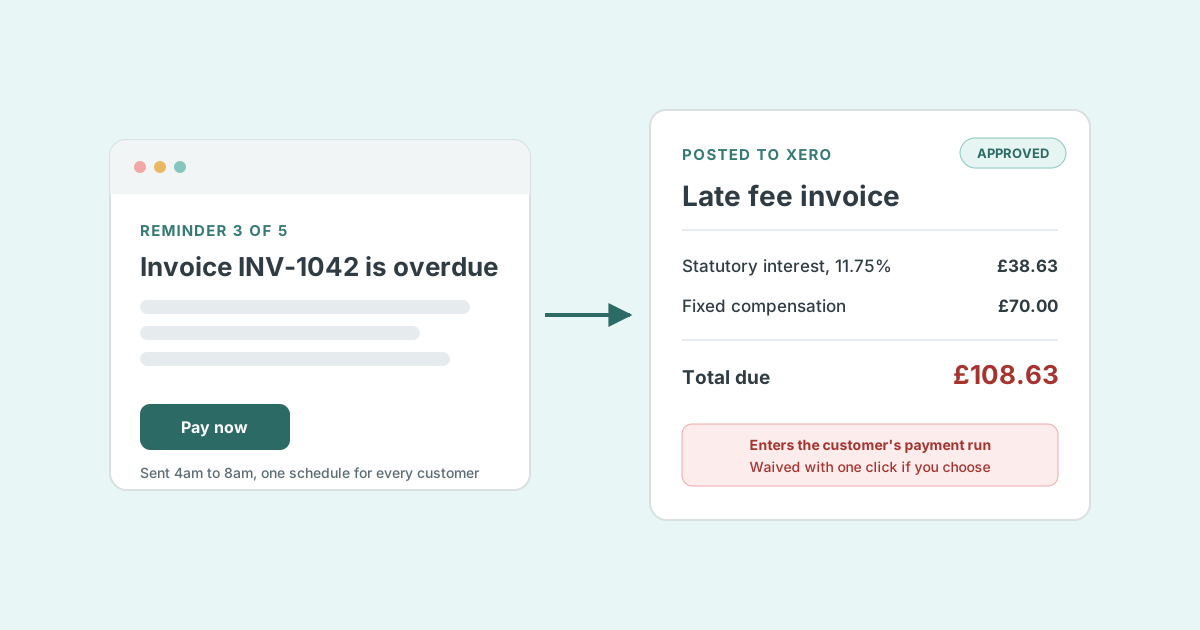
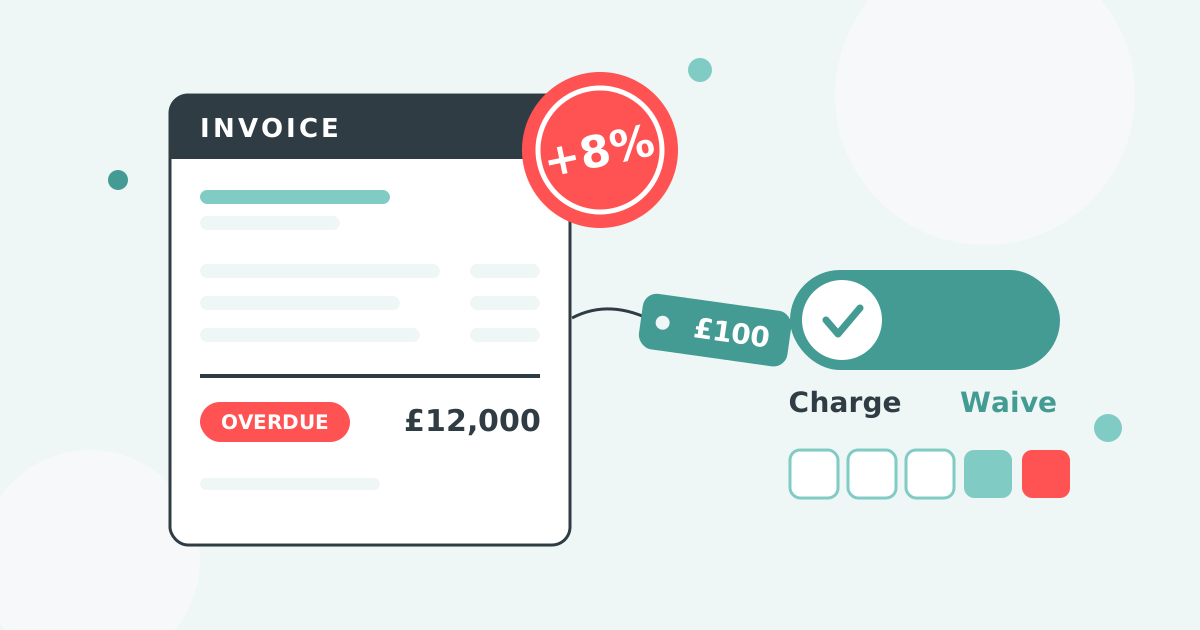
You: That's fair, and I'd like to help. To keep this from repeating, we can set up automated reminders before the due date, and a payment plan if that helps. If late payments continue we'll need to look at our terms, including late fees, but I'd much rather sort it out with you now. What would work best at your end?
Use when: 3 to 5 days before an invoice is due.
You: Hi [name], a quick courtesy call to let you know invoice [number] for [amount] is due on [date]. Nothing to worry about, I just wanted to make sure it's on your radar. Is there anything you need from me to get it processed in time?
Use when: the call goes to voicemail.
You: Hi [name], it's [your name] from [company], calling about invoice [number]. Could you give me a call back on [number] when you have a moment? Thanks very much.
Use when: the next step is a late fee or escalation.
You: Hi [name], I'm calling about invoice [number] for [amount], which is now [days] days overdue. We've been in touch a few times, so I wanted to let you know personally that if it isn't cleared by [date], a late fee will apply and the account will move to our formal collections step. I'd much rather settle this with you today. Can we agree a payment now?
General information to help you communicate with customers, not legal advice. If you collect debts on behalf of others, check the rules that apply to you.
When a customer says cash flow is tight, acknowledge it, then ask for a part payment today and agree a short plan for the balance, with each instalment dated. A smaller sum now beats an open-ended promise, and a written plan turns "when we can" into a schedule you can hold them to. Script 7 in the library covers the wording.
When a customer disputes an invoice, ask for the exact line or amount that looks wrong, promise to check it against your records, and give a date you will come back by. Never argue on the call. If you over-billed, reissue a corrected invoice the same day; if the amount is right, send the agreement that covers it so both sides are looking at the same document. Script 2 covers this.
When payment is waiting on an internal sign-off, offer the document that unblocks the approver, usually a signed delivery note or a summary of the work, and pin down the date the approval is expected. Diarise a follow-up for that date before you hang up. Script 4 covers this.
When a customer says the invoice never arrived, confirm the email address it went to, get the right one, resend it the moment you hang up, and still ask for a payment date. A resent invoice with no date attached restarts the clock from zero. Script 3 covers this.
When a customer says an invoice is already paid, ask when and how it was paid, check your bank feed and ledger while they are on the line if you can, and assume good faith. If the payment is there, confirm and close it off; if it is not, agree a date to trace it together. Script 6 covers this.
A business calling about its own invoices, first-party collections, has more latitude than a third-party collector, but the call must stay accurate, professional and respectful, and every call should be recorded in a note on the account. This is general information, not legal advice, so check the rules that apply to you.
If you collect debts on behalf of others, the rules are stricter. In the US, the Fair Debt Collection Practices Act (FDCPA) requires third-party collectors to identify themselves and include a disclosure, often called the mini-Miranda: "This is an attempt to collect a debt and any information obtained will be used for that purpose." It also limits when you can call. In the UK, treat consumer debt with particular care and follow the relevant FCA guidance. Wherever you operate, keep records of every call.
After a collection call, email a written summary of the agreed amount, date and payment method the same day, diarise a check on that date, and thank the customer. A verbal commitment is not money in the bank. The moment you hang up, do three things:
A collection call is not worth making when the balance is smaller than the time the call costs, or after several genuine attempts have produced no commitment. For a very small balance, the time the call takes can cost more than the invoice is worth, and a final written notice plus an automated late fee is the better use of your day. And there is a point, usually after several genuine attempts with no commitment, where the right business decision is to hand the account to a collections partner or write it off and protect your energy for customers who pay. Knowing when to stop is part of good credit control, not a failure of it.
Collection calls become the exception when the reminders, late fees and statements that sit before the call run automatically, so an invoice reaches the phone stage only after the routine follow-up has failed. If you are working through these scripts week after week, the call is happening too late.
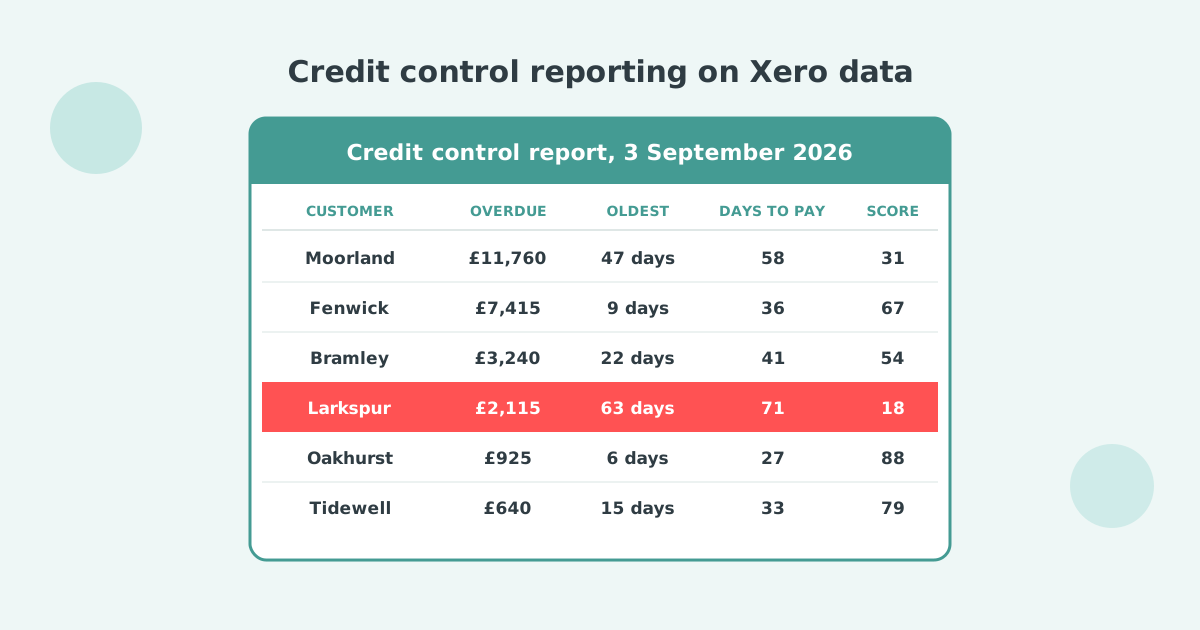
Paidnice automates the steps that sit either side of the phone call for businesses on Xero and QuickBooks. It sends email and SMS payment reminders before and after the due date, applies your late fees and interest automatically, sends account statements, and escalates the few accounts that still need a human call, so your team only picks up the phone when it actually matters. When you do need a plan, you can set up automatic payment plans too.
Paidnice customers cut overdue invoices by 70% in their first 30 days and cut their average wait for payment (days sales outstanding) in half within 30 days, and most are set up in under 30 minutes.
A good payment reminder message is short, polite and specific. It names the invoice number and amount, states the due date or how overdue it is, gives a clear way to pay, and asks for a firm payment date. Keep it friendly before the due date and a little more direct once it has passed.
Write a debt collection call script in five steps: open by identifying yourself and the invoice, confirm the customer has it and ask if anything is holding it up, listen, then make a clear ask for payment by a specific date, and finish by confirming the agreement in writing. Keep it firm on the amount and warm on the tone.
A payment script is a prepared talk track for asking a customer to pay an invoice. It sets out what to say on a reminder or collection call so the conversation stays calm and consistent and ends with a clear commitment to pay.
An example of a collection call script is: Hi [name], it is [your name] from [company]. I am calling about invoice [number] for [amount], which was due on [date]. I wanted to check you received it and see whether anything is holding it up. The full set of examples is in the library above.
Good opening lines are friendly and specific. Identify yourself and the invoice in one sentence, for example: Hi [name], it is [your name] from [company], I am calling about invoice [number] which was due on [date], just to check everything is in order. A calm, specific opener sets a collaborative tone.
When making a collection call, confirm who you are and which invoice you are calling about, ask whether there is any reason it has not been paid, listen to the answer, then ask for payment by a specific date. Agree a concrete next step and send a written summary the same day.
Yes. Use the library above to tick the scripts you want and download them as a PDF or a Word file, or copy any single script to your clipboard. The templates are free to use and edit.
Yes, businesses can call customers about unpaid invoices. If you are collecting your own invoices you have more latitude, but you must stay accurate and professional. If you collect debts for others, stricter rules apply: in the US the FDCPA requires third-party collectors to include a disclosure known as the mini-Miranda (this is an attempt to collect a debt and any information obtained will be used for that purpose) and to limit calling hours. This is general information, not legal advice.
Stop when the call costs more than the invoice is worth, or after several genuine attempts with no commitment. For a very small balance, a final written notice plus an automated late fee is a better use of your time. At that point the right move is usually to hand the account to a collections partner or write it off. Knowing when to stop is part of good credit control, not a failure of it.
Ready to make overdue invoices the exception? Try Paidnice free or book a demo.
Paidnice is accounts receivable automation that enforces your payment terms, trusted by thousands of businesses on Xero and QuickBooks. Credit control and debtor management, run for you.
Try it Now - It's FreeNo card required.
Optimize your cash flow with our suite of financial tools designed for AR professionals. Calculate DSO, aging analysis, late fees, and more.