Summary
Xero can age debt in custom periods only on its Aged Receivables report, set under Ageing Periods and saved as a custom report. That breakdown never reaches the statement a customer receives, and the Xero idea asking for it has 485 votes and the status Not in pipeline. Paidnice adds an aged breakdown to the statement itself.
- Native Xero: The Aged Receivables Summary report takes custom aging periods (number of periods and their length) and can be saved as a custom report, but only as a report, not a statement.
- The gap: The Xero product idea Customer Statements - Ageing (30, 60, 90days), posted 18 May 2022, holds 485 votes at Not in pipeline; Xero's last reply on 8 March 2023 pointed users to the Aged Receivables Detail report instead.
- The fix: A Paidnice statement policy toggles the aging breakdown on and lets you set the buckets (the default is 29, 60 and 180 days) so every statement and the customer portal show the same aged balances.
Can you add 30/60/90 day aging to a Xero statement?
No. Xero's Aged Receivables report can be bucketed by custom periods, but that breakdown does not carry onto a customer statement, and there is no statement setting to add one. A Xero statement shows current, overdue and total, and nothing in between.
This is a confirmed gap rather than a settings issue. The Xero product idea Customer Statements - Ageing (30, 60, 90days) was posted on 18 May 2022, holds 485 votes and carries the status Not in pipeline. Xero's last reply, from community manager Kelly Munro on 8 March 2023, said there were no direct plans to change customer statements and pointed users to the Aged Receivables Detail report as a workaround: run it per customer, export to PDF, send by hand.
An aging breakdown on the statement shows the customer how long each amount has been owed, which is what moves a 90-day invoice to the top of their payment run.
How do I customize aging periods on Xero's own Aged Receivables report?
You change the aging periods on Xero's Aged Receivables Summary report from the report's own settings: open the report, set the number of periods and how long each one is, then save it as a custom report so the buckets stay the same next month. Xero Central's Aged Receivables Summary guide covers the same steps.
- In Xero, go to Reporting, then All reports, and open Aged Receivables Summary (or Aged Receivables Detail for invoice-level lines).
- Set the report date.
- Under Ageing Periods, choose the number of periods and the length of each, for example 3 periods of 30 days for a 30/60/90 view, and whether to age by due date or invoice date.
- Click Update to run the report.
- Click Save as and choose Custom so the periods are kept for next time.
The result is an internal report for your own team. To put the same buckets in front of the customer you would export it per customer and attach it to a statement email by hand, every cycle, which is where a connected app takes over.
How to add 30/60/90 day aging to your Xero statements
You add aging to a Xero statement with a Paidnice statement policy: turn on the aged debt breakdown, set your own periods, and every automatic statement and the customer portal carry the same buckets. The setup is four steps.
1. Configure your auto statement settings
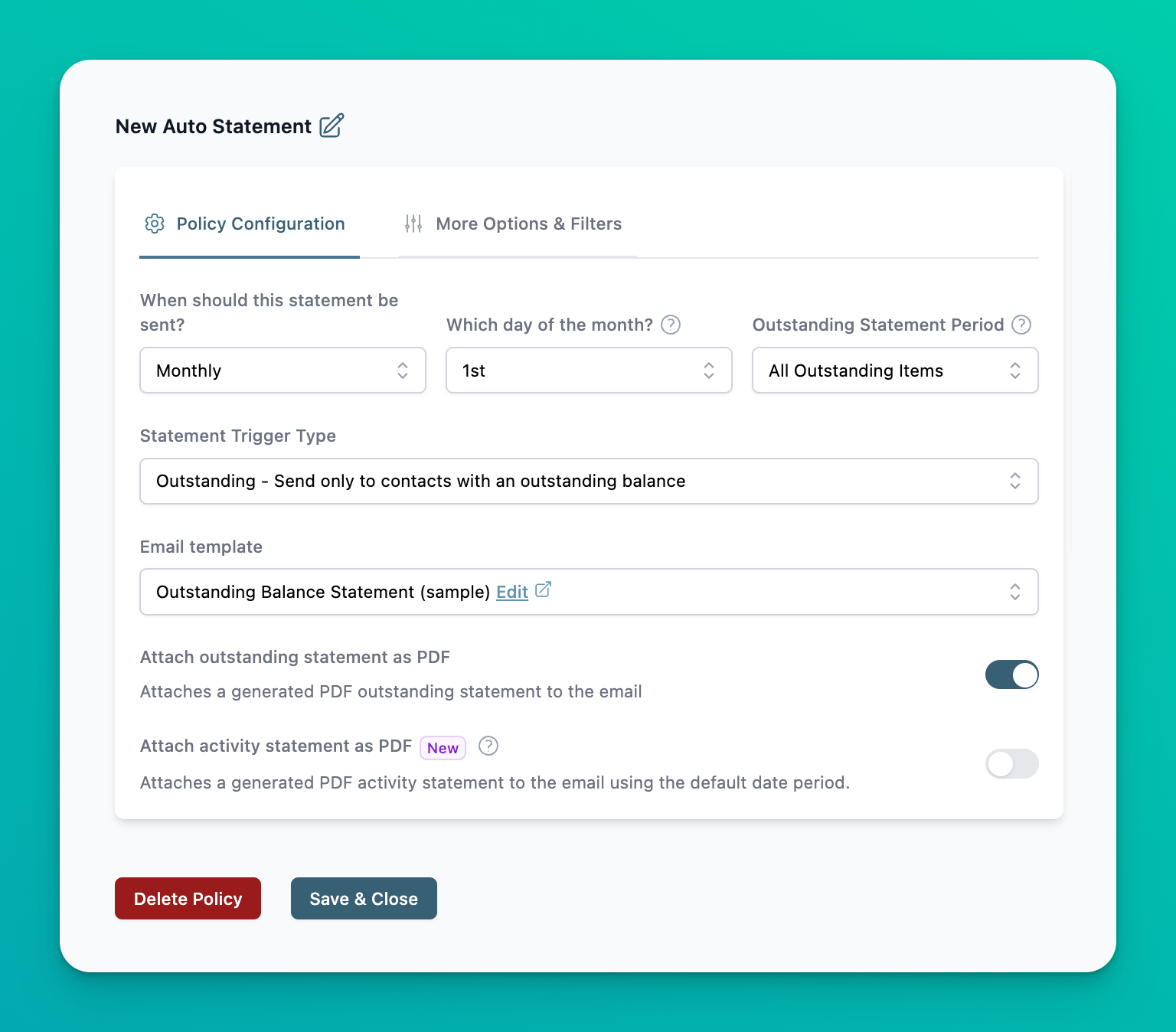
In Paidnice, navigate to the statements section and click "New Auto Statement." You'll see options to configure:
- When statements should be sent (monthly, weekly, or monthly on weekdays only).
- Which day of the month to send them.
- Statement trigger type (outstanding, overdue, or all).
- Email template selection.
- PDF attachment options.
2. Customize your aging analysis breakdown
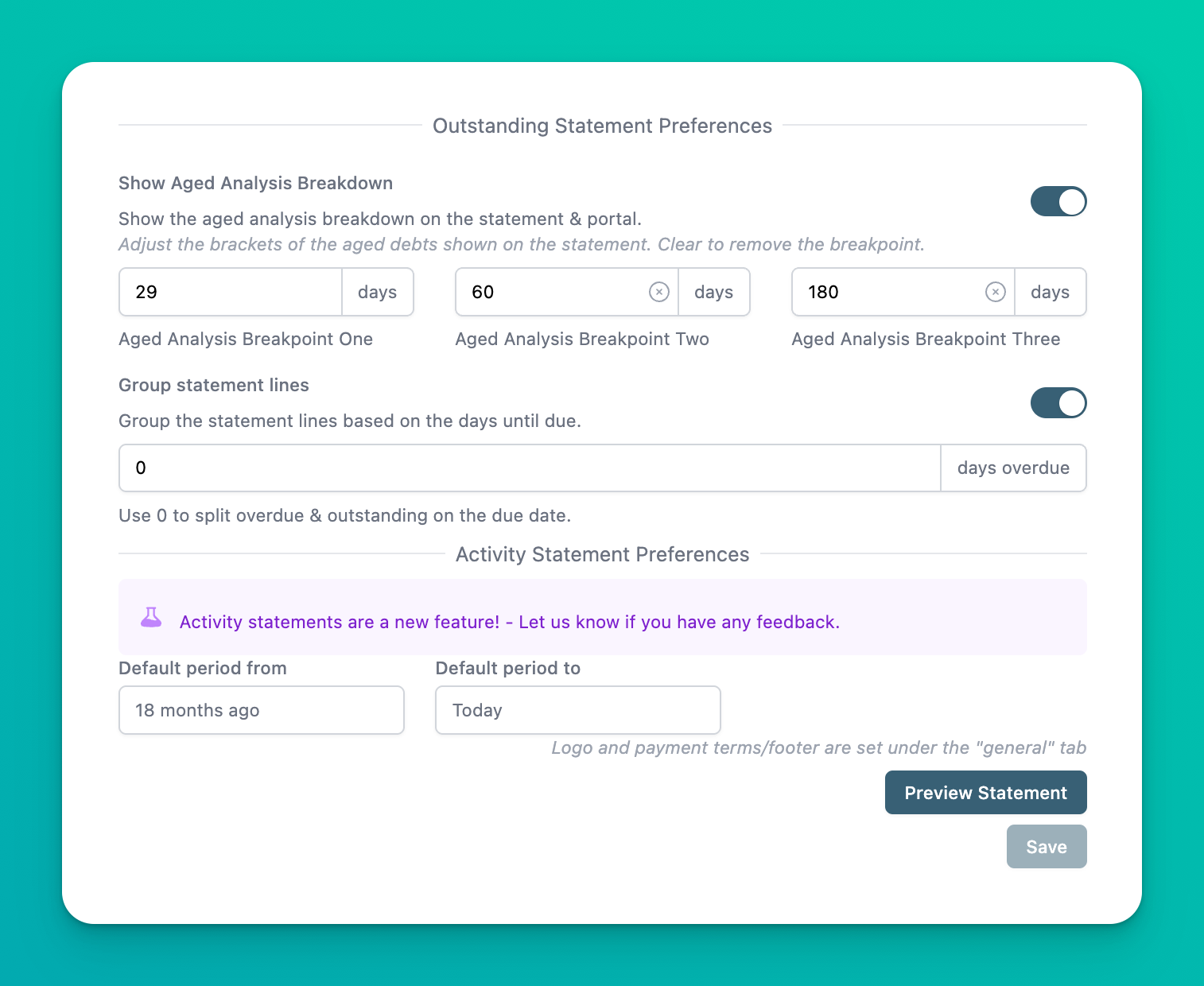
Paidnice gives you control over how aging information appears on your statements:
- Toggle the aging analysis breakdown on or off.
- Customize the aging periods (the default is 29, 60, and 180 days).
- Group statement lines based on days until due.
- Set breakpoints that match your payment terms.
3. Preview your customer's experience
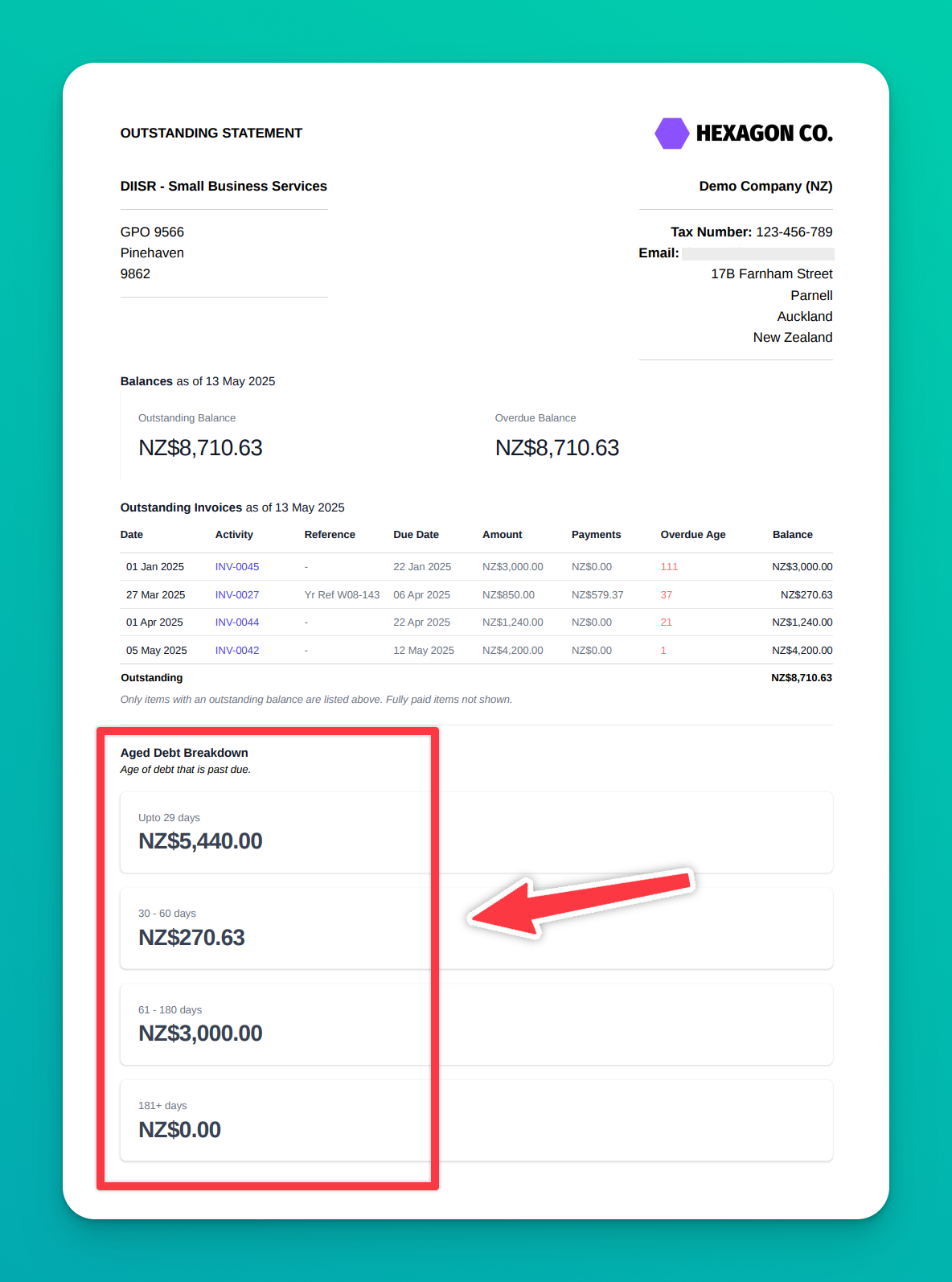
The result is a statement that shows customers their total outstanding balance, the overdue balance, the aging breakdown, and each invoice with its current status. The red box in the screenshot marks the aging section, which is what the customer reads first.
See an example of our Outstanding Statement PDF here.
4. Provide customer portal access
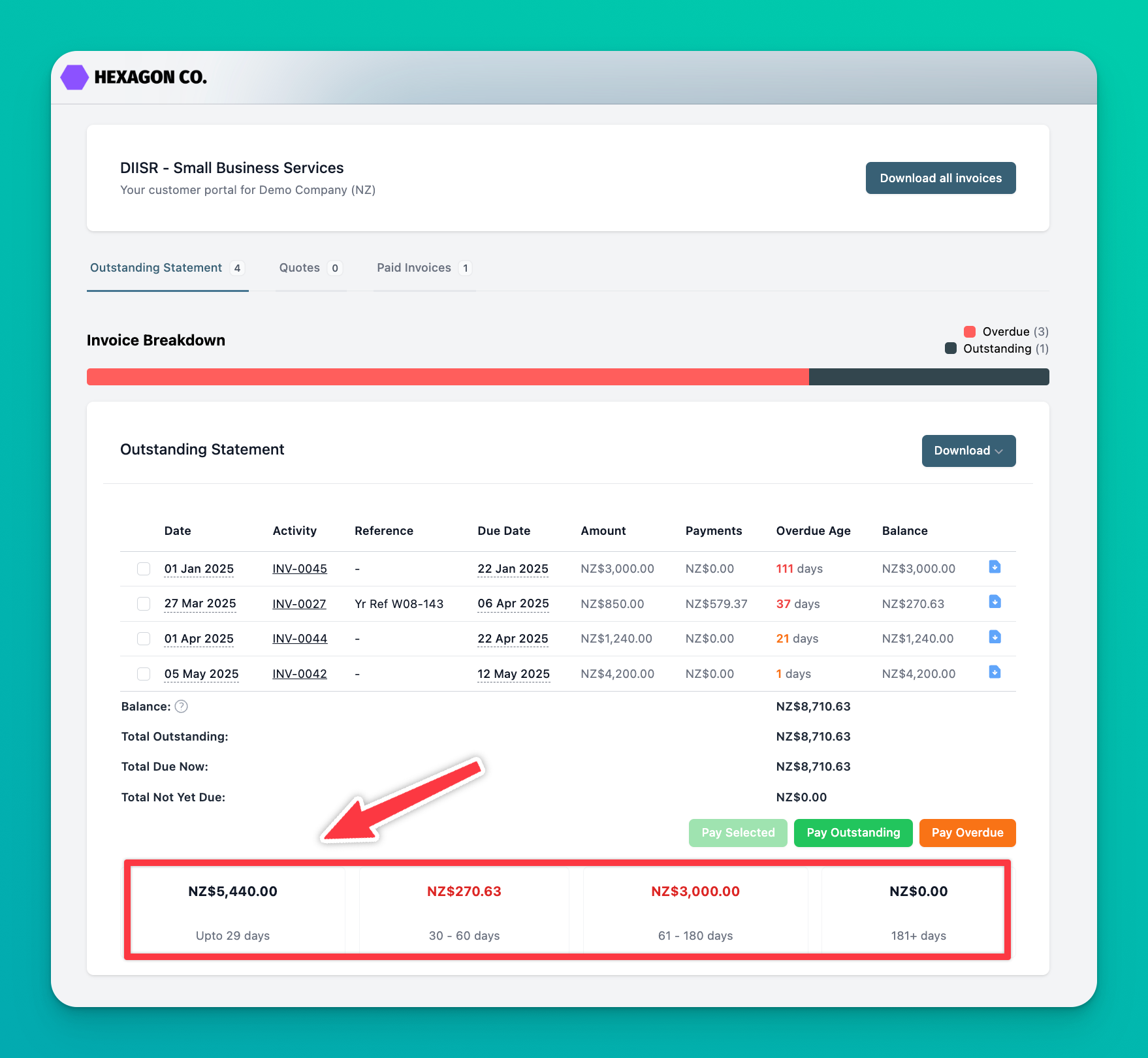
Every statement links to a customer portal where the customer sees the outstanding statement, an aged debt breakdown in four buckets, the overdue age in days for each invoice, and can download the invoices or pay by card, ACH, BACS or direct debit through Stripe. No login is needed: the link in the statement opens it.
Statements can send from your own authenticated domain on the Pro plan (see sending from your own domain), and each policy can use its own email template with merge tags and a portal link.
What's the difference between an outstanding and an activity statement?
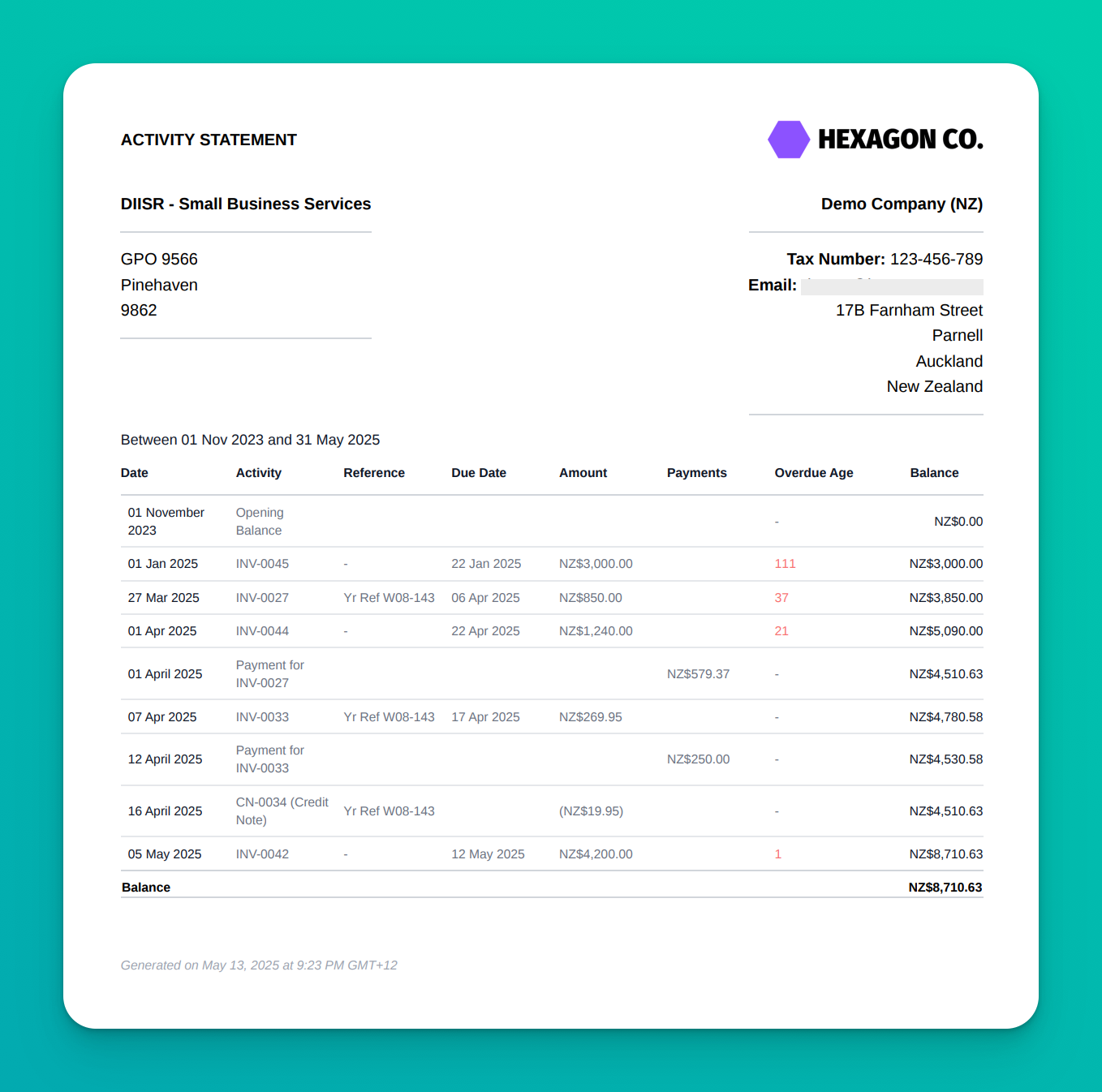
An outstanding statement lists only the invoices still owed as at a date; an activity statement lists every transaction in a period, paid or unpaid, including invoices, payments, credit notes and the opening and closing balance. Xero offers both types on its manual Send statements screen. Paidnice can attach an Activity Statement PDF alongside the outstanding statement, or instead of it, on the same automatic schedule, with the aging breakdown on the outstanding statement and the current balance on both.
See an example of our Activity Statement PDF here.
What results do businesses see from aging on statements?
Paidnice customers cut their average wait for payment in half within 30 days once statements, reminders and late fees run on policy, and eight in ten invoices get paid on time. Aging on the statement is one part of that: customers prioritize older invoices when they can see how old they are, and fewer collection calls are needed because the statement has already explained the position.
As Will Q., a Paidnice customer, shares: "We've been getting paid much faster and more often since using Paidnice. I love the automatic discounts, late fees, and email/SMS reminders."
Getting started with Paidnice
Adding aging to your Xero statements takes a free Paidnice sign-up, a Xero connection and one statement policy. Signing up is free and needs no credit card.
- Sign up at Paidnice.com.
- Connect your Xero or QuickBooks Online account.
- Create a statement policy and turn on the aged debt breakdown.
- Pick your email template.
- Send the first run and watch the 90-day column shrink.
Alongside statements, the same Paidnice account runs email and SMS reminders, late fees and payment links from your existing Xero ledger. Book a demo or sign up to add aging to your next statement run.

Stop chasing invoices.
Start getting paid.
Paidnice is accounts receivable automation that enforces your payment terms, trusted by thousands of businesses on Xero and QuickBooks. Credit control and debtor management, run for you.
Try it Now - It's FreeNo card required.