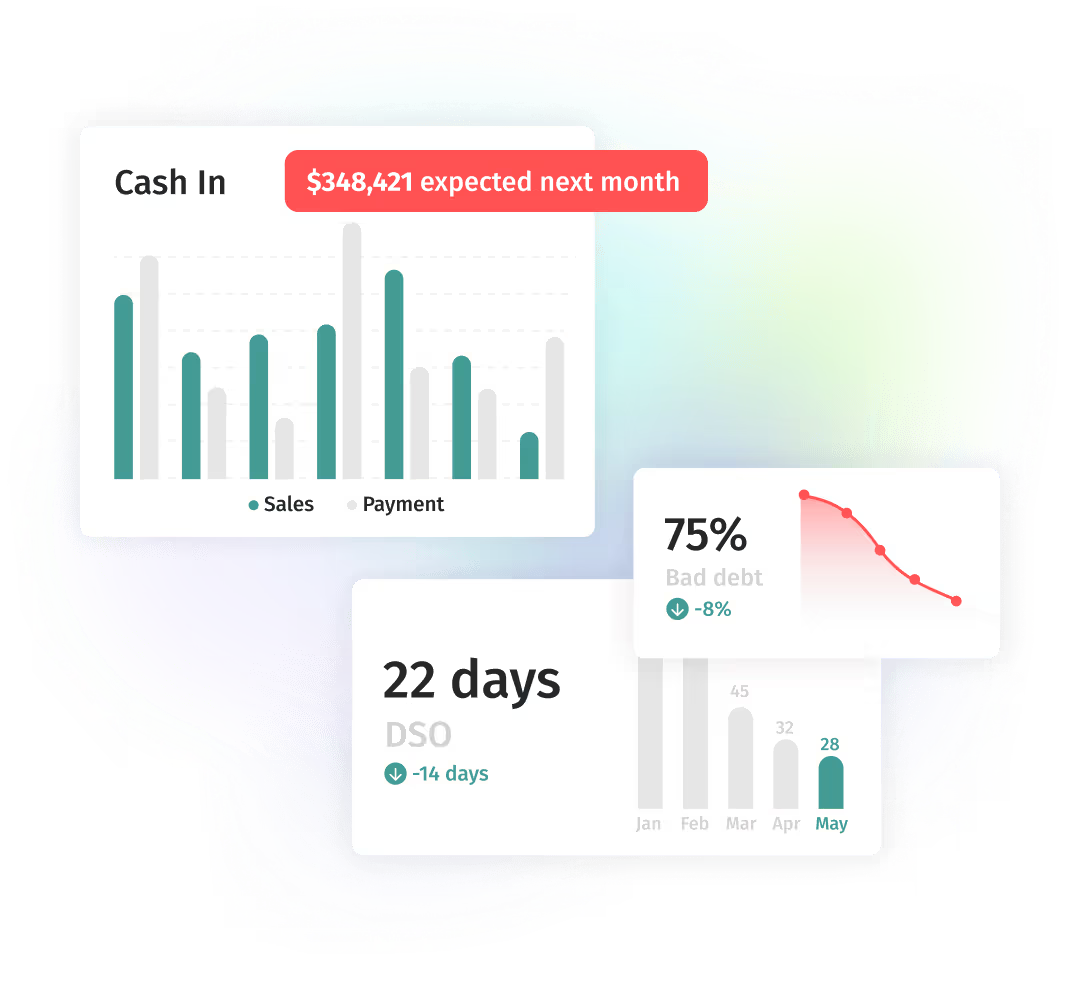
Paidnice is debtor management software for South African businesses that invoice other businesses on Xero or QuickBooks Online. Reminders, statements, interest and escalation run off the ledger you already keep.
No credit card. Your first 20 actions are free.


Debtor management software automates invoice reminders, tracks your accounts receivable and recovers overdue payments. In South Africa the term is used two ways. One is consumer debt review, where a debt counsellor restructures a person's debt under the National Credit Act. The other is the business one, and the one this page is about: collecting what other businesses owe on your debtors book.
That line matters for what you may charge. The National Credit Act does not apply to credit where the juristic person has asset value or annual turnover of R1 million or more, so most trade credit between registered companies sits outside it and your terms of trade govern instead.
Paidnice reads the invoices already in your Xero organisation or QuickBooks Online company and follows up every one of them. Essentials is R1,100 a month, prices as at July 2026, priced by invoice volume, not revenue. See the wider category in debtor management software and credit control software, or the ledger view in debtor management for Xero.
Every account on the age analysis gets an email or SMS before the due date and after it, from your own address, in business hours. Start in approval mode, then let it run.

"Being able to send all communications directly from my own domain, everything looks fully branded and professional, with delivery tracking built in."
Fixed fees, interest, or a rate per annum, with a grace period before anything applies. The charge sits on the invoice in Xero or QuickBooks Online, so it reaches your customer's payment run.
"First round of late penalties and everyone magically paid their bill."
Statements go out weekly or monthly with a payment link. An account still overdue is escalated to a call, a credit stop or a legal letter, assigned to a person.
"Within 1 week of implementing this tool we received a tidal wave of cash from overdue receivables."
Rows are alphabetical. Pricing is shown for Paidnice only.
| Software | Target | Integration | Key feature | Price |
|---|---|---|---|---|
| Jumping Fox Software | South African collections teams, schools and sectional title bodies | Credit bureau and attorney partners, Xero stated on the vendor site | Multi-channel collection workflows with South African compliance tooling | |
| Paidnice | Small and medium businesses on Xero or QuickBooks Online | Xero and QuickBooks Online | Reminders, statements, fees and escalation from the invoices already on the ledger | R1,100 a month, Essentials. Prices as at July 2026. |
| Sage Debtors Manager | Businesses already on Sage Pastel or Sage Business Cloud Accounting | Sage ledgers | An automated workflow to track and collect outstanding payments | |
| TRAQ Software | South African collections and credit control teams | Not stated on the vendor page | Automated collection workflows across email, SMS and phone |
On interest: where no rate is agreed, the Prescribed Rate of Interest Act sets the default, currently 10.50% per annum from 1 July 2026, and it moves with the repo rate. Where your terms of trade set a rate, that rate applies. Our guide to late fees in South Africa covers the detail, and late fees and interest covers how Paidnice applies them.
Cash flow is the constraint here: 62% of South African small businesses had cash flow issues in the past year, on Xero's 2026 survey of 427 SA small businesses. The work below is what takes an age analysis off a person and onto a schedule.
Audit. Connect the ledger, read your current debtor days, and look at the oldest buckets on your age analysis. You now know which accounts carry the money and which are noise.
Configuration. Set reminder timing before and after the due date, set the grace period, and set the terms your interest and fees rest on. Different customer groups can run different rules.
Automation. Turn on the pre-due and overdue triggers, start in approval mode so nothing sends until you say so, then let it run. Add automated statements and a customer payment portal once the reminders are settled.
Read the full comparison of debtor management software in South Africa.Results across Paidnice customers
Paidnice runs every step of the debtors book. Reminders, interest and fees, statements and escalation follow the rules you set for each customer group.
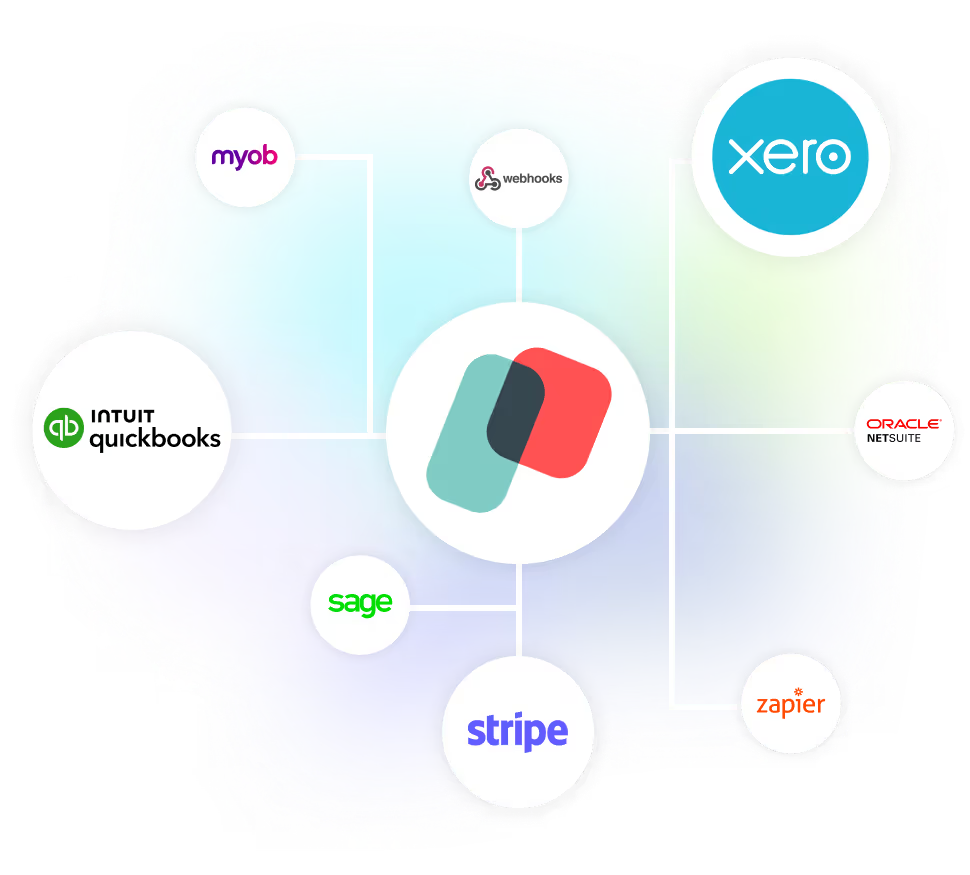
Nothing changes in Xero or QuickBooks unless a rule you set makes it happen. Paidnice connects through the official Xero and QuickBooks integrations, so we never see your accounting password.
It’s the debt collection system I’ve been looking for, for the last 15 years.


Within the first month of implementing Paidnice, we saw late customer payments decrease from over 20% to zero.
Alex Hamilton, Paintvine, New Zealand
Read the case study →
The biggest impact from using Paidnice has really been man hours for me. Just by using Paidnice, it's freed up loads and loads of time. We're talking five hours already of admin per month, and we're a scaling business. In a year, that could be 15 to 20 hours a month.
Jon Murphy, Salt Silo, United Kingdom
Read the case study →
Before Paidnice, over 25% of our payments were late, which we were manually chasing up. With Paidnice automating this for us, that has dropped to less than 5%
Louis Fourie, Venture Workspace, South Africa
Read the case study →Debtor management is the work of getting paid for what you have already invoiced: keeping the debtors book current, watching the age analysis, following up each account, charging interest where your terms allow it, and escalating what stays unpaid. In most South African businesses a debtors clerk does this by hand. Software does the same work on a schedule.
No. Debtor management runs your own debtors book while the account is still yours, so most invoices are paid after a reminder or a statement. Debt collection hands the account to an outside agency or attorney once it has failed. Paidnice is the first of those, not the second.
Sage Pastel is the long-standing incumbent for South African small and medium businesses, and Sage sells its own Debtors Manager module on top of it. Xero and QuickBooks Online are the cloud options, and they are the two ledgers Paidnice works with. Paidnice does not connect to Sage Pastel.
Yes, where your terms of trade provide for it. Where no rate is agreed, the Prescribed Rate of Interest Act sets the default rate, which is 10.50% per annum from 1 July 2026 and moves with the repo rate. Paidnice applies a fixed fee, a percentage or a rate per annum, after a grace period you set.
Ordinary contractual debt, which covers most trade invoices, prescribes three years after the debt became due under the Prescription Act 68 of 1969. Prescription is interrupted by part payment, a written acknowledgement of debt, or service of summons. Consistent follow-up keeps an account well inside that window.
R30,000, effective 1 August 2026, raised from R20,000. It was the first change since 2019. The Small Claims Court hears claims without an attorney, which makes it the practical route for a small unpaid invoice.
A few minutes. Connect your Xero organisation or QuickBooks Online company in one click, pick a preset template for reminders, interest and statements, and preview your upcoming actions before anything sends. Approve each action at the start, then let them run.
Your first 20 actions are free, with no time limit and no credit card. An action is anything Paidnice performs: an email sent, an SMS sent, an escalation created or a late charge generated. Paid plans start at R1,100 a month, month to month, with no contracts and no lock-ins.
Debtor management software South Africa
No credit card. Your first 20 actions are free.