


Debtor management software automates invoice reminders, tracks accounts receivable and recovers overdue payments from the invoices already on a South African business's ledger. That is business to business debtor management: a company invoicing other companies. Debt review, debt counsellors and the National Credit Act route for consumers are a different subject, and most South African search results drift into them.
Five tools are compared below, matched to the ledger each one runs on: Sage Pastel, Xero or QuickBooks Online.
A debtors book needs software when the age analysis stops moving between runs and a debtors clerk is phoning the 60-day column by hand. A clerk with a clean age analysis and twenty open accounts does not need it: the reminders go out on Monday, the statements on the first of the month, and the 60-day column is short enough to phone through in an afternoon.
The clerk runs out of hours when the book grows. The 30-day column fills, the 60-day column stops emptying, and the person who was reconciling receipts is now chasing instead. At that point the follow-up is a repeating process, and software runs a repeating process better than a person does.
The pressure behind that is measured. Xero's State of South African Small Business 2026 report, from a survey of 427 South African small businesses published in April 2026, found:
Source: Xero, State of South African Small Business 2026, published 16 April 2026.
Checking the balance every day is a symptom. The cause sits in the 60 and 90-day columns of the age analysis, and the fix is a process that works those columns without a person having to remember.
Where the native tools stop. Sage Pastel gives you the age analysis, customer statements and the debtors book itself. Xero gives you an aged receivables report, up to five invoice reminders on one organisation-wide schedule, and statements you send by hand. QuickBooks Online is similar.
None of them charge interest, post a fee to the customer's account, escalate an invoice to a named person, or send a statement on a schedule you set once.
The two signs you have hit that ceiling: the age analysis looks the same on the first of each month, and somebody is phoning the 60-day column by hand. At that point the software costs less than the hours it replaces.
Debtor management software automates the follow-up on your debtors book and shortens the time it takes to get paid. Four capabilities decide whether it works for a South African business.
Those four make a tool usable. What makes it worth paying for is what the ledger cannot do at all: interest and fees posted to the customer's account, escalation to a named person, a pause on a disputed invoice, and a portal the customer pays from.
That is the dividing line in this category. A chasing tool sends better reminders. An automation platform enforces the terms you already agreed. Four of the five below sit on one side or the other, and the fifth is a collections platform built for a different job.
The right tool follows your ledger first and the size of your debtors book second. The five tools below are not competing for the same job, and in South Africa the ledger decision is usually already made.
| If this is you | Ledger | Start with |
|---|---|---|
| On Sage Pastel Partner, Xpress or Evolution, and you want reminders and collection tracking without leaving Sage | Pastel |  |
| Larger business on several ledgers, and you need credit checks as well as chasing | Xero, QuickBooks, Sage 50, 200 or Intacct, NetSuite |  |
| On Xero or QuickBooks Online, and you want reminders, statements, interest and escalation in one plan | Xero, QuickBooks Online |  |
| A school, body corporate or HOA collecting fees and levies, with legal handover built in | Sage, Pastel, Xero, import |  |
| A collections team or call centre running agents, diallers and Debi-Check | Own platform, no named ledger |  |
Each tool is placed against the job it does best, rather than scored out of ten. A R7 million engineering firm on Pastel and a R40 million distributor on Xero are buying different products, so a single winner would be wrong for most readers.
Checked against vendor materials in September 2026. Prices change; verify before you buy.
If your debtors book already lives in Sage Pastel or Evolution
Sage's own answer. Debtors Manager is an add-on module inside Sage 50cloud Pastel Partner, Pastel Xpress and Sage Evolution, so it reads the debtors book you already have with nothing to sync.
The limitation. Public materials describe a reminders and reporting layer. There is no visible interest or late fee automation, no SMS or WhatsApp channel, no payment portal and no letter of demand path. Pricing is not published, so a self-serve buyer cannot size it without a sales conversation.
Best for: a Pastel or Evolution business that wants reminder tracking and reporting inside Sage and has no plan to move ledger.
If you are a larger business and credit checks matter as much as chasing
The most established international suite here, founded in 2014, and the one to pick if vetting customers matters as much as chasing them. The pricing tiers are built for businesses well past the size of a typical South African small business.
The limitation. It is the oldest product on this list and the configuration is rigid. The late fee rule is global. Statements go monthly on a fixed day, with recipients and senders you cannot change. Pricing in pounds on company revenue means a South African business with few invoices of high value can land on the £599 tier for a handful of invoices a month.
Best for: businesses past £4m that want credit data and chasing in one product and can absorb a rigid configuration.
If you run your debtors book in Xero or QuickBooks Online
Paidnice is debtor management software for South African businesses on Xero or QuickBooks Online. It automates reminders by email and SMS, scheduled statements, interest and late fees, payment plans, a customer payment portal and escalation, in one plan, from the invoices already on the ledger.


The limitation. No Pastel. Paidnice runs on Xero and QuickBooks Online only, so a Pastel or Evolution business would need to move ledger first, and other systems are a Custom plan conversation. No credit bureau data either: there is no TransUnion or Experian feed, so vetting a new account happens elsewhere.
The two-ledger depth is what lets Paidnice post a fee into the ledger instead of only reading from it. A Pastel business should start with the first entry on this list.
Best for: Xero and QuickBooks Online businesses with a growing debtors book that want reminders, statements, interest and escalation in one plan.
If you collect school fees, levies or service accounts and want legal handover built in
A South African collections platform with a human collections team behind it, operating since 2014. Its core market is schools, body corporates and homeowners' associations, with trade debtors alongside.
The limitation. It is built for schools and levy books and is strongest there. No visible interest or late fee automation, no visible payment portal or South African payment rail, and no published price. WhatsApp, SMS, email and phone are all standard channels, which suits a levy book better than a trade debtors book on 30-day terms.
Best for: a school, body corporate or HOA collecting fees under a statute, with a real attorney handover at the end of the process.
If you run a collections team or call centre
A Durban-built collections operations platform for call centres and collections teams. It spans business to business trade debt and consumer collections, which makes it a different category from the four above.
The limitation. It is collections infrastructure, and it spans consumer debt recovery as well as trade debt. A small business with a debtors clerk and a Pastel or Xero ledger would be buying a call centre. No named ledger integration, no WhatsApp named, no visible letter of demand library, and no published price.
Best for: a collections operation that needs agents, diallers, Debi-Check and decisioning in one system, on either side of the consumer and business line.
The table shows what each tool runs on, what it automates, whether it can post a charge into your ledger, and what it costs. Read the "Runs on" column first, because in South Africa it rules most of the list in or out before the features matter.
| Tool | Runs on | Fits | Automates | Posts fees to the ledger | Entry cost |
|---|---|---|---|---|---|
| Sage Debtors Manager | Pastel, Evolution | Existing Sage businesses | Reminders, collection tracking, reporting | Not published | Not published |
| Chaser | Xero, QuickBooks, Sage 50, 200, Intacct, NetSuite | £4m to £100m | Email and SMS chasing, credit checks | One global rule, Xero only | £199/mo |
| Paidnice | Xero, QuickBooks Online | US$1m to US$20m | Chasing, statements, interest, plans, portal, escalation | Yes | ZAR 1,100/mo |
| Jumping Fox Software | Sage, Pastel, Xero, import | Schools, HOAs, body corporates | SMS, WhatsApp, email and phone chasing, legal handover | Not published | Not published |
| TRAQ Software | Own platform, no named ledger | Collections teams | Agent workflows, dialler, payment rails | Fees yes, ledger not stated | Not published |
Row order follows the list above, not a ranking. A cell reads "not published" where the vendor documents nothing either way, rather than where a capability is known to be absent.
The "posts fees to the ledger" column separates the tools most. Chaser syncs its fee as a line item to Xero only, under one global rule that cannot vary by customer group. Posting a charge into Xero or QuickBooks as an invoice, per customer group, is the deeper integration, and it is why interest raised in Paidnice reaches your customer's creditors clerk rather than sitting on a dashboard.
A South African business can charge the contractual rate in its terms of trade, or, where none is agreed, the prescribed rate of interest under the Prescribed Rate of Interest Act 55 of 1975. The prescribed rate is the repo rate plus 3.5 percentage points, and it changes by Gazette notice each time the repo moves.
The last gazetted rate is 10.25% per annum from 1 March 2026, per Government Gazette 54520, Notice 3887 of 2026. The repo has moved since, so check the current notice before you apply a rate.
The National Credit Act is the consumer framework. It generally does not apply to business to business credit where the customer company has asset value or turnover of R1 million or more, which puts most trade debt between registered companies outside it. Smaller entities can still be covered, so check the customer, not the invoice.
For a debt that gets as far as court, the Small Claims Court limit rose from R20,000 to R30,000 on 1 August 2026, per the Department of Justice. Above that, the route runs through a letter of demand from an attorney and the ordinary courts.
The rates, the admin fee question and a calculator are in how much you can charge for late fees in South Africa.
Interest is leverage only once it is on the customer's account. A charge on a collections dashboard is a number your customer never sees. A charge posted as an invoice lands on the next statement, in your customer's creditors ledger and in their payment run. That is why the "posts fees to the ledger" column above matters more than the rate.
A debtors book is automated in three phases: audit, configuration, automation. Whichever tool you land on, most of the setup time goes into the first one.
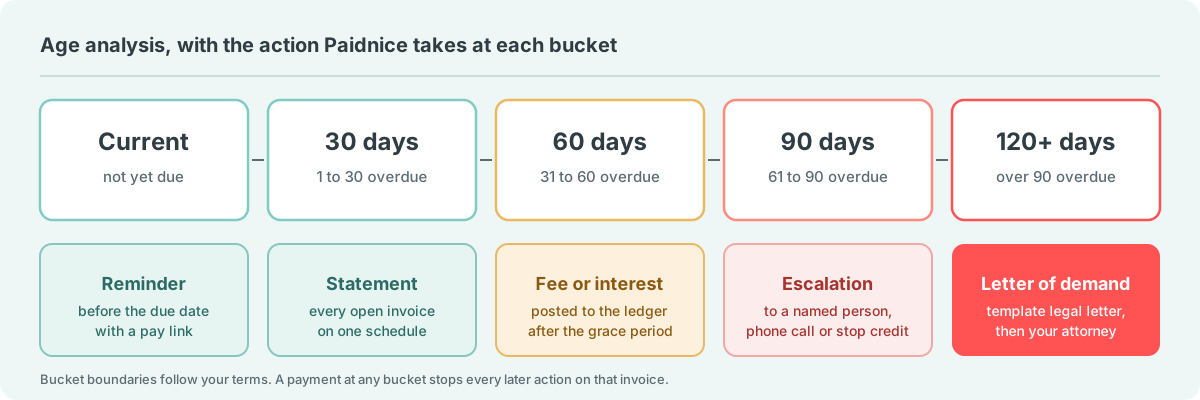
Choose by answering two questions: which ledger you run, and how big the debtors book is. Five common situations and where each one lands.
| Your situation | What to look at |
|---|---|
| Fewer than 25 invoices a month, any ledger | Automated reminders and a scheduled monthly statement run. That alone is a full use case, and interest and fees can come later. |
| On Pastel or Evolution, with no plan to move | Sage Debtors Manager, or a tool with a Pastel connector. Do not buy a Xero-only product and plan to bridge it. |
| On Xero or QuickBooks Online, with statements going out monthly | Scheduled statements, interest and escalation in the base product rather than as paid add-ons. |
| Extending credit to accounts you cannot vet | Credit bureau data. This is the one job the ledger-native tools do not do. |
| Collecting fees under a statute, or running a collections team | A collections platform with legal handover or dialler tooling. Your problem is not reminders, and a reminders tool will not fix it. |
The category is the same one covered in the global guide to debtor management software. The South African difference is the ledger question.
Six questions separate these tools in a demo, and none of them appear on a pricing page. Feature grids look identical across the category because every vendor writes to the same checklist.
The second question changes the most demos. Ask the vendor to raise an interest charge during the call and then show you that charge sitting in your ledger as an invoice against the customer. A charge on a dashboard is easy to show. A charge on the ledger is the one that reaches your customer's payment run.
The decision comes down to which ledger you run and how much of the process you want automated. If you still cannot tell, ask us.
We would rather point you at the right tool than sell you the wrong one. A Pastel business belongs with the first entry on this list, and we will say so.
What is debtor management?
Debtor management is the process of following up the money your customers owe you: sending reminders, issuing statements, applying interest on late accounts and escalating the ones that do not pay. In South Africa it is usually run by a debtors clerk from the age analysis. Debtor management software automates that process from the invoices already on your ledger.
What is the most used accounting software in South Africa?
Sage Pastel, in its Pastel Partner, Xpress and Evolution forms, is the South African-founded ledger most local bookkeepers know. Xero and QuickBooks Online are the cloud options, and they are the two ledgers Paidnice works with. Paidnice does not connect to Pastel. No primary market share figure exists for any of the three.
What software do collection agencies use?
A collection agency uses a collections platform built for volume, with diallers, agent allocation, decision trees and Debi-Check, and TRAQ Software is that kind of product. A business chasing its own trade invoices uses debtor management software that runs on its ledger, and the other four tools on this list are that kind of product.
Can I charge interest on an overdue invoice in South Africa?
Yes, at your contractual rate, or otherwise at the prescribed rate under the Prescribed Rate of Interest Act 55 of 1975: repo plus 3.5 points, last gazetted at 10.25% a year from 1 March 2026. The repo has moved since, so check the current notice. The National Credit Act generally does not apply to business customers with assets or turnover of R1 million or more.
How long can a debt be chased in South Africa?
Three years for an ordinary trade debt, under section 11(d) of the Prescription Act 68 of 1969, counted from when the debt became due. Acknowledgement of the debt by the customer, a part payment or serving summons interrupts the period. This is general guidance, so take advice on a specific account before you write it off or sue on it.
Is there a free trial?
Sage Debtors Manager, Jumping Fox and TRAQ do not publish trial terms. Chaser offers a 10-day trial, demo required. Paidnice has a free action period instead of a timed trial: the first 20 actions are free, with no time limit and no card. An action is anything Paidnice performs: an email sent, an SMS sent, an escalation created or a late charge generated.
Does Paidnice work with Sage Pastel?
No. Paidnice runs on Xero and QuickBooks Online. A Pastel or Evolution business should look at Sage Debtors Manager, or a tool with a named Pastel connector, unless it is already planning to move ledger.
Paidnice is accounts receivable automation that enforces your payment terms, trusted by thousands of businesses on Xero and QuickBooks. Credit control and debtor management, run for you.
Try it Now - It's FreeNo card required.



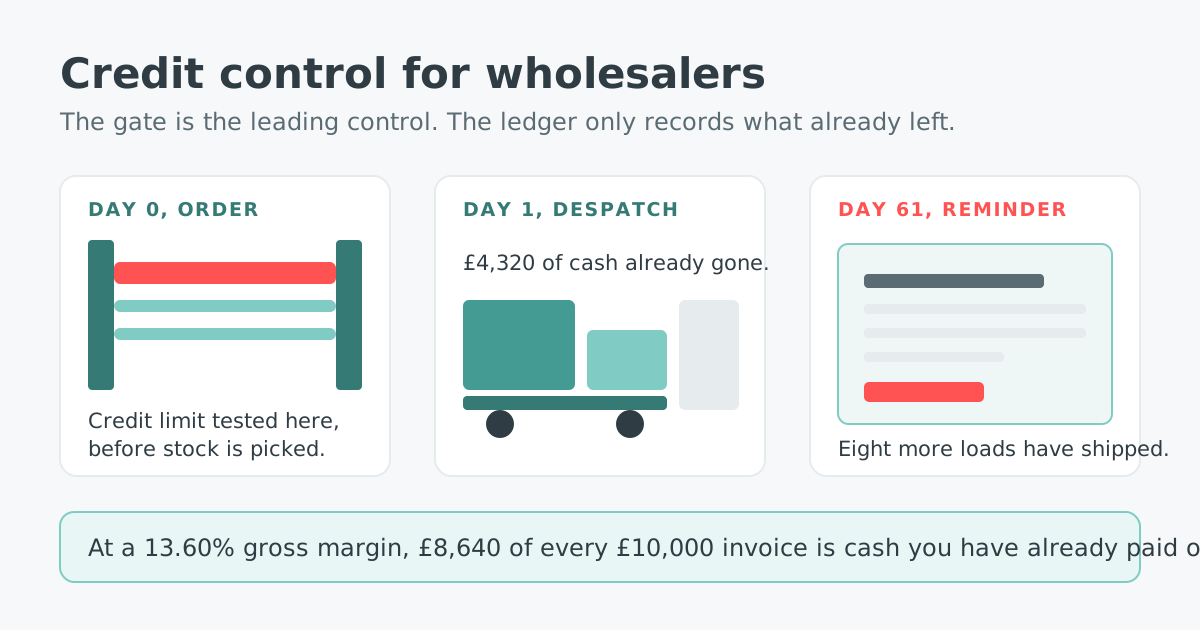

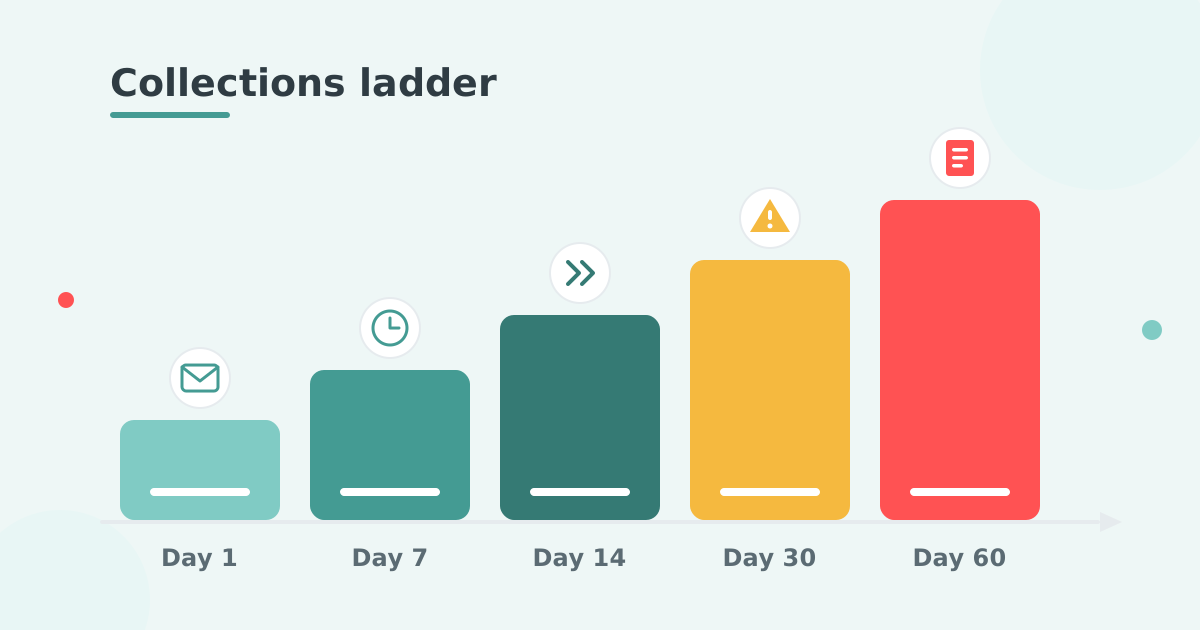
Optimize your cash flow with our suite of financial tools designed for AR professionals. Calculate DSO, aging analysis, late fees, and more.