What is collections management?
Collections management is the end-to-end process a business uses to turn its overdue invoices into cash: tracking what is owed, chasing it on a set cadence, escalating accounts that do not pay, and deciding when to write the rest off. It is the discipline that sits between making a sale on credit and actually getting paid for it. Done well, it is quiet, consistent, and mostly automatic. Done badly, it is a scramble of forgotten follow-ups and awkward phone calls.
For any business that invoices on credit, collections management is where cash flow is won or lost. Every unpaid invoice is money you have earned but cannot spend, and the longer it sits, the less likely you are to ever see it. Good collections management shortens that gap without burning the customer relationships that took you years to build.
It is how invoices become cash.The full process of tracking, chasing, escalating and resolving what customers owe.
Cadence beats effort.A consistent, automated follow-up sequence collects more than sporadic, manual chasing.
Measure DSO and CEI.Days sales outstanding and collection effectiveness tell you whether it is working.
The collections management process
Collections management runs as a repeatable cycle, not a one-off chase. The same sequence applies to every invoice, which is exactly what makes it scalable: you define the steps once, then let them run on every account automatically.
Send a clear invoice with explicit due dates and payment terms, so the clock starts cleanly and expectations are set.
A friendly nudge a few days before the due date prevents many invoices from ever becoming late.
Run a steady reminder cadence by email and SMS the moment an invoice passes its due date.
Step up tone, apply late fees, place account holds, or route to a person for accounts that ignore reminders.
Agree a payment plan, settle disputes, or hand genuinely bad debt to a collection agency.
Track DSO and collection rates, find where invoices stall, and tune the cadence and policy.
The art is matching effort to risk. A reliable customer who is two days late needs a gentle reminder, not a phone call; a chronic late payer who is 60 days overdue needs escalation well before then. A defined collection policy sets those rules in advance, so the response is consistent rather than dependent on who happens to be chasing.
Collections management best practices
The strongest collections functions share a handful of habits. None of them are complicated, but together they decide whether your cash arrives on time or drifts.
Chase early and consistentlyA debt's collectability falls sharply with age, so an invoice chased at 7 days overdue is far easier to recover than one left until 90.
Keep the tone humanMost late payers are disorganized, not dishonest, and an aggressive first message poisons a relationship you want to keep.
Make paying effortlessA clear call to action and a one-click payment portal remove every excuse for delay.
Segment your customersHigh-value or high-risk accounts get closer attention than the long tail.
Write your rules downA collection policy means the whole team, and your software, follows the same playbook.
The single biggest lever, though, is automation. Manual collections breaks down precisely when you are busiest, which is when cash matters most. Automating the routine chasing through AR automation means every invoice is followed up on time, every time, freeing your team to spend its judgment on the genuinely difficult accounts rather than on copying and pasting reminder emails.
One mistake worth naming is treating every customer the same. A blanket cadence either chases your best clients too hard or lets your riskiest ones drift. Tier your accounts by value and payment history, then run a gentler sequence for reliable payers and a tighter one, with earlier escalation, for the accounts that habitually run late. The same logic applies to disputes: an invoice held up by a genuine query is not a collections problem, it is a resolution problem, and chasing it harder only frustrates the customer. Route disputes out to be resolved, and keep the collections cadence for invoices that are simply unpaid.
A worked example: a chasing cadence
Picture a 4,000 invoice on net 30 terms. Under a well-run collections process, the customer gets a polite reminder three days before the due date. Most pay here, and the invoice never turns late at all.
If the invoice passes due, an automatic reminder goes out the day after.
A stronger email follows a week later for any account still unpaid.
A text message adds a second channel two weeks overdue.
A dunning notice warns of a late fee, and the account is flagged for a personal call.
A late fee is applied and a final notice sent before the debt is considered for a payment plan or external recovery.
The point is that nothing in this sequence relies on someone remembering. The cadence is defined once and runs on every invoice, so a quiet account is chased exactly as diligently as a noisy one, and your team only steps in at the escalation points where human judgment actually adds value.
How to measure collections management
You cannot improve what you do not measure, and a few metrics tell you almost everything about collections health.
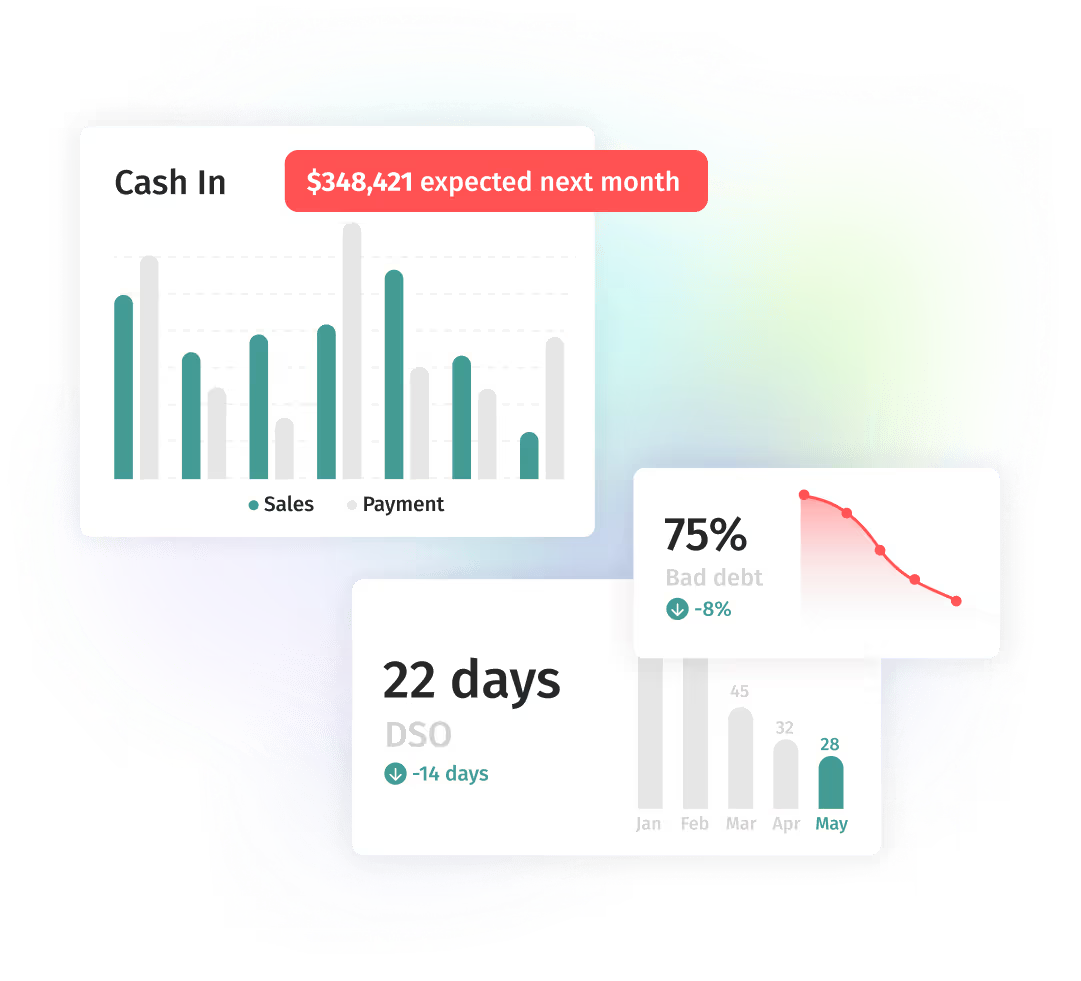
Days sales outstanding (DSO)The headline number: the average days it takes to collect after a sale, where lower and stable is better.
Collection effectiveness index (CEI)The percentage of available receivables you actually collected in a period, and unlike DSO it is not distorted by sales swings.
Average days delinquentIsolates how late your late payers are, separate from invoices paid on time.
Percentage of overdue receivablesShows how much of your ledger is past due right now.
Track these over time, not in isolation. A creeping DSO or a falling CEI is an early warning that your cadence has slipped or your customer mix has shifted toward slower payers. It also helps to read DSO against your own payment terms: if you sell on net 30 but DSO sits at 50, the average invoice is being paid 20 days late, and that gap is the real target. Pair the headline number with a quick aging analysis to see where the overdue balances concentrate, because a single large account drifting past 90 days can move your metrics more than a hundred small ones.
You can size the headline figure with the days sales outstanding calculator, then use a tool like debt collection software to act on what the numbers reveal, automating the chasing and surfacing the accounts that need a human. Measured, automated, and consistent: that is what separates collections management that protects your cash flow from collections that quietly leaks it.