What is debtor management?
Debtor management is the process a business uses to get paid on time by the customers it has invoiced on credit, from terms of trade and invoicing through reminders, statements, late fees and escalation. The customers who owe you are your debtors, and the total they owe is your debtors ledger or debtors book.
The term is standard in Australia and New Zealand, and common in South Africa. It describes the same job that the United Kingdom calls credit control and the United States calls accounts receivable management. The aim in each case is to shorten the gap between sending an invoice and the money landing, and to keep bad debt rare.
Good debtor management starts before the sale, with clear terms, and runs on a fixed rhythm afterwards. The early stages prevent most late payment. The later stages recover the invoices that still slip.
What debtor management includes
Six activities make up the job, and they repeat for every customer and every invoice.
- Terms of trade agreed before the sale
- Accurate invoices sent the day work is done
- Reminders before and after the due date
- Statements showing every open invoice
- Late fees and interest set by your terms
- Escalation: calls, stop credit, recovery
Escalation is the last stage, not the first. Stages 4 to 6 exist for the ones that are not, and what you learn there feeds the next set of terms.
Debtor management, credit control and accounts receivable: the same job in different countries
Debtor management, credit control and accounts receivable management are three names for one process, and the name you hear depends on where the business is. The ledger it runs on differs by country too, which is why software built for one market often uses the terms of that market.
| Term | Where it is used | Ledger most small businesses run |
|---|---|---|
| Debtor management | Australia, New Zealand | Xero and MYOB |
| Credit control | United Kingdom, South Africa | Xero and Sage (United Kingdom); Sage Pastel, with Xero growing (South Africa) |
| Accounts receivable management | United States, Canada | QuickBooks Online |
The vocabulary shifts with the term. A debtor management reader talks about the debtors book, debtor days and the age analysis. A credit control reader talks about the sales ledger, a credit controller and aged debtors. An accounts receivable reader talks about AR, DSO and the aging schedule.
How debtor management is measured
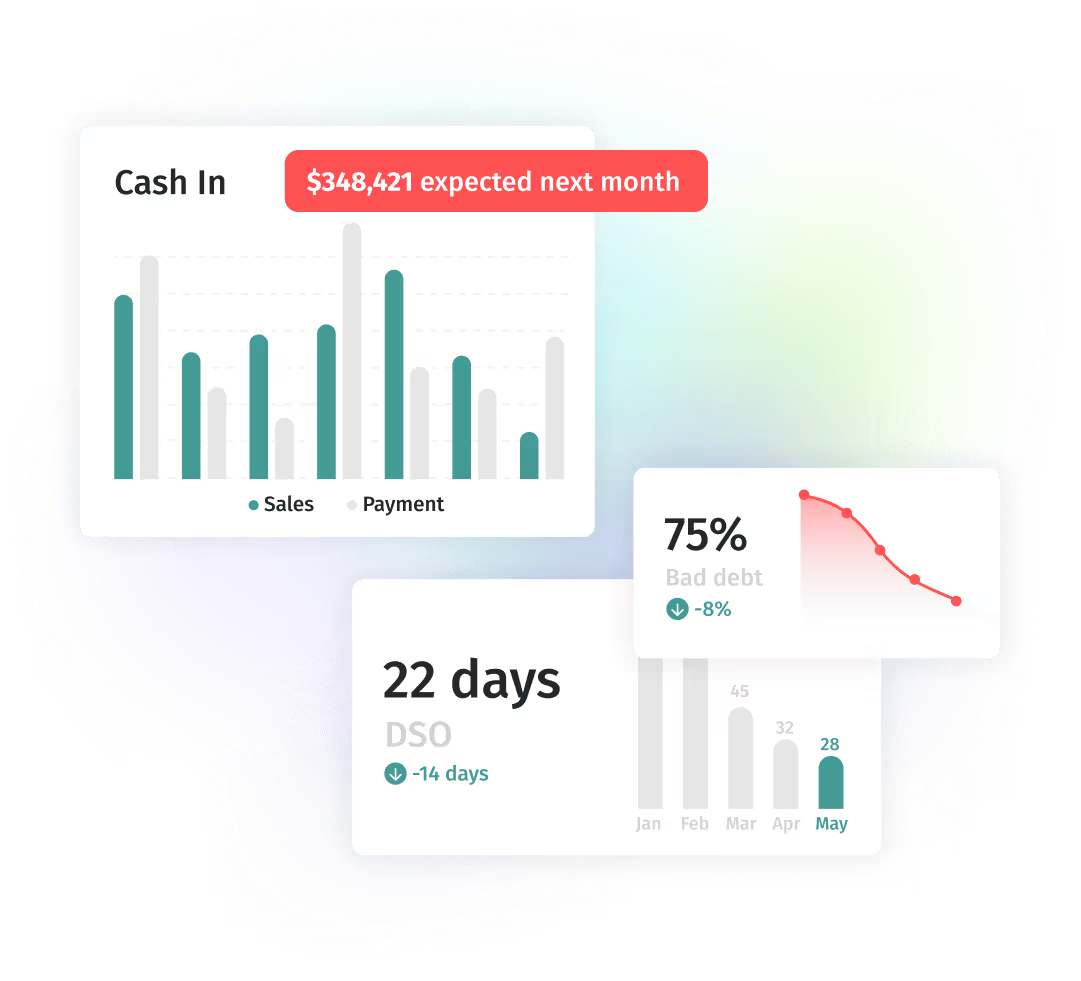
Debtor management is measured with two figures: debtor days, and the age analysis of the debtors ledger. Debtor days is the average number of days between issuing an invoice and receiving payment. It is the same figure the United States calls days sales outstanding. Falling debtor days means the process is working.
The age analysis groups every unpaid invoice into buckets by how overdue it is: current, 1 to 30 days, 31 to 60, 61 to 90 and over 90. It tells you who to chase first and which balances are at risk of becoming bad debt. The full method is in the entry on aged debt analysis.
Our accounts receivable statistics hub publishes average payment times and days late by country, from ledger data.
Debtor management software
Debtor management software connects to the accounting ledger and runs the repetitive parts of the cycle on their own: reminders, statements, late fees and interest, and escalation triggers. The invoices already exist in Xero or QuickBooks Online, so the software reads them and acts on a schedule, instead of a person working through the age analysis each week. Paidnice is one such tool, built for Xero and QuickBooks Online.
It sends reminders before and after the due date, issues statements on a set day, applies a fee or interest charge after a grace period on the terms you set, and raises an escalation when an invoice or a customer's total balance passes a threshold. Reminders and statements alone are a complete use of it, and fees are optional.
Our debtor management software page covers what Paidnice automates.
The rules around fees and interest, the courts and the common ledgers differ by market, so there are separate guides for Australia, New Zealand and South Africa.
Common questions
Is debtor management the same as debt collection?
No. Debtor management is the routine a business runs on its own customers, from terms through reminders to escalation. Debt collection is the last resort, when an account is handed to an agency or a court. Good debtor management means very few accounts ever get that far.
Is debtor management the same as credit control?
Yes. Credit control is the United Kingdom and South African name for the same process. Accounts receivable management is the United States and Canadian name. The steps and the measures do not change.
Who does debtor management in a small business?
Usually the owner, the bookkeeper or an accounts person, in the gaps between other work. That is why it slips when the business gets busy, and why the repetitive parts are worth automating.
What is a good debtor days figure?
One close to the terms you set. On 30-day terms, debtor days in the low 30s means customers are paying roughly on time. A figure well above your terms means money is sitting in your customers' accounts instead of yours.