What are predictive collections?
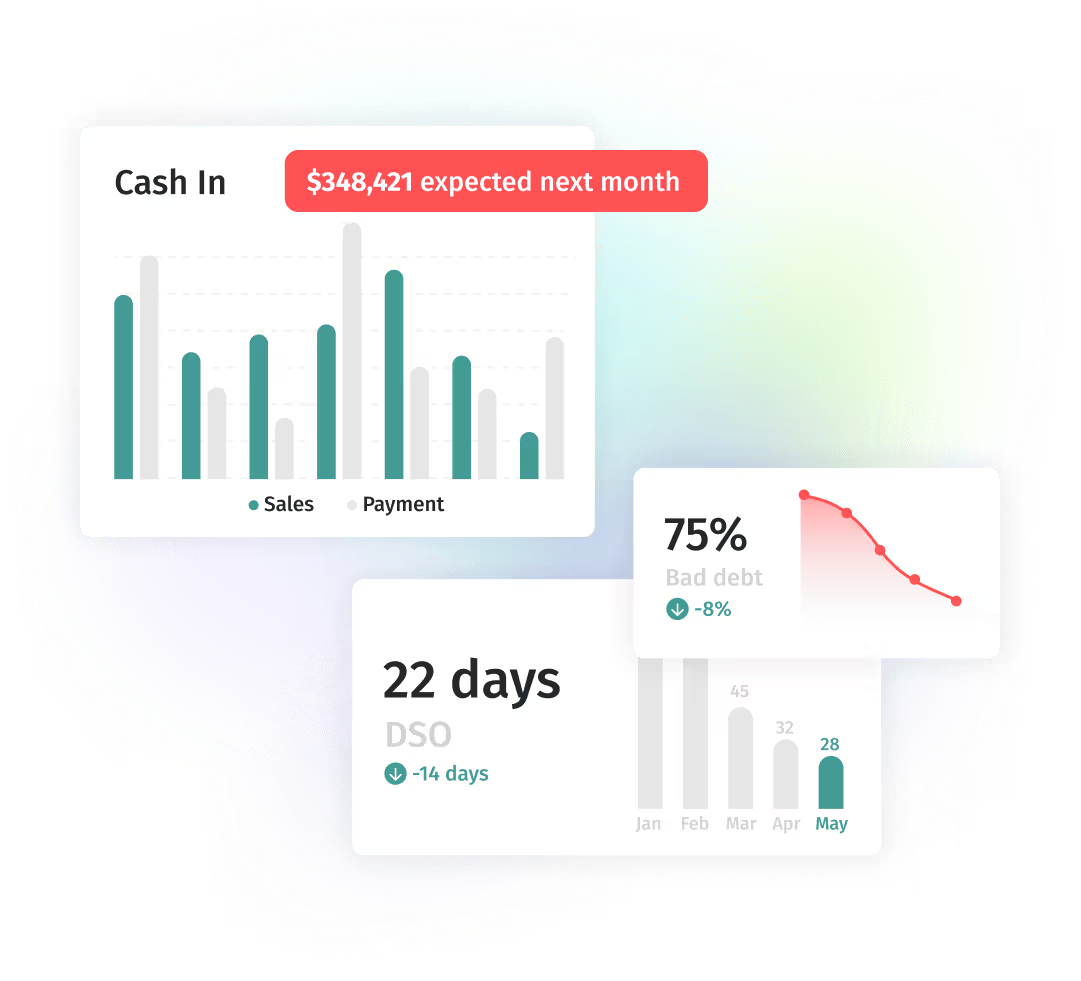
Predictive collections is the practice of using a customer's past payment behavior to forecast how likely each open invoice is to be paid late, then prioritizing your chasing on the accounts most likely to slip, before they actually do. Instead of reacting once an invoice is overdue, you act on the ones a model flags as risky while they are still current. It moves collections from chasing the past to getting ahead of the future.
In accounts receivable this is the difference between a team that is always behind and one that is always early. Most collection effort is spent on invoices that have already gone late. Prediction lets you spend some of that effort sooner, on the accounts that data says are heading that way, where a gentle early nudge often prevents the problem entirely. The fuel is information you already hold: how every customer has paid you before.
It chases before, not after.You act on invoices likely to go late while they are still current.
History is the signal.How a customer paid before is the best guide to how they will pay next.
Effort goes where it pays.Limited collection time is aimed at the accounts most likely to slip.
How predictive collections works
Predictive collections is a loop, not a black box. Whether it runs as a simple ruleset or a trained model, the shape is the same: learn from history, score the open invoices, act, and feed the result back in.
Analyze how each customer has paid before: timing, consistency, disputes and reminder response.
Estimate the likelihood, or expected date, that this invoice will be paid late.
Sort accounts so the highest-risk, highest-value invoices rise to the top.
Nudge likely-late accounts before the due date and match the message to the risk.
Feed back who paid and when, so the next prediction is sharper.
The output of step two is just a probability attached to each invoice, and step three turns that into a ranked list your team works top down. This is where predictive collections meets collections scoring: scoring ranks what is in front of you now, prediction adds a forward estimate of what is about to go wrong. The whole loop runs on patterns drawn from customer payment behavior analysis, which is why clean payment history is the real prerequisite.
What goes into a prediction
A prediction is only as good as its inputs, and the strongest ones are the signals already sitting in your ledger. These are the factors a model leans on most.
Past payment timingHow early or late this customer has settled previous invoices.
ConsistencyWhether their days-to-pay is steady or all over the place.
Invoice sizeLarger invoices often behave differently from small, routine ones.
Reminder responseHow a customer has reacted to nudges in the past.
Dispute historyA pattern of queries that tends to delay settlement.
Recent trendWhether the customer is speeding up or slowing down lately.
None of these is exotic. They are the same facts a sharp credit controller carries in their head about each customer, made explicit and applied to every account at once. That is really all "predictive analytics in collections" means: scaling good human judgment across the whole ledger, so no risky invoice slips through simply because nobody happened to remember that customer's history.
A worked example: getting ahead of a slip
An invoice for 9,000 is issued to a customer on net 30. It is not overdue, so a reactive process ignores it entirely until day 31. Predictive collections looks at it on day one and finds three warning signs at once.
The customer has paid late on their last four invoices.
Average days-to-pay has drifted from 30 to 47 over the past year.
The 9,000 invoice is big enough to matter if it slips.
It scores the invoice as high risk of late payment and surfaces it on the worklist immediately. Instead of waiting, the team sends a friendly confirmation a week before the due date, checking the invoice was received and everything is in order. That single early touch often clears the small frictions, a lost invoice, an approval not yet started, that would otherwise have turned into a 17-day delay. The invoice lands on time, the 9,000 stays out of the overdue column, and no aggressive chasing was ever needed. Repeat that across the riskiest slice of the ledger and the overdue book shrinks not because you chased harder, but because you chased earlier.
The benefits of predictive collections
The payoff lands in four concrete places, and they reinforce one another: faster cash, sharper effort, less bad debt, and steadier customer relationships.
Invoices that would have drifted are nudged onto time, which pulls down days sales outstanding.
The same team hours are spent on the accounts where they change the outcome, not spread evenly across everyone.
Deteriorating accounts are caught while the balance is still small and recoverable, rather than after it has aged.
A well-timed reminder before the due date reads as helpful, where a stream of overdue notices reads as nagging.
Underpinning all of it is good AR reporting, which makes the history legible, and AR automation, which turns each prediction into an action without a person having to trigger it by hand.
Predictive collections vs reactive collections
Reactive collections waits until an invoice is overdue and then chases it; predictive collections forecasts which invoices are likely to go overdue and acts before they do. Reactive is the default almost everywhere, and it is not wrong, every business needs a way to chase what is genuinely late. The limitation is timing: by the time an invoice is overdue, some of the easy levers have already passed.
| Aspect | Reactive collections | Predictive collections |
|---|---|---|
| Timing | Acts once an invoice is overdue. | Acts before the due date on at-risk invoices. |
| Trigger | The invoice passing its due date. | A risk score drawn from payment history. |
| Effort | Spread across whatever is late. | Concentrated on the accounts most likely to slip. |
| Customer feel | Overdue notices can read as nagging. | An early check-in reads as helpful. |
| Best role | The safety net for genuinely late accounts. | The forward layer that stops slips happening. |
Predictive does not replace reactive, it sits in front of it, removing a share of the invoices that would otherwise have become overdue at all. The two together are what a modern collections function looks like, with a forward-looking layer drawn from payment predictive analytics feeding a disciplined reactive process behind it. Start simple, even ranking accounts by past lateness is a basic prediction, and let the model earn more trust as it proves itself against real outcomes.
Treat the score as a signal, not a verdict
A word of realism: a prediction is a probability, not a verdict. Some invoices flagged as risky will pay on time, and the occasional safe one will surprise you, so treat the score as where to look first, not as a label for a customer.
Two habits keep it honest. Watch the model against actual outcomes and recalibrate as payment behavior shifts, because a model trained on last year's customers drifts out of step with this year's. And keep the early outreach genuinely light, a helpful check-in rather than a pre-emptive chase, so a good customer flagged by the model never feels accused of being late before they were ever given the chance to pay.