What is a cash flow projection?
A cash flow projection is an estimate of the cash coming into and going out of a business over a future period, usually month by month, so you can see in advance whether you will have enough money on hand. It adds up expected receipts, such as customer payments, loans and other income, then subtracts expected outgoings like wages, rent, tax and supplier bills, to show the closing cash balance at the end of each period. The point is to spot a shortfall before it happens, while there is still time to do something about it.
It is forward-looking, which is what separates it from the cash flow statement in your accounts. The statement records what already happened; a projection estimates what is about to. For a finance team it answers the most basic survival question a business has, which is whether there will be enough cash to meet every obligation as it falls due, even in the weeks when more is going out than coming in.
It looks forward.A projection estimates future cash in and out, not the cash that has already moved.
It finds the gaps early.Seeing a shortfall weeks ahead gives you time to act instead of react.
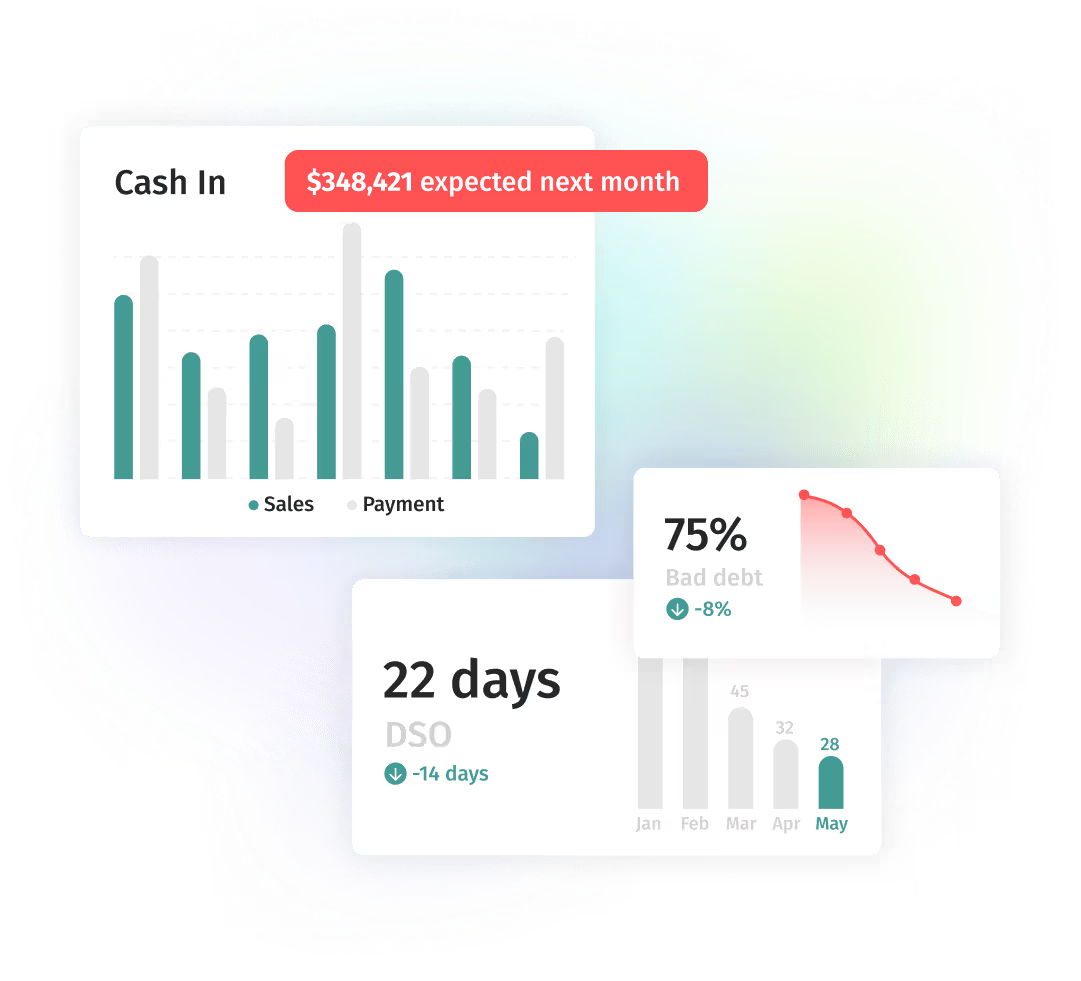
AR is the wild card.When customers actually pay drives the forecast, so receivables timing matters most.
What goes into a cash flow projection
A projection is built from three things: your starting cash, the cash you expect to receive, and the cash you expect to pay out, set out period by period. Get those inputs right and the closing balance for each period falls out of simple arithmetic. The skill is in estimating the inflows and outflows realistically rather than optimistically.
Opening cash balanceThe cash you actually hold at the start of each period, the foundation everything builds on.
Expected receiptsCustomer payments on invoices, plus loans, grants, interest and any other income due in.
Fixed outgoingsPredictable costs like rent, salaries, loan repayments and subscriptions that recur each period.
Variable outgoingsCosts that move with activity, such as stock, materials, commissions and one-off purchases.
Tax and one-offsVAT or sales tax, income tax and irregular payments that can dwarf a normal month if forgotten.
Closing cash balanceOpening cash plus receipts less outgoings, which becomes the opening balance for the next period.
The single most important judgment is timing. A projection works on when cash actually moves, not when a sale is booked or an invoice is raised, so an invoice you send in January but expect to be paid in March belongs in March. That distinction between recording revenue and receiving cash is what makes a projection different from a profit forecast, and it is where most rough estimates go wrong.
How to build a cash flow projection
Building one is a short, repeatable routine rather than a finance exercise reserved for specialists. The same five steps work whether you keep it in a spreadsheet or generate it from your accounting software.
Choose a time step, usually weekly or monthly, and how far ahead to look, often three to twelve months.
Enter your actual opening balance for the first period; this anchors the whole forecast to reality.
Forecast customer payments based on your terms and how customers really pay, not the invoice date.
Add fixed and variable costs, tax and any one-offs to the period in which the money actually leaves.
For each period, opening cash plus receipts less outgoings gives the closing balance, then carry it forward.
Once it is built, the value comes from keeping it current. Compare the forecast against what actually happened each period, adjust the assumptions that proved wrong, and roll the horizon forward so you always have several months of visibility ahead. A projection reviewed monthly is a planning tool; one written once and filed away is just a guess.
Why cash flow projections matter in accounts receivable
For accounts receivable, the projection is only as good as the assumptions about when customers will pay, which makes AR the part of the forecast most worth getting right. Profit can look healthy while the bank balance runs dry, simply because invoices are sitting unpaid. The projection is where that gap becomes visible, because it forces you to estimate not just how much you are owed but when each amount will actually arrive.
Model when customers really pay
This is why receivables timing deserves more care than any other line. If your customers typically pay well after the due date, the projection has to reflect that reality rather than the terms on the invoice, or it will show cash that never turns up on time. Your days sales outstanding is a useful guide here: if it sits at 45 days, an invoice raised today should be modeled to pay in roughly 45 days, not on its net 30 due date.
Faster collections, steadier forecast
Better collections feed straight into a healthier forecast. Every day you shave off the time between invoicing and payment pulls cash forward and smooths the projection, which is the whole logic behind the cash conversion cycle. Tracking receivables closely with AR reporting shows where cash is tied up, and chasing overdue invoices promptly turns an optimistic projection into one you can actually bank on.