How Bullot & Rankine beat the spam filters and got paid on time
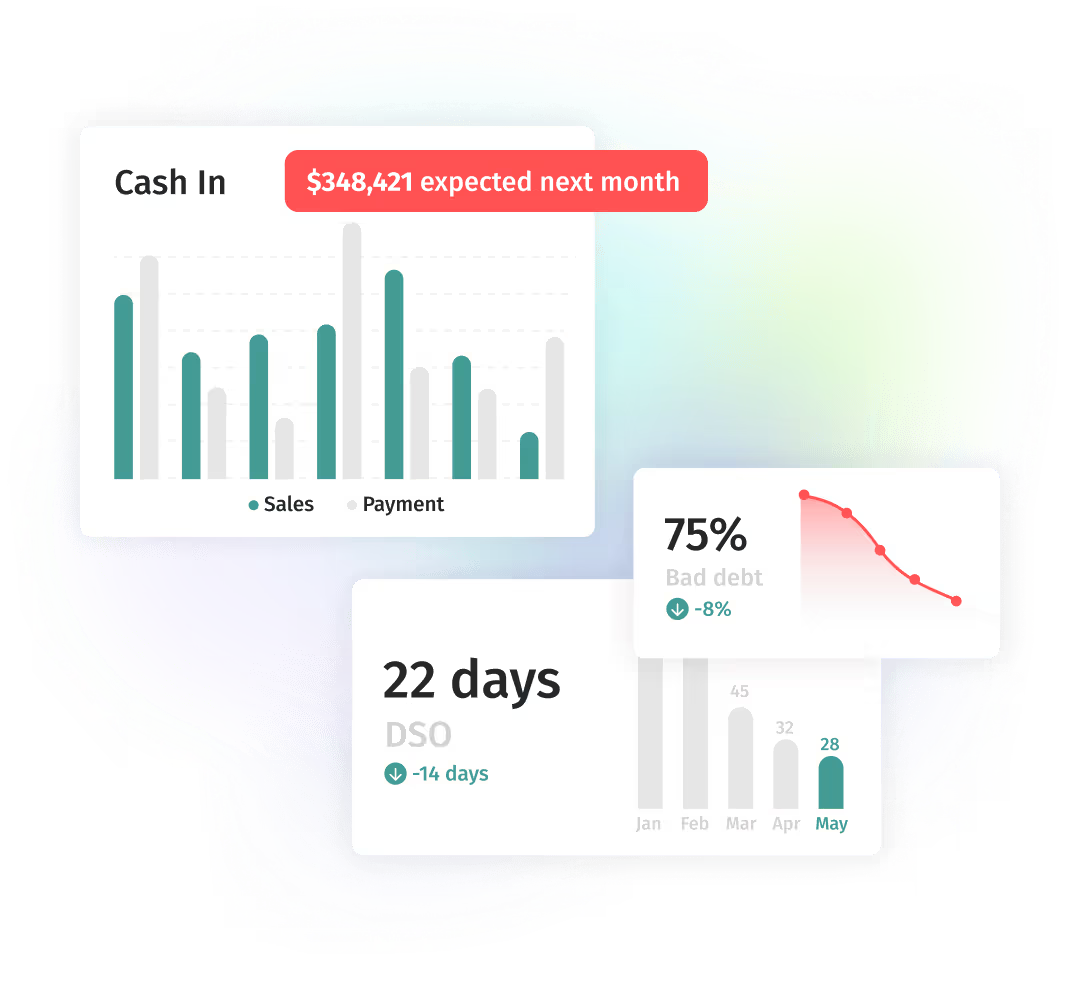
Reminders clients recognize, sent from the firm itself, dropped debtor days immediately and handed back hours every week.
"We reduced our debtor days down really, really quickly."
 Watch Marc tell it · 4:26
Bullot & Rankine, a chartered accountancy firm on Auckland's North Shore, had a collections problem that no amount of effort could fix: clients were either ignoring their Xero reminders or never seeing them at all.
Invoices sent from "no-reply@xero" were landing in spam folders, and the manual work of statements and follow-ups was eating 2-3 hours of staff time every week. For a firm whose director sums up the business in three words, "cashflow is king", that was a problem worth solving properly.
The stakes: effort wasn't the problem
Bullot & Rankine weren't short on diligence. They were short on a system that actually reached clients. As the firm grew, standard Xero reminders were quietly failing on two fronts: the ones that arrived were being tuned out, and many never arrived at all.
"The reality is people will deal with what's in front of them. If they're not actually getting the invoice in the first place, it's very difficult to expect them to pay it."
Meanwhile, the workaround, manually sending statements and following up payments, was consuming 2-3 hours of staff time a week. Without a structured follow-up process, cash flow took the hit.
The diagnosis: generic and invisible
On the surface this looked like a discipline problem. Dig in, and it was two separate failures wearing one disguise.
Invoices and reminders from "no-reply@xero" were frequently filtered into spam, so clients never saw them. Mail providers often block accounting platforms' shared senders because fake-invoice spam is so common. How to stop Xero invoices going to spam.
The messages that did land were generic Xero templates, easy to ignore because they did not look like the firm the client knew.
You can't reduce debtor days by pushing harder when the follow-up never reaches the inbox, and reaches no one personally when it does.
The shift: make it personal and recognizable
Marc Proctor, Director of Bullot & Rankine, discovered Paidnice at a conference, where he met co-founder Ashley actively talking to attendees. The conversation surfaced exactly what the firm needed: not more reminders, but reminders that arrive and get read.
What sold them was the level of customization, the ability to make every communication unmistakably theirs.
"We like the fact that it was very customisable. What we discovered was that you could send the emails from your own email address. So it actually meant that the emails were more personal, because when the client gets the email, they see your name in the inbox and they're probably more inclined to read it."
The implementation: a system shaped around the firm
Bullot & Rankine built a setup that mirrors how they actually work with clients, using a handful of Paidnice features together:
- Their own sender and voice
Reminders sent from the firm's own email address, written in the firm's own language.
- Statements that stand out
Automated monthly statements to all clients, plus mid-month statements for anyone carrying a balance.
- Client segmentation
4-5 contact groups with tailored messaging, so high-value clients can be ring-fenced.
- Firm, fair escalation
Strongly worded follow-ups at 30 and 60 days overdue, plus late fees and interest, something clients had asked Xero for, for years.
And when something needed fixing, the support made the difference.
"When we've had a couple of challenges, Ashley has taken ownership very quickly to get them resolved for us. I can't fault the support we've had from Paidnice. They've actually gone out of their way to make it easy."
The results
Before Paidnice
Third-party sends that clients did not recognize.
Following up invoices, sending statements, reconciling.
Follow-ups went unseen or were easy to ignore.
After Paidnice
Nicely worded reminders clients actually relate to.
"It's taken away the need for someone within our team to spend two to three hours a week."
"The impact that we had was immediate."
"It's taken away the need for someone within our team to spend two to three hours a week just chasing invoices and sending statements and reconciling things. It sends nicely worded reminders that clients can actually relate to, and when they make their payments, they match the statement, it just makes the reconciliation easy."
"The impact that we had was immediate. We reduced our debtor days down really, really quickly."
A pain point that became enjoyable
Most tellingly, collections stopped being the part of the job nobody wanted.
"You've taken away a pain point and made the ability to manage something that's difficult into something that's actually enjoyable."
The verdict
"Give it a go. You've got nothing to lose, worst case it might cost you two or three hundred dollars, but you may save that in one month with better cash flow."
The strongest proof showed up unprompted: clients noticed the change and asked to use it themselves.
"We got good feedback from our clients about it. And then we had a few clients actually ask if they could join with us or have a look at it for their own businesses. We've rolled it out so far to a couple of people."
One client who adopted Paidnice saw their own accounts receivable fall noticeably within 45-60 days, simply by running a disciplined, automated follow-up process. For a firm built on the principle that cashflow is king, that's the whole point, proven once internally, then again for the clients they advise.
Bullot & Rankine are chartered accountants based in Auckland, New Zealand, working face to face and online. Xero Certified, they work with businesses of all sizes.