
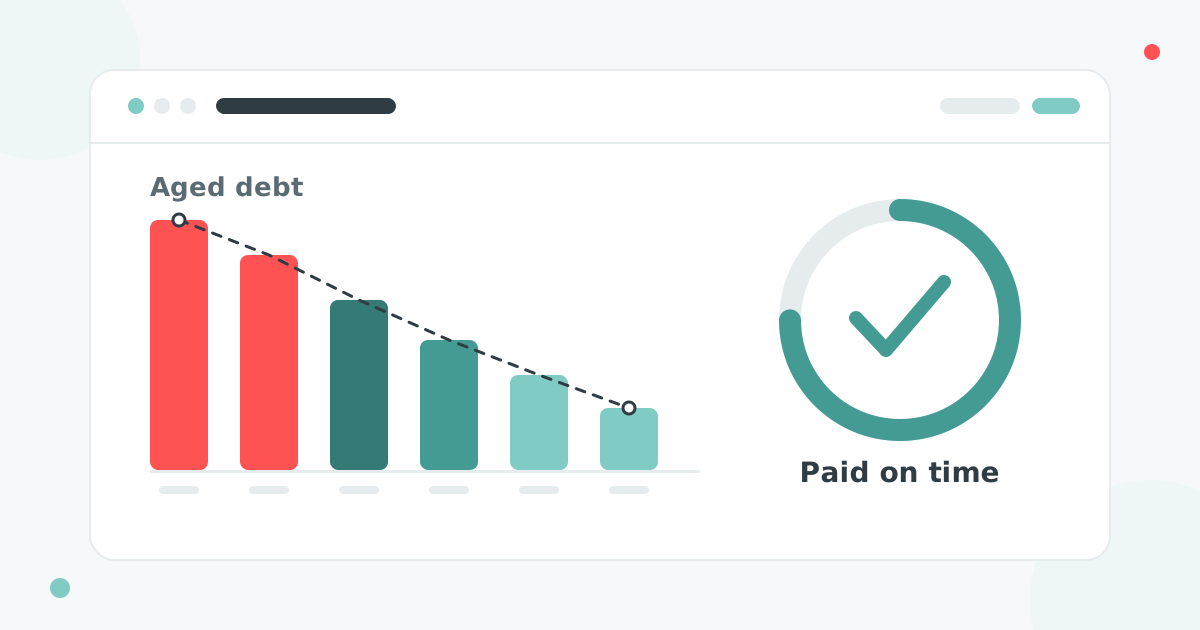

MSP credit control is the system a managed service provider uses to get paid on time: payment terms set in the MSA, autopay as the default, accurate invoices, a firm reminder ladder, and late fees that are actually enforced.
Get those five pieces working together and late payment stops being a monthly drama. This guide covers the whole system, with the numbers, the process and a one-week plan to put it in place.
Credit control is everything you do to make sure work you have already delivered turns into cash on time. For an MSP that job is harder than it looks, because managed services run on credit by default: you deliver continuously, invoice monthly, and then wait 30 days or more while the client's business runs on infrastructure you are paying to support.
Three things make the MSP version of this problem sharper than most industries face:
The result shows up in the data. Atradius' most recent payment practices research found 47% of B2B invoices across Western Europe are overdue, and roughly half of B2B invoices in the US, where overdue invoices are settled on average 20 days past their due date. MSPs sit at the sharp end of those numbers because the service keeps running while the invoice does not get paid.
If you want the textbook definition of the discipline itself, we keep one in our AR dictionary entry on credit control. This page is about the MSP-shaped version.
Late payment is a loan you never agreed to make. Work out what your clients owe you beyond terms right now, and that figure is the interest-free credit line you are extending while you pay for their licenses.
The measure that matters is how long you actually wait to be paid, days sales outstanding, or DSO. Xero Small Business Insights data, which tracks millions of real invoices, put UK small businesses at 29.3 days to be paid in June 2026 and US small businesses at 29.1 days, with about eight of those days past the due date.
For an MSP the gap bites harder, because the service keeps running the whole time the invoice sits unpaid. Work out your own number below, or read the DSO dictionary entry if the metric is new to you.
DSO = accounts receivable divided by credit sales, multiplied by the days in the period. A 90-day period smooths out one odd month. A guide, not financial advice.
Worked example, the figures the calculator loads with: an MSP owed £168,000 with £420,000 of credit sales over the last 90 days. 168,000 divided by 420,000 is 0.4, and 0.4 multiplied by 90 gives a DSO of 36.0 days. On 30-day terms that is 6.0 days of drift. The standalone version lives in our DSO calculator.
Fixing it is not theoretical. 3IT Consulting, a managed service provider running on Xero, had 80 to 90% of clients paying late before Paidnice. After switching on automatic late fees and branded reminders, late payments fell 60 to 70%, and today more than 60% of their clients pay promptly, most within 14 days.
"With Paidnice, we've transformed client behaviour around on-time payment. By automatically enforcing late fees, we've set new expectations. Now over 60% of customers pay us promptly." Louis De Kock, Director, 3IT Consulting
3IT is not an outlier. Paidnice customer data: customers cut their average wait for payment in half, within 30 days, and eight in ten invoices get paid on time.
Five levers close the gap between invoice and payment, in rough order of impact. The sections below work through them, from the biggest fix down.
Most MSPs invoice on net 30 in arrears because the template MSA said so. The MSPs that get paid on time run a different shape: recurring services billed in advance and due on receipt with autopay, net 15 to 30 kept for project milestones with a deposit, and hardware and license pass-throughs prepaid, always. Different revenue carries different risk, so the terms differ too.
Advance billing is the single structural fix. The invoice for March goes out in the last week of February and is due on 1 March, before the work is delivered. Your agreement is a subscription; bill it like one. Nobody expects Microsoft to collect for M365 a month after use, and your seat-based agreement is no different.
Autopay is the second half of that fix. New clients sign a direct debit or ACH authority as part of the MSA and the monthly invoice collects itself, because late payment mostly is not malice, it is an invoice sitting in an inbox behind forty other things.
Set the target at 80% of monthly recurring revenue on autopay within two quarters, and convert repeat late payers as a condition of continuing service.
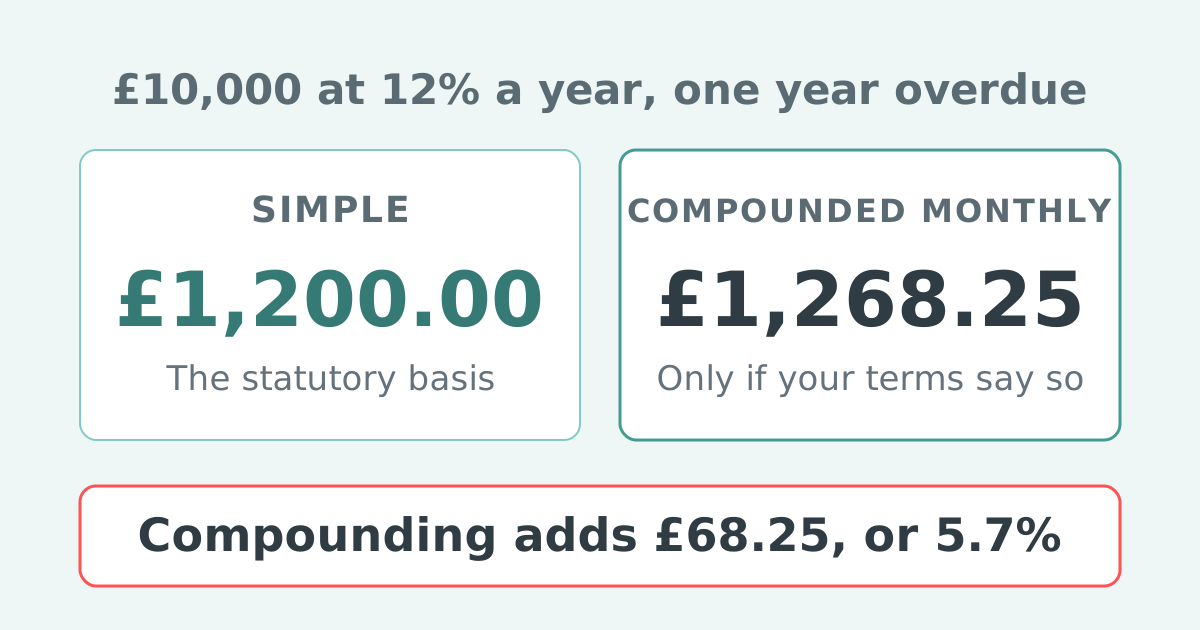
Then there are late fees, the legal leverage most MSPs never use. The footing differs by market:
The full terms-by-revenue-type table, the copy-paste MSA clause wording and the regional detail live in our MSP payment terms guide.
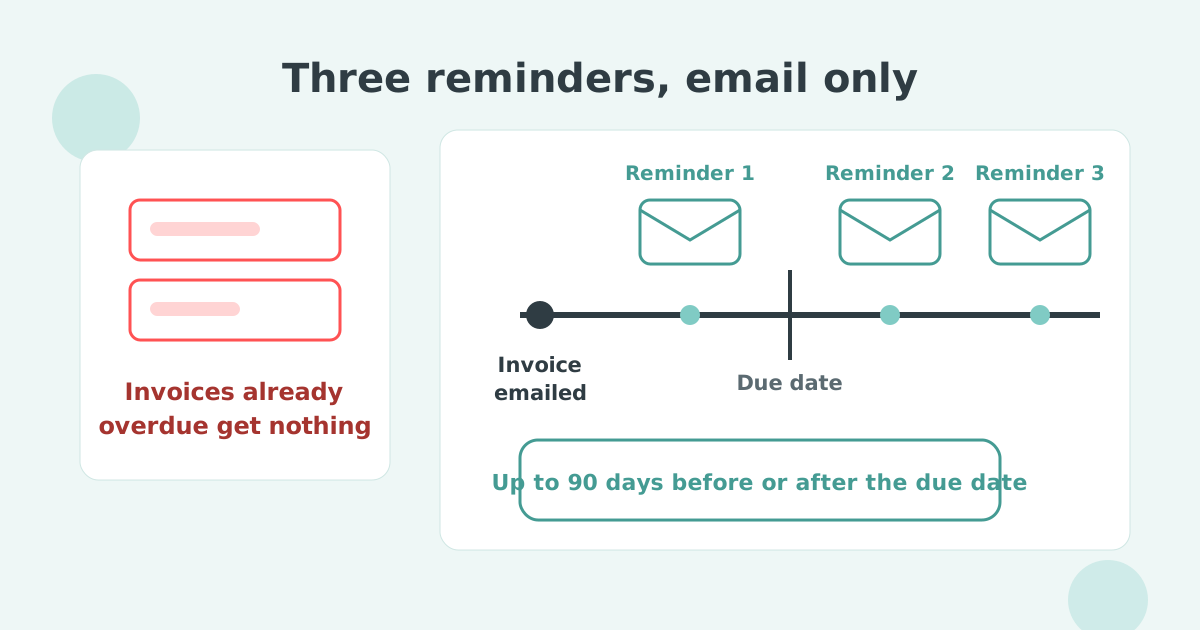
Collections fail when the only consequence anyone plans for is suspension, which feels so drastic that nothing happens at all. The fix is a ladder with many small rungs, run on schedule whether or not anyone remembered. Ours, counted from the due date:
Two design details matter more than any wording. Diagnose before you chase, because a disorganized client, a disputing client, a cash-strapped client and a client using you as free working capital need four different tracks.
And keep disputes on their own track entirely: split the disputed line from the undisputed balance so a $400 disagreement never holds $4,600 hostage. The full ladder with all nine copy-paste email and call templates, including UK and US late fee variants, is in the MSP collections process.
A surprising share of "slow payers" are actually billing accuracy problems wearing a disguise. A wrong seat count or a surprise usage line gives the client a legitimate reason to park the whole invoice, and a parked invoice ages exactly like an ignored one.
Three habits close most of it down:
A credit note without a root cause is scheduled to repeat. The models compared, proration mechanics and the full pre-send checklist are in our MSP billing guide.
MSP billing software is three different jobs wearing one label. The PSA you already run (ConnectWise, Autotask, HaloPSA, Syncro, Kaseya BMS, SuperOps) generates invoices from agreements. Payment platforms make paying easy with portals, ACH rails and autopay. And an AR enforcement layer that sits on the ledger supplies the discipline: reminder ladders, late fees, statements, escalation.
Which one you need depends on which gap you have. If clients want to pay and find it awkward, that is a payments gap. If invoices are accurate and easy to pay and still sit unpaid at day 50, that is an enforcement gap.
The three layers, published pricing and best-for guidance by stack and situation are in our guide to the three MSP tool layers. If you want named products ranked against each other, that is our list of the best credit control software for MSPs.
Credit control that is not measured drifts back to mood within a quarter. Four numbers, reviewed for ten minutes at the same time every week, keep the system honest:
Every number is on one screen in Xero or QuickBooks plus your AR layer; none of them needs a spreadsheet.
The whole system can be stood up in a working week, without renegotiating a single existing contract:
None of this requires confrontation. It requires a policy, written down, that fires the same way every time. The policy is the bad guy, so you do not have to be.
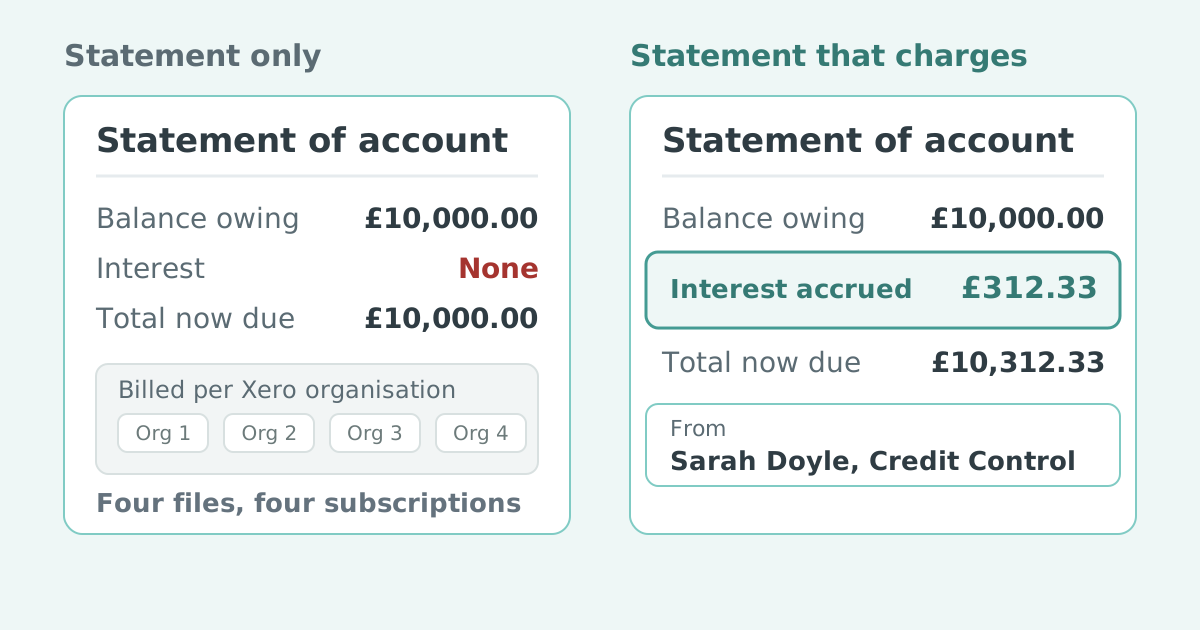
Paidnice is the enforcement layer in that stack. It sits on Xero or QuickBooks Online underneath whatever PSA you run, and automates the discipline on this page: reminders from your own domain, late fees and interest applied by rule (UK statutory rates auto-indexed), statements, payment plans and escalation workflows.
Because it reads the ledger rather than the PSA, it keeps working if you change PSA. That is the practical meaning of closing the gap between invoice and payment.
It is best for MSPs on Xero or QuickBooks whose gap is enforcement discipline rather than payment rails. It is not a PSA, and it is not a merchant processor: payments run through Stripe or Pinch.
If your real bottleneck is a branded portal with cheap ACH, a payment platform is the better first purchase. The tool layers guide lays out who is best for what, with nobody's row highlighted, including ours.
What is credit control for an MSP?
Credit control for an MSP is the end-to-end system for getting paid on time: payment terms and late fee clauses in the MSA, autopay as the default collection method, accurate advance invoicing, an automated reminder and escalation ladder, and a suspension policy as the documented last resort.
What payment terms should an MSP use?
Bill recurring services in advance, due on receipt with autopay. Keep net 15 to 30 for project work with a deposit, and take hardware and licenses prepaid. Net 30 in arrears is common, but common is what produces 50-day payment cycles.
Should an MSP suspend service for non-payment?
Only as the documented last step, typically around day 60, after written notice and a cure period, with security monitoring and backups carved out. Use a credit hold first: pause projects, procurement and non-urgent work while support continues.
How do MSPs automate late fees?
Through an AR automation layer on the accounting platform rather than the PSA. Paidnice, for example, watches every invoice in Xero or QuickBooks against your rules and applies the late fee or interest charge automatically, so enforcement stops depending on someone remembering to do an awkward thing.
Each of these stands alone; together they cover the whole system on this page.
Ready to see it on your own ledger? Paidnice connects to Xero or QuickBooks Online and most MSPs are live in about 15 minutes, on flat pricing from US$69 a month with local pricing in seven currencies. Or fix the process first with the guides above; the software will still be here.
Paidnice is accounts receivable automation that enforces your payment terms, trusted by thousands of businesses on Xero and QuickBooks. Credit control and debtor management, run for you.
Try it Now - It's FreeNo card required.



Optimize your cash flow with our suite of financial tools designed for AR professionals. Calculate DSO, aging analysis, late fees, and more.