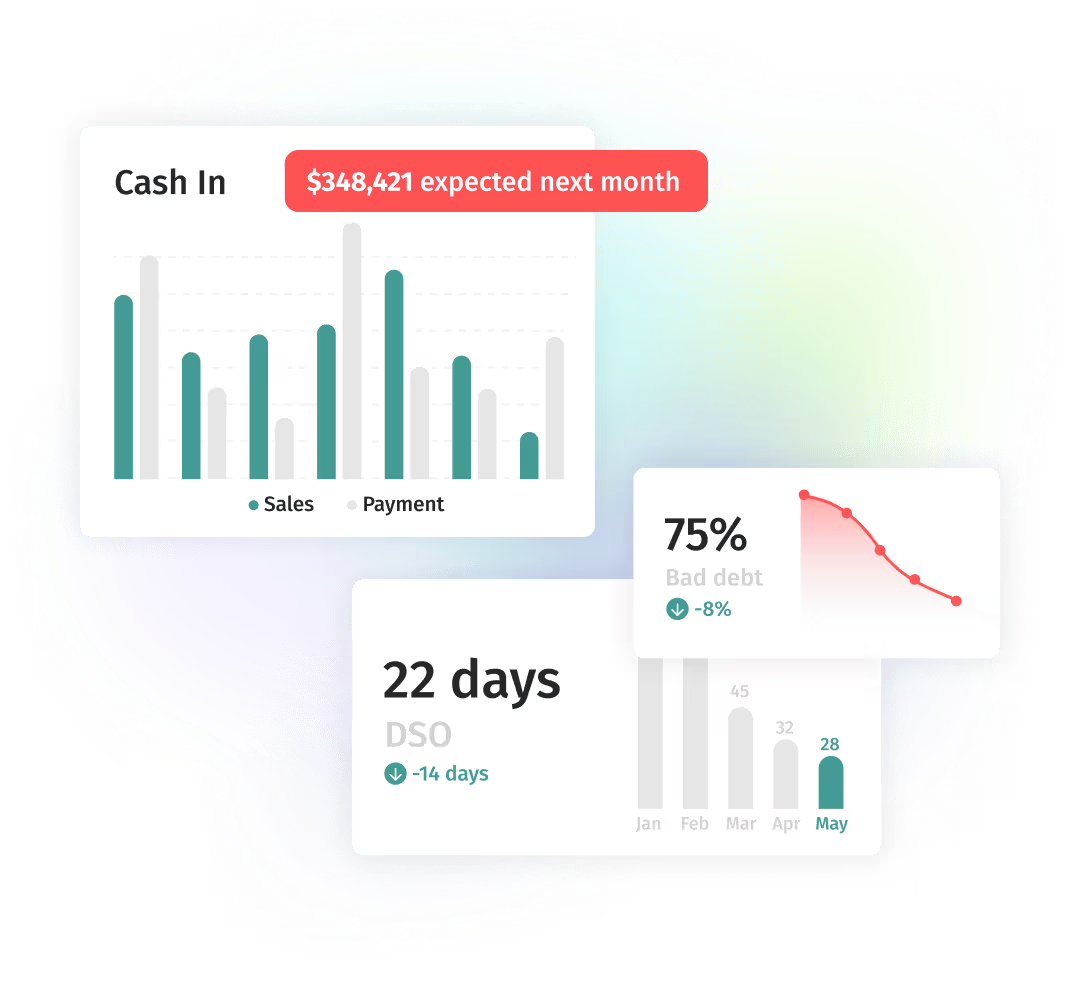
What is invoice reconciliation automation?
Invoice reconciliation automation is the use of software to match invoices against payments, purchase orders and bank records automatically, flagging only the mismatches for a person to review. Instead of someone ticking off line items by hand, the software compares the figures, confirms the ones that agree, and surfaces the exceptions that do not. The result is a ledger that stays accurate with far less manual effort.
Reconciliation is the routine check that the money you recorded and the money that actually moved line up. Done manually, it is slow, repetitive and easy to get wrong, especially at volume. Automating it does not change what reconciliation is for; it changes how much of it a human has to touch. The same matching and the same checks happen, but the software handles the high-volume, rules-based part and leaves people to deal with the genuine queries.
Software does the matching.Invoices are compared to payments, purchase orders and bank records automatically.
People handle exceptions only.Confident matches post on their own; just the mismatches go to a human.
Fewer errors, faster books.The same checks run every time, so the ledger stays accurate at any volume.
What invoice reconciliation automation does
At its core, the software takes over the repetitive comparison work that reconciliation is made of. These are the steps that eat hours and cause most of the mistakes when done by hand, which is exactly why they suit automation.
Match payments to invoicesTies each incoming or outgoing payment to the invoice it settles, even when references are missing.
Compare against the bank feedChecks recorded transactions against what actually cleared the bank, so the books match reality.
Flag discrepanciesHighlights short payments, duplicates and amounts that do not agree, instead of letting them slip through.
Route exceptions to a personSends only the cases that need a judgment call to the finance team, with the context attached.
Post confident matchesUpdates the ledger automatically where the match is clear, keeping the books current.
Keep an audit trailRecords every match and correction, so the history is there when an auditor or a colleague asks.
The thread through all of these is that they are rules-based comparisons, which is what software does reliably and a tired person does not. In accounts receivable, this overlaps closely with automated receivables matching, the engine that ties each customer payment to its open invoice. Tying reconciliation into your accounting system, whether that is QuickBooks or another ledger, means matched data flows straight to the books rather than being rekeyed.
Manual vs automated reconciliation
Manual reconciliation relies on a person comparing records by hand at set times, while automated reconciliation runs the comparison continuously and asks for a human only on the exceptions. The difference is not the goal but the effort and the speed, and at any real volume the two pull apart quickly.
| Aspect | Manual reconciliation | Automated reconciliation |
|---|---|---|
| Effort | A person checks every line by hand. | Software checks every line; people see exceptions only. |
| Speed | Slow, and slower as volume grows. | Near instant, regardless of volume. |
| Errors | Tired eyes miss mismatches and duplicates. | The same checks run every time, so misses are rare. |
| Timing | Often saved up for month-end. | Can run continuously, keeping the ledger current. |
| Audit trail | Depends on notes and memory. | Every match and correction is logged automatically. |
For a business handling a handful of transactions a month, manual reconciliation is perfectly workable. The case for automating grows with volume: once you are matching hundreds or thousands of payments, the manual approach becomes both a time sink and a reliability risk. This is the same logic behind continuous reconciliation, where the matching runs as transactions happen rather than piling up for a single end-of-period push.
Why invoice reconciliation automation matters
The payoff shows up in four places, and they reinforce each other: cleaner numbers, time saved, better cash visibility, and stronger control.
Duplicates, short payments and wrong amounts get caught by the same checks every time, rather than depending on whoever is reconciling that day.
Finance stops ticking off line items and spends its time on the exceptions and the judgment calls that actually need a person.
Because payments are matched as they arrive, you can see what is collected and what is still outstanding on any given day.
An automatic audit trail and consistent checks make discrepancies easier to explain and fraud or duplicates easier to catch early.
There is a collections angle too. When cash is applied promptly and accurately, your aged debtors report is trustworthy, so you never chase a customer who has already paid. That accuracy feeds straight into a lower days sales outstanding, because effort goes to the accounts that genuinely owe rather than to phantom overdue balances created by slow reconciliation.
How it works in practice
In accounts receivable, invoice reconciliation automation usually rides on a live connection to your bank and your ledger. Payments arrive through a bank feed, a matching engine ties each one to its open invoice using references and rules, and confident matches post straight to the books. Only the unclear cases, a payment with no obvious invoice or an amount that does not add up, are routed to a person. Because the loop runs constantly rather than at month-end, reconciliation never builds into a backlog, and the ledger stays close to current. This is the same engine that underpins broader AR automation: hand the repetitive matching to software, and keep people for the decisions that need judgment. Reconciliation that posts cleanly also keeps the wider ledger reconciliation honest, because the receivables side is the highest-volume, most error-prone area to keep matched.