


An invoice escalation ladder is a pre-agreed sequence that fires as an invoice ages: reminders in the first 30 days, statements and late fees by 60, and a final demand plus a decision (payment plan, collections, or write-off) by 90.
Here is the pattern I see in thousands of Xero and QuickBooks businesses. An invoice goes overdue. Nobody wants to be the bad guy, so the reminder waits. It waits until the cash gets tight, or until that customer does something else irritating, and then a sharp email goes out at day 52 that would have been better as a calm one at day 7. The problem was never the customer. It was that escalation depended on a mood.
A ladder takes the decision out of your hands. Each rung has a day number attached, and it fires whether you are busy, on leave, or feeling generous that week. That consistency is the whole point: it is also fairer to the customer, because everyone is treated the same and nobody gets surprised by a demand that jumped three steps because you happened to be short that month.
The numbers back it up. Across our customers, overdue invoices drop by 70% in the first 30 days once a scheduled ladder is running, and finance teams cut manual chasing by up to 90%. Not because the messages are cleverer, but because they go out on time, every time, without anyone having to work up the nerve.
The escalation ladder, by invoice age
The invoice goes out with a due date, a late-fee clause, and a payment link. Nothing to escalate yet, but every rung above depends on this being unambiguous.
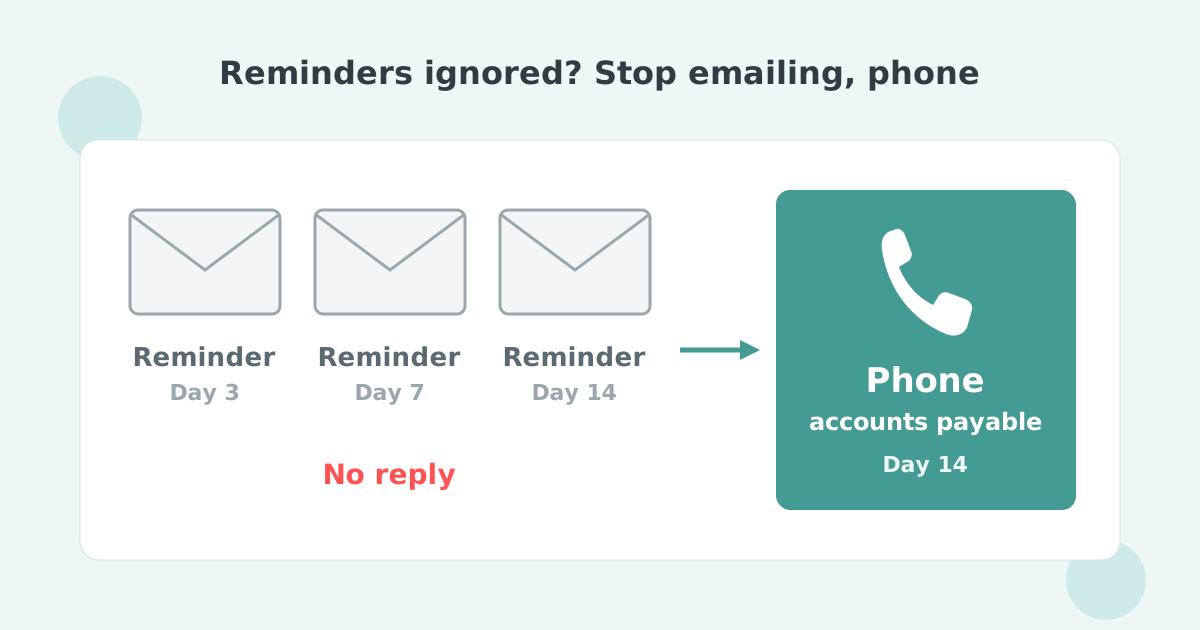
AutomatedA pre-due nudge, a polite reminder the day it falls overdue, then firmer follow-ups at roughly day 7 and day 14. SMS lands where email gets buried. Most invoices clear here.
AutomatedSend a full account statement, apply the late fee or interest you set out in your terms, and add a phone touch. An AI phone call can make that touch at scale without a person dialing.
AutomatedA factual final notice stating the next concrete step, paired with an off-ramp: a payment plan for a customer who wants to pay but cannot pay in full today.
AutomatedThe account has aged past the automated rungs. Now a human decides: send a letter before action, hand it to a collections partner, or write it off. This call is yours to make.
Human decisionThe first 30 days are for reminders. A nudge before the due date, a friendly note the day it goes overdue, then a firmer follow-up around day 7 and day 14. Vary the channel so it does not become wallpaper: email for the paper trail, SMS for the ones who never open email. Eight in ten invoices get paid on time when this runs consistently, so by day 30 you are dealing with the genuine stragglers.
At the 30-day mark, the message changes from "have you seen this?" to "this now has a cost." Send a statement that shows every open invoice in one place, because a customer running late on one is often late on several. Apply the late fee or interest your terms allow, automatically, so it does not depend on you feeling brave. And make it human once: a short call, or an AI phone call that reaches everyone at this rung without your team picking up the phone.
Sixty days is where a lot of businesses freeze. The relationship feels strained, so the invoice drifts. Do not let it. A final demand at this stage is not a threat, it is information: it states the amount, the fees applied, and exactly what happens next if the account is not settled by a specific date.
The move that separates firm from cold is offering an off-ramp at the same time. Some customers are late because they are disorganized. Others are late because cash is genuinely tight, and for them a demand alone gets you nothing. A payment plan turns a stuck balance into scheduled installments you can actually collect. Firm on the money, fair to the customer: you still expect to be paid, you are just giving a workable way to do it.
By 90 days the automated ladder has done its job. The reminders went out, the fees applied, the final demand landed, the payment plan was offered. If the invoice is still open, more of the same will not move it. This is the point the whole ladder was built to reach cleanly, with a full documented trail behind you.
You have three options. Send a formal letter of demand (letter before action) as a last step before legal proceedings. Hand the debt to a collections partner. Or write it off and stop spending time on it. There is no automating this decision, and you should not try to, because the right answer depends on the customer, the amount, and whether the relationship is worth keeping. Paidnice gets you to day 90 with everything in order. The choice at day 90 is yours.
Illustrative policy template. Adjust the day numbers to your terms and cash-flow needs.
If the customer has stopped responding, see Your customer is ignoring invoice reminders: what to do next.
I have watched businesses bolt an escalation sequence onto payment terms that read "payment due on receipt" with no fee clause and no defined due date. The ladder fires, the customer replies "we always pay net 60," and the whole thing collapses into a negotiation. The automation was never the weak link. The terms were.
So fix the terms first. Put a specific due date on every invoice. State the late fee or interest rate in writing, and keep it within what the law allows in your market. Make the payment method obvious. Once the terms are clear and agreed, the ladder has something solid to enforce, and each rung stops being a debate. For the full workflow around who owns each step and how it fits your wider process, see our accounts receivable collections process guide. This post is the day-by-day ladder; that one is the process around it.
Paidnice closes the gap between invoice and payment by making the ladder run itself. You set the days and the rules once. Reminders go out by email and SMS from your own domain, statements send on time, late fees and interest apply automatically, and an AI phone call can make the human touch at day 30 without your team dialing. Payment plans are offered before things get tense. Contact groups mean a VIP gets a gentle nudge while a repeat late payer gets the full sequence, so you are firm where it counts and fair where it matters.
Where Paidnice stops is the day-90 decision. Collections, legal action, and write-offs are judgment calls that belong to a person who knows the customer, and we do not pretend otherwise. See how escalation workflows work, or read how we built escalation triggers. Customers cut their average wait for payment in half within 30 days once the ladder is running.
Escalate on a fixed schedule tied to invoice age, not on how you feel. Reminders run in the first 30 days, consequences (a statement plus late fees or interest) start at day 30, a final demand and payment-plan offer go out around day 60, and a human decision follows at day 90. Setting the days in advance means escalation happens consistently instead of only when an invoice finally annoys you.
Consider a collections partner at 90 days overdue, once the automated ladder has run its course: reminders sent, late fees applied, a final demand issued, and a payment plan offered and declined. Collections is one of three choices at that point, alongside a letter before action or a write-off, and it is a human decision that depends on the amount, the customer, and whether the relationship is worth keeping.
Do both, in order. Late fees should apply automatically at day 30 as set out in your terms, so the consequence is consistent and not personal. A phone call works best as a human touch at the same stage, either from your team or as an AI phone call at scale. The fee makes lateness cost something; the call gives the customer a chance to explain and pay.
Three to four reminders across the first 30 days is a sensible default: a pre-due nudge, a note on the due date, and firmer follow-ups around day 7 and day 14. Vary the channel between email and SMS so the messages do not blur together. If the invoice is still open after 30 days, stop reminding and move to consequences: a statement, late fees, and a call.
Paidnice automates rungs 1 to 4: reminders by email and SMS, statements, late fees and interest, AI phone calls, and payment-plan offers, all on a schedule you set once on top of Xero or QuickBooks. The day-90 decision (a letter before action, collections, or a write-off) stays a human call, because that judgment depends on the customer and the amount.
Paidnice is accounts receivable automation that enforces your payment terms, trusted by thousands of businesses on Xero and QuickBooks. Credit control and debtor management, run for you.
Try it Now - It's FreeNo card required.


Optimize your cash flow with our suite of financial tools designed for AR professionals. Calculate DSO, aging analysis, late fees, and more.