
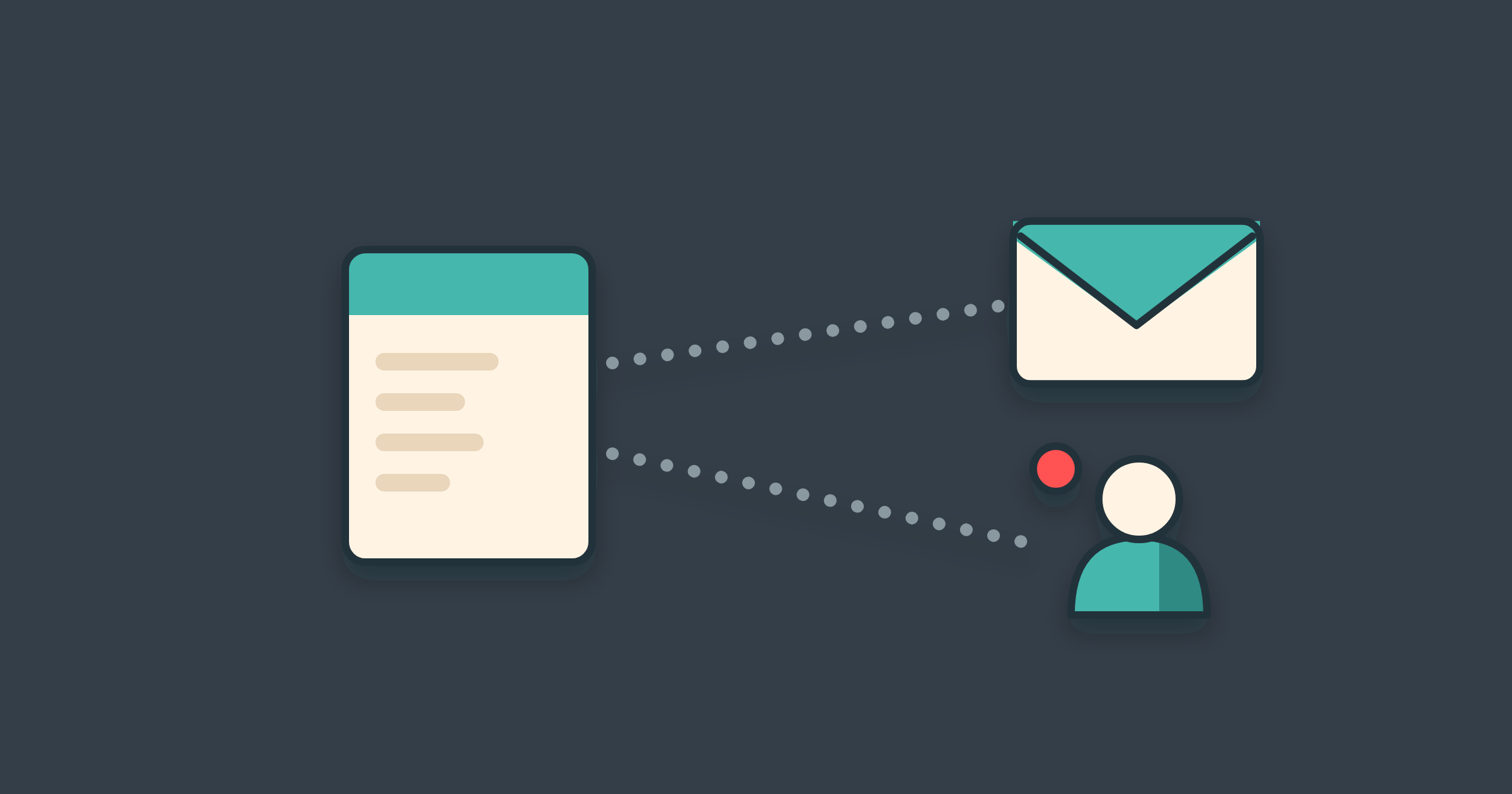

Neither Xero nor QuickBooks Online can escalate an overdue invoice beyond repeating the same email reminder. Changing the action as an invoice ages (SMS, statements, late fees, team tasks, final notices) needs a connected AR app.
Xero has invoice reminders. QuickBooks Online has automatic reminders and, in some regions, reminder sequences. Both are useful, and if you are sending nothing today, turn them on first. But look closely at what they do: a reminder goes out at, say, 7 days overdue, then again at 14, then again at 30. Same tone. Same email address. Same nudge, three times.
That is a reminder loop, not an escalation. Escalation is the part your credit controller does by hand today: at 30 days they add a late fee, at 45 they draft a final notice, and when a big customer's balance gets uncomfortable they walk over to sales and ask them to hold the next order. The accounting platform has no concept of any of that. It cannot add a fee, send an SMS, create a task for a person, or notify an owner. So the escalation stays manual, which means it happens late, unevenly, or not at all.
To automate it you connect an accounts receivable layer on top of Xero or QuickBooks. Paidnice reads your invoices and contacts from the ledger and runs the rules the ledger cannot. We built the escalation triggers for exactly this gap between a repeating reminder and a real, aging process.
Every trigger reads the same way: when this is true, do that. The condition is something Paidnice can see in the ledger, for example days overdue, the customer's total overdue balance, the contact group they belong to, or whether the last reminder was opened. The action is something Paidnice can do: send an email or SMS, apply a late fee, generate a statement, create a task for a named team member, or draft a final notice for a person to approve.
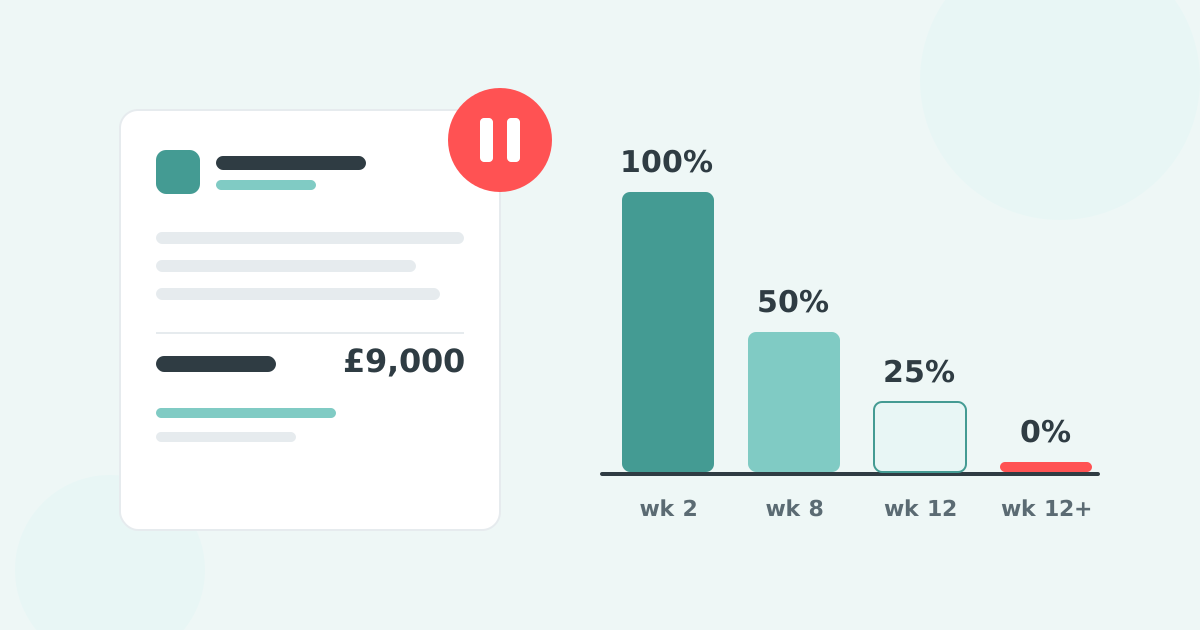
The difference between a reminder and an escalation is that the action escalates. A first reminder is a friendly note. A second is a firmer note plus a late fee. A third routes to SMS because email is being ignored. A fourth creates a task for a human and drafts a final notice. Each step is a separate trigger, and together they form a ladder. If you want the full progression written out, we cover it in the invoice escalation ladder.
Triggers also route by who the customer is, not just how late they are. A VIP on a contact group gets a gentle nudge and never an automated fee. A repeat late payer gets the full ladder. That is the "firm on the money, fair to the customer" part, and it is the reason a flat reminder schedule feels blunt: it treats your best account and your worst account exactly the same.
Feature pages tell you triggers exist. They rarely tell you which ones to build. Here are three we run and recommend, written the way you would set them up. Two of them touch a customer relationship, so both carry an approval step. More on why below.
The notice is written and queued, but a person clicks send. Nothing leaves the building until someone confirms this is the right account.
Credit risk climbs with the balance, not the calendar. This catches the customer who is current on old invoices but stacking up new ones.
A text is harder to miss than a fourth email in a full inbox. Safe to run without a gate: it is the same message on a louder channel. SMS is US$0.10 per message.
Set the balance threshold in recipe 2 to a number that would actually worry you, not a round default. For a business doing $1M to $10M a year, a customer sitting past $8,000 overdue is a different conversation than one past $400. And keep recipe 3 for customers who are ignoring you, not customers who are simply slow. A contact group of reliable payers should never get bumped to SMS for being a few days late.
The setup is a builder, not a script. You pick a condition from what the ledger knows, pick an action, and decide whether it runs on its own or waits for a person. Here is what the escalation trigger builder looks like for recipe 1.
Escalation trigger
Final notice at 45 days · applies to: Repeat late payers
When
Then
The order of operations is worth getting right. Connect the ledger first, so Paidnice can read live invoice and contact data. Then set up your overdue alerts and contact groups, because routing is what keeps the ladder fair. Only then build the triggers. Start with the reminders and the SMS switch, which are safe to run automatically, and leave the final notice and the order hold gated until you trust the data. A couple of payment features vary by platform, so if you are on QuickBooks rather than Xero, check availability before you rely on a specific action.
I will be straight about this, because we learned it the slow way. If you fully automate the top of the ladder, the math is not on your side. Run a final-notice trigger across a few thousand invoices a month and the day will come when it fires on a customer who paid yesterday, or who has a legitimate dispute open, or who is your single biggest account having one bad month. The trigger was technically correct. The outcome still costs you the relationship.
The fix is not to slow the automation down. It is to split the ladder. The routine steps (reminders, a standard late fee, a channel switch) run on their own because the cost of a mistake is low. The sharp steps get drafted automatically and then wait. Paidnice writes the final notice, queues the order hold, and a person spends ten seconds confirming it is the right call before it goes out. You keep the speed on the safe 90% and the judgment on the risky 10%. We wrote up how the approval step works in pre-approve draft actions.
This is the whole reason Safe Mode exists in the product. New triggers draft their actions without sending, so you can watch a week of real invoices flow through the rules and see exactly what would have gone out before you let anything go live.
The wrong metric is how many reminders you sent. That measures noise. Watch three things instead.
First, days to payment. Across our customers, the average wait for payment gets cut in half within 30 days of turning the system on, so you should see the gap between invoice date and paid date shrink month over month. Second, overdue balance recovered: track the dollars sitting past due before and after, and the share of them that comes in without a human touching it. Customers cut overdue invoices by 70% in their first 30 days, and manual follow-up drops by up to 90%, which frees your AR person for the accounts that genuinely need a call. Third, and least obvious, count how often the sharp triggers fire. If final notices and order holds trend down over a quarter, escalation is doing its job upstream: customers are paying at the reminder and late-fee stage, before it ever gets tense.
No. Xero reminders send the same email on a schedule. Xero cannot change the action, add a late fee, switch to SMS, or create a task for a person as an invoice ages, so escalation needs a connected accounts receivable app on top of Xero.
QuickBooks Online has automatic reminders, and in some regions reminder sequences, but every step is the same reminder email to the same contact. It has no built-in way to escalate the action or route by customer, which is the part a connected AR app handles.
An escalation trigger is a rule with two halves: a condition that describes an invoice or customer, and an action that fires when the condition becomes true. When the action changes as the condition sharpens, for example days overdue rising from 30 to 45, you have escalation rather than a repeating reminder.
Route by customer group so VIPs get a gentle nudge and repeat late payers get the full ladder, and put a draft-and-approve gate on the sharp actions. Paidnice drafts final notices and order holds, then waits for a person to confirm before sending.
Start with a final notice at 45 days that creates a task and drafts the notice for approval, an order hold when a customer's overdue balance crosses your threshold, and a switch to SMS after the second reminder is ignored. The first two carry an approval step; the SMS switch is safe to run automatically.
SMS reminders start at US$0.10 per message, with pricing that varies by currency. Paidnice plans start at US$69 per month for Essentials, with no per-seat fees.
See how escalation triggers work →
Paidnice is accounts receivable automation that enforces your payment terms, trusted by thousands of businesses on Xero and QuickBooks. Credit control and debtor management, run for you.
Try it Now - It's FreeNo card required.

Optimize your cash flow with our suite of financial tools designed for AR professionals. Calculate DSO, aging analysis, late fees, and more.