
Module 3The receivables process6 min read
Credit control procedures: the UK process, and what the law gives you
A credit control process written for UK terms: the statutory interest you are entitled to without asking, the fixed compensation per invoice, the Fair Payment Code, and where credit control differs from collections.

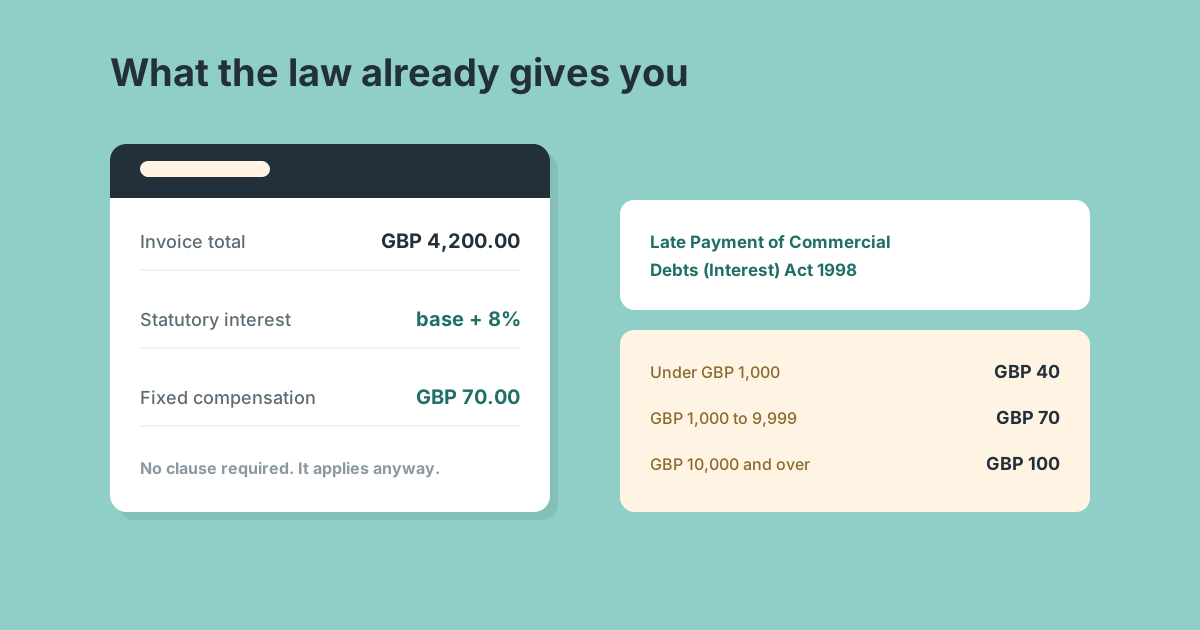
Credit control is the UK term for the whole discipline of getting paid: deciding who gets credit, setting the terms, and chasing what goes past them. The part that surprises people is how much the law already gives a UK business. Statutory interest and fixed compensation apply to a late commercial invoice automatically, whether or not the contract mentions them.
Key takeaways
You do not need a clause to charge interest. The Late Payment of Commercial Debts (Interest) Act 1998 applies even when the contract is silent.
The rate is Bank of England base plus 8%, currently 11.75%, and it is fixed for six-month blocks.
There is fixed compensation per invoice too: £40, £70 or £100 depending on the amount owed.
Credit control is wider than collections. It starts before the invoice, at the decision to extend credit at all.
What the law gives you
Under the Late Payment of Commercial Debts (Interest) Act 1998, a UK business supplying another business has a statutory right to interest and compensation on a late payment. It is automatic. It does not need to be in your terms, and the customer cannot contract out of it unless they offer a substantial remedy instead.
| Entitlement | Amount |
|---|---|
| Statutory interest | Bank of England base rate plus 8%. With base at 3.75%, that is 11.75% |
| Fixed compensation, debt under £1,000 | £40 per invoice |
| Fixed compensation, £1,000 to £9,999.99 | £70 per invoice |
| Fixed compensation, £10,000 and over | £100 per invoice |
| Reasonable recovery costs | Claimable above the fixed sum where they exceed it |
Two details matter in practice. The rate is set in six-month blocks rather than moving daily, so an invoice spanning a rate change uses the correct rate for each period. And the compensation is per invoice, not per customer, which on a ledger of many small overdue invoices adds up faster than the interest does.
Charging it is a commercial decision, not a legal one
The entitlement exists. Whether to use it is a different question, and the honest answer for most clients is that the fee is leverage rather than income.
A late payment charge on the ledger changes the conversation from a favour to a term of business. Most customers who see one applied pay and ask for it to be waived, and a waiver granted once is a reasonable thing to trade for payment today. The value is in having a position, not in collecting the interest.
The voluntary code, and what replaced it
The Prompt Payment Code was replaced by the Fair Payment Code in January 2025, administered by the Office of the Small Business Commissioner. It is a voluntary standard with award tiers rather than a single signatory list.
Government has committed to legislation giving the Commissioner power to investigate and fine persistent late payers, tied to unpaid statutory interest liability. That is a commitment rather than an enacted law, so describe it as what it is.
Credit control is wider than chasing
| Stage | The question | When it happens |
|---|---|---|
| Credit assessment | Should this customer have terms at all? | Before the first invoice |
| Terms setting | How long, and what happens if they are missed? | At onboarding |
| Invoicing | Is it correct, and does it reach a person who can pay it? | On delivery |
| Collections | Who is chased, when, and in what tone? | Through the cycle |
| Escalation | Credit hold, plan, referral or write-off? | At the decision point |
The chasing part is covered in detail in the collections process. What credit control adds at the front is the decision nobody makes deliberately: most small businesses extend credit to anyone who asks and discover the problem at day 60.
What Xero gives a UK business
Xero holds the invoice and shows an aged receivables report. It does not apply statutory interest, does not add the fixed compensation, and does not fire anything when an invoice passes its due date.
Applying the entitlement by hand means calculating base plus 8% across the right periods, adding the correct fixed sum per invoice, and raising it on the ledger so the customer's balance and your balance agree. That is doable once and tedious monthly, which is the case for automating it rather than a case for ignoring it.
💡 Paidnice insight
Paidnice indexes the UK statutory rate automatically, so a policy set once stays correct through base rate changes and applies the right rate to each period an invoice spans. Charges are raised on the ledger rather than tracked beside it, which means the balance in Xero and the balance the customer owes stay the same number. Customers cut their average wait for payment in half within 30 days.
Common questions
Can I charge interest on a late invoice in the UK?
Yes, on a commercial debt, automatically. The Late Payment of Commercial Debts (Interest) Act 1998 gives a statutory right to interest at base plus 8% and fixed compensation of £40 to £100, whether or not your contract mentions it.
What is the current statutory interest rate?
Bank of England base plus 8%. With base at 3.75%, the statutory rate is 11.75%. It is fixed for six-month blocks rather than changing daily.
What is the difference between credit control and collections?
Credit control is the whole discipline, including whether to extend credit in the first place. Collections is the chasing. In the UK they are used almost interchangeably. In the US "credit control" is rarely used at all, which is worth knowing if you are searching for guidance.
Is the Prompt Payment Code still running?
It was replaced by the Fair Payment Code in January 2025, run by the Office of the Small Business Commissioner. It remains voluntary, with award tiers rather than a single list of signatories.
Should I actually charge my customers interest?
Treat it as leverage rather than income. Having the entitlement on the ledger changes a request into a term of business, and waiving it in exchange for payment today is a trade most customers will take.
More in The receivables process
The accounts receivable process: the eight steps, and the five that actually decide whether you get paid
The full cycle, the formulas that measure it, the escalation ladder, and what you can legally charge in each market.
The collections process: a ladder you set once and stop improvising
The escalation ladder, the tone at each rung, and how to separate a late invoice from a disputed one.
The month-end close checklist, and where the two platforms leave you
The full close task list, close timing that is actually realistic, and the close-tracking feature Xero does not have.