Summary
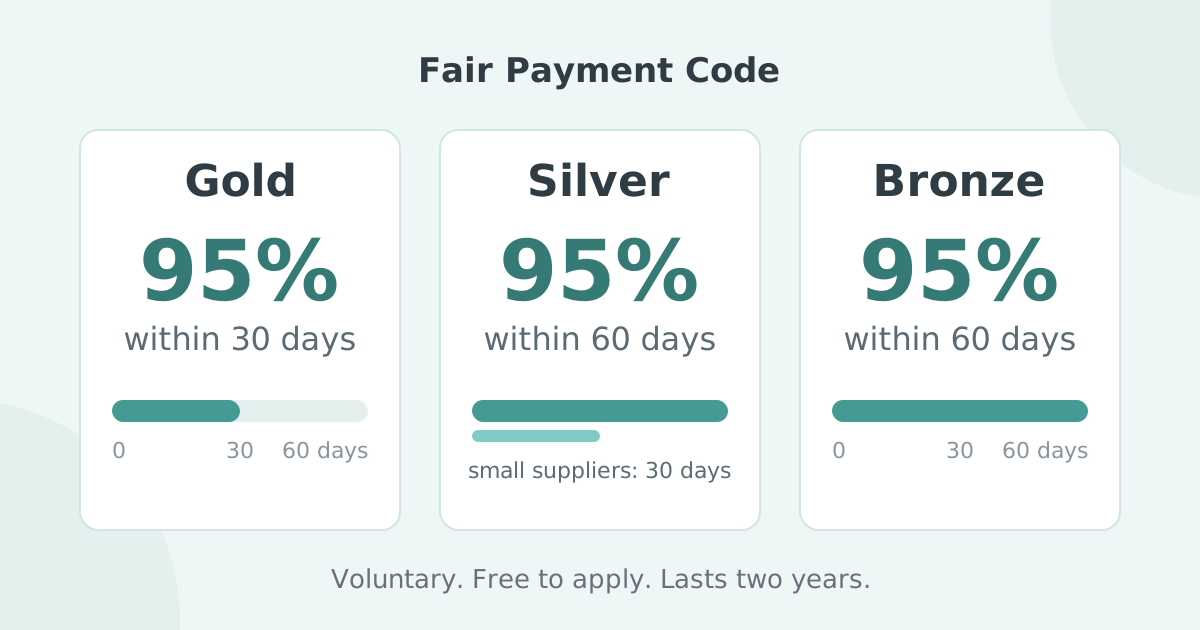
The Fair Payment Code is a voluntary UK award scheme, run by the Office of the Small Business Commissioner, for businesses that pay at least 95% of supplier invoices within 30 or 60 days. It replaced the Prompt Payment Code in December 2024 and awards Gold (95% of invoices paid within 30 days), Silver (95% within 60 days, small suppliers within 30) or Bronze (95% within 60 days). An award is free, lasts two years, and the Commissioner's homepage lists 791 awardees.
- The tiers: Gold is 95% of all invoices paid within 30 days, Bronze is 95% within 60 days, and Silver sits between them with a 30-day standard for suppliers with fewer than 50 employees.
- Not law: The Fair Payment Code is voluntary and carries no fines; a supplier's remedy when any customer pays late is statutory interest at 8% over the Bank of England base rate under the 1998 Act.
- For suppliers: Paidnice sends the reminders and statements and adds statutory interest to invoices a customer pays outside terms, whichever award that customer holds.
What is the Fair Payment Code?
The Fair Payment Code is a voluntary, tiered award scheme for UK businesses that pay their suppliers on time, administered by the Office of the Small Business Commissioner on behalf of the Department for Business and Trade. It opened in December 2024 and replaced the Prompt Payment Code.
A business applies for one of three awards: Gold for paying at least 95% of all invoices within 30 days, Silver for 95% within 60 days with small suppliers paid within 30, and Bronze for 95% within 60 days. Every awardee also commits to three principles: being Clear, Fair and Collaborative with suppliers.
Applying is free and an award lasts two years before the business must reapply. The code is not law and changes nothing about a supplier's rights: when a Gold, Silver or Bronze awardee pays late, statutory interest under the Late Payment of Commercial Debts (Interest) Act 1998 still applies.
What are the Gold, Silver and Bronze criteria?
The Gold, Silver and Bronze criteria are payment-speed standards set by the Small Business Commissioner: 95% of invoices within 30 days for Gold, 95% within 60 days for Bronze, and Silver between them with a small-supplier test.
| Award | Standard | Who it suits |
|---|---|---|
| Gold | At least 95% of all invoices paid within 30 days | Businesses already paying every supplier within 30 days |
| Silver | 95% in 60 days, and small suppliers in 30 days | Larger buyers on 60-day terms who pay small suppliers faster than the rest |
| Bronze | At least 95% of all invoices paid within 60 days | Businesses on standard 60-day terms with a reliable payment run |
The Commissioner states Silver two ways: the About page says 95% of all invoices within 60 days including 95% of small business invoices within 30 days, and the FAQ page says large suppliers within 60 days and small suppliers (fewer than 50 employees) within 30 days. The "Who it suits" column is Paidnice's reading, not Commissioner wording.
What has replaced the Prompt Payment Code?
The Fair Payment Code replaced the Prompt Payment Code in December 2024, and the government's prompt payment guidance calls it a voluntary code of practice for companies of any size.
The old Prompt Payment Code had one standard, set in its 2021 reform: 95% of invoices within 60 days, and 95% of small business invoices within 30 days. That Prompt Payment Code standard matches today's Silver tier. Gold adds a 30-day bar for every supplier; Bronze is the 60-day entry level.
The Fair Payment Code is run by the Small Business Commissioner's office, and the government announced in 2019 that the Prompt Payment Code would move to the Commissioner.
The Fair Payment Code is separate from the government's prompt payment policy, the 30-day rule public bodies must follow on their own contracts.
Is the Fair Payment Code mandatory?
The Fair Payment Code is not mandatory: it is a voluntary code, and holding or lacking an award has no legal effect and carries no fines. Claims that the code fines late payers or makes 30-day terms compulsory are wrong. Enforcement is a complaints process: an awardee that breaks its commitments can be investigated and removed from the code.
Two stronger rules get confused with the code:
- Payment practices reporting. Large companies must publish payment reports twice a year under the 2017 Regulations, including whether they sign a payment code. Failing to publish is a criminal offence.
- The Commercial Payments Bill. This proposed late payment law would let the Commissioner enforce the reporting duty and fine large businesses that breach it. The Bill is before Parliament and is not law.
How do you apply for the Fair Payment Code?
A business applies for the Fair Payment Code by emailing [email protected] to express interest, then supplying payment evidence for the tier it wants, following the Commissioner's application process. Eligibility has four conditions:
- A business of any size with a UK registered office.
- Not a local authority, NHS trust or government department: the Commissioner's FAQ lists these as ineligible. Universities, charities, community interest companies and co-operatives can apply.
- A company that must file payment practice reports and is behind on them is not eligible.
- Evidence that payment performance meets the Gold, Silver or Bronze standard: at least 6 months of payment data and at least 2 supply chain references, one from a supplier with fewer than 50 employees.
Applying is free, an award lasts two years, and the Commissioner's Fair Payment Code homepage lists 791 awardees.
Which tier would your own ledger meet?
A business can check which Fair Payment Code tier its own ledger would meet by working out the share of supplier bills paid within 30 and 60 days of receipt of the invoice, then comparing each share with the 95% bar. Receipt of the invoice is the start date the Commissioner's evidence rules use. Five steps:
- Export every supplier bill paid in the last 12 months, with the date you received the invoice and the payment date.
- Count the days from the date the invoice was received to the payment date on each bill.
- Work out the share paid within 30 days and the share paid within 60 days.
- Mark the bills from suppliers with fewer than 50 employees and work out their share paid within 30 days.
- Match the three percentages to the tiers: 95% within 30 is Gold; 95% within 60 plus 95% of small-supplier bills within 30 is Silver; 95% within 60 is Bronze.
Take a business that paid 400 bills in the year: 352 within 30 days (88%) and 388 within 60 days (97%). Of its 120 bills from small suppliers, 116 were paid within 30 days (96.7%).
The 88% misses Gold. The 97% clears Bronze, and the 96.7% on small-supplier bills lifts it to Silver. Gold would need 380 bills inside 30 days, so 28 more.
The Fair Payment Code tier checker below shows which award a supplier's own ledger would meet against the 95% bars for 30 and 60 days. The result names the highest tier the counts clear and the extra on-time bills the next tier needs; the Commissioner's evidence review decides the award.
Fair Payment Code tier checker
Enter the counts from step 3 and step 4 for the last 12 months. The checker matches them to the Gold, Silver and Bronze standards and shows how many more on-time bills the next tier needs.
Small-supplier bills (suppliers with fewer than 50 employees). Optional: Silver needs these counts.
This check counts from receipt of the invoice, which is how the Commissioner's evidence rules measure it. It is a guide: an application also needs at least 6 months of payment data and at least 2 supply chain references, and the Commissioner confirms the evidence it needs.
What does the Fair Payment Code mean for suppliers?
For a supplier, a customer's Fair Payment Code award is a published promise about payment speed to hold against the customer's actual behaviour, and the legal remedy for late payment is unchanged. A supplier can use a customer's award in three ways:
- When you set terms. Ask whether the customer holds an award and at which tier. A Gold awardee has committed to paying 95% of invoices within 30 days, so agreeing to 60 gives away a month. For large customers, read their payment practice reports: average days to pay and the share paid within 30, 60 and over 60 days.
- In your reminders. A line such as "Your business holds a Silver Fair Payment Code award, which commits you to paying small suppliers within 30 days. This invoice is now 12 days past 30 days" is factual and hard to ignore.
- When a pattern of late payment shows. If a customer holding an award keeps paying outside its tier, you can report it to the Commissioner, which runs the complaints process. Awardees that fail their commitments can be investigated and removed from the code.
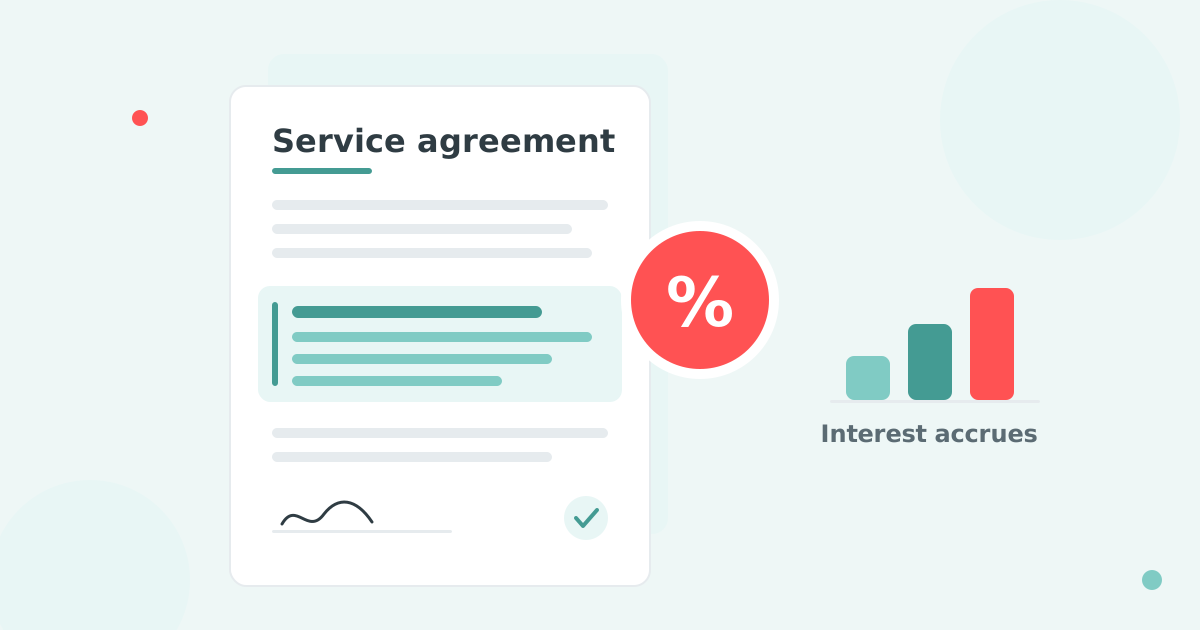
The Fair Payment Code does not change a supplier's legal position. Under the Late Payment of Commercial Debts (Interest) Act 1998, every overdue business invoice carries statutory interest at 8% over the Bank of England base rate, 11.75% for invoices that fall overdue in 2026 (8% plus the 3.75% reference rate set on 31 December 2025 and 30 June 2026), plus a fixed sum of £40, £70 or £100 by invoice size.
The UK late payment fees guide covers the calculation.
Statutory interest and the fixed sum are late fees with the law behind them; a customer prioritises an invoice that costs money to ignore. The cost of late payments to a small business shows what is at stake.
How Paidnice does this, and how simple it is
Paidnice helps a supplier hold customers to their payment terms, whichever award they hold: reminders and statements for every customer, and statutory interest on the ones that pay outside terms, from your Xero organisation or QuickBooks Online.
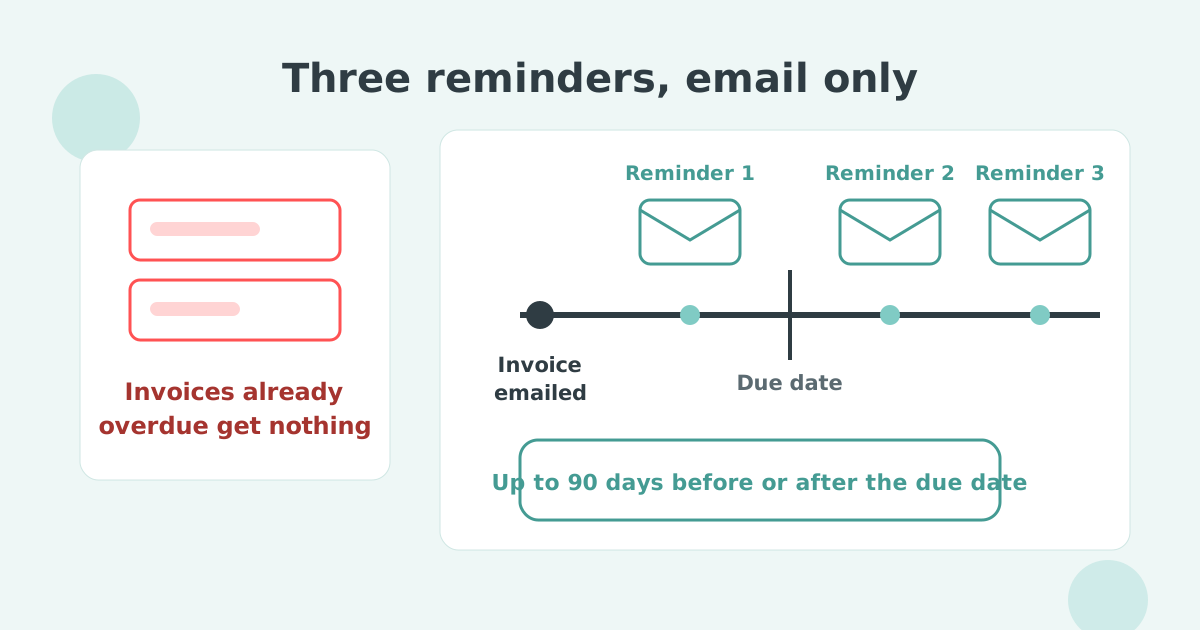
- Reminders and statements run on a schedule, before and after the due date, so an awardee hears from you at day 30 without anyone drafting an email.
- The Bank of England toggle applies 8% over base, locked for each six-month period as the law sets it, or following the rate as it changes.
- A fixed amount line adds the £40, £70 or £100 compensation on each overdue invoice, with its own description and income account.
- Each customer group runs its own policy. Gold awardees can get reminders and statements only; late payers get statement interest, raised as Draft or Approved on the ledger.
Setting it up takes a connection to Xero or QuickBooks, one customer group and one policy. Paidnice customers cut their average wait for payment in half within 30 days. Try Paidnice free, no card needed, or read the manual route in late payment fees in Xero.
Common questions
What is a payment code?
A payment code is a voluntary set of commitments a business makes about how quickly and fairly it pays suppliers. The UK's current one is the Fair Payment Code.
Does the Fair Payment Code apply to the NHS or local councils?
No. Local authorities, NHS trusts and government departments are not eligible. Their payment duties come from the Procurement Act 2023 and the government's prompt payment policy.
Can a supplier charge interest to a Fair Payment Code awardee?
Yes. Statutory interest at 8% over base rate, plus the fixed sum, applies to any overdue business invoice whatever award the customer holds. The late payment interest calculator gives the figure.

Stop chasing invoices.
Start getting paid.
Paidnice is accounts receivable automation that enforces your payment terms, trusted by thousands of businesses on Xero and QuickBooks. Credit control and debtor management, run for you.
Try it Now - It's FreeNo card required.