
"People don't like asking for money," observes Lani Fogelberg, and this simple truth lies at the heart of many businesses' cash flow challenges.
As a management and strategy consultant based in Auckland, Lani has seen firsthand how fear holds businesses back from implementing effective payment collection processes.
But Lani challenges us to think, what if that fear is costing you more than you realize?
In this illuminating conversation from our Ask an Expert series, Lani shares powerful insights about overcoming the psychological barriers to effective accounts receivable management, and why being assertive about payments isn't just okay – it's essential for business survival.
Listen to the full conversation below:
The Fear Factor in Collections
"There's definitely an element of fear," Lani explains, addressing why businesses often struggle with payment collection. "Business owners can freak out about placing expectations on their clients because they worry about how it's going to impact the client relationship."
But this fear often stems from a misconception.
Lani points out a simple truth that many business owners overlook: "Pretty much every bill we pay as a responsible adult has a late fee on it. Power bills, water bills, rates bills – if you pay your mortgage late, boom, penalty interest."
This perspective shift is crucial.
Late fees aren't an unusual punishment; they're a standard business practice that customers encounter in their daily lives.
Setting Expectations from Day One
The key to confident collections starts long before any payment is due. "It really starts with how your clients engage at the very beginning," Lani emphasizes.
"You can set up all the different automations and workflows down the track to try and collect your invoices, but if you haven't managed clients' expectations well at the beginning of the relationship, that's actually going to be harder down the track."
Lani recommends being crystal clear about these three things from the start:
- How clients can pay you.
- When you expect them to be paid.
- What happens if they don't pay.
The Numbers That Build Confidence
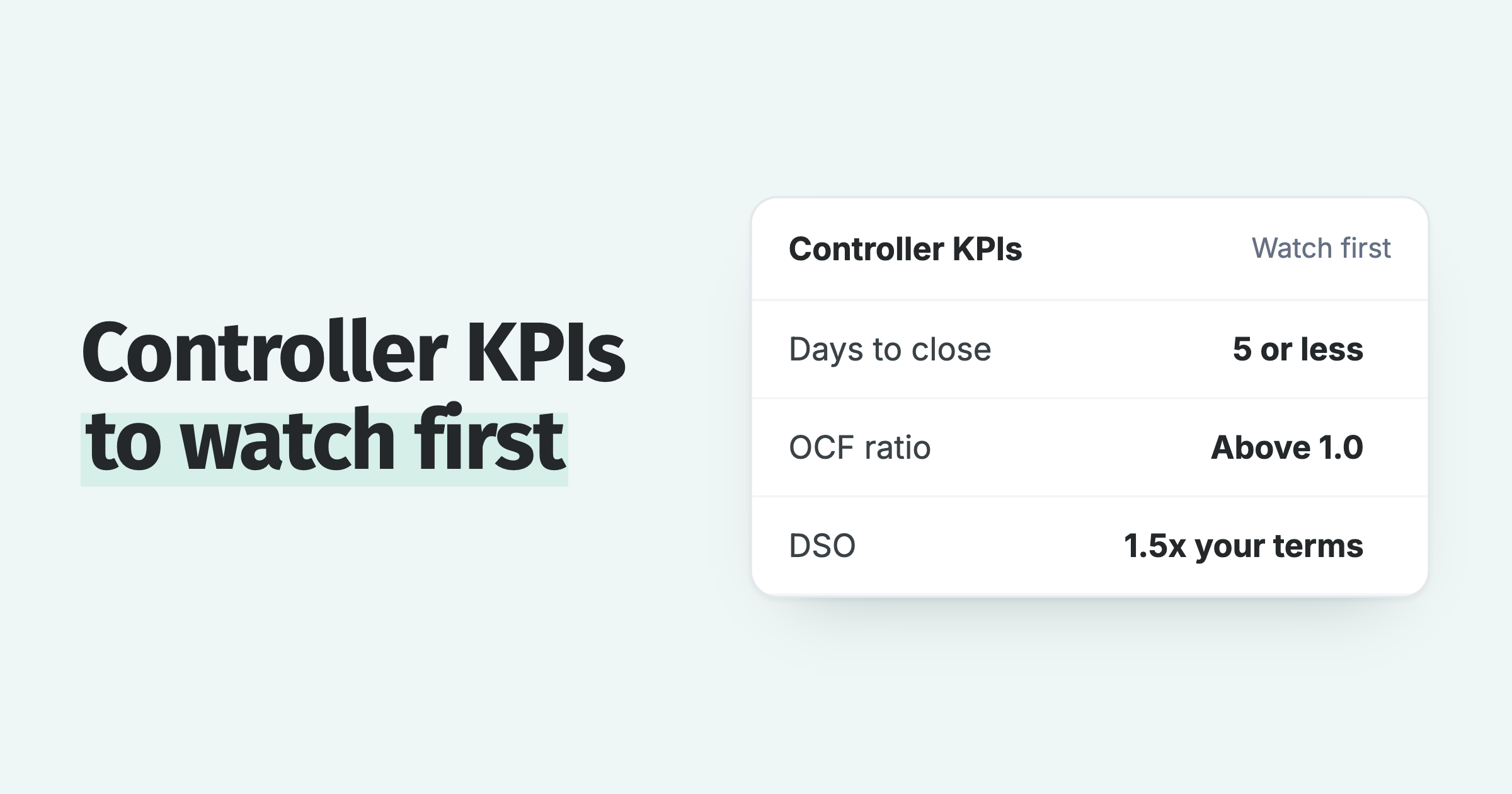
For businesses ready to take control of their collections, Lani shares her favorite AR metric: the percentage of monthly turnover sitting in overdue invoices.
"If you've got half of your monthly turnover sitting there as overdue invoices, straight away you've probably got a cash flow problem," she explains.
Her target? Under 5% of monthly turnover in overdue invoices.
One of her clients achieved dramatic results, reducing their overdue payments from over 30% to under 10% of monthly turnover in less than six months by implementing consistent processes and automation.
Breaking Free Through Automation
One of the most powerful ways to overcome collection fear is to remove the emotional burden through automation.
Lani shares a compelling insight: "Something as simple as a different voice on the end of the phone asking for the bill to be paid can be really powerful."
This is where automation tools come in. "I think one of the biggest changes that we see is that they feel such a sense of relief because they don't have to think about this anymore," Lani notes.
Business owners are often surprised to discover that clients don't react negatively to automated reminders and late fees – they just pay.
Taking Action with Confidence
When it comes to structuring payment terms and late fees, Lani emphasizes the importance of understanding your business context:
- How often do you charge clients?
- What are your typical invoice amounts?
- What payment methods do your clients prefer?
"The objective for setting late fees isn't to generate revenue, it's to generate cash flow," she reminds us.
This perspective helps frame late fees as a tool for maintaining healthy business operations rather than punishing clients.
The Final Word
Lani's message to business owners is clear: "Be confident enough to do something about it. A lot of people just avoid looking at it because it's a bit scary or they don't necessarily understand the impact that it's having on their business."
The fear of damaging client relationships by enforcing payment terms is almost always unfounded.
By setting clear expectations, implementing consistent processes, and using automation tools, businesses can break free from collection fear and build stronger, more professional client relationships.
Don't let fear hold your business back. As Lani shows us, the path to better cash flow starts with the confidence to take action.
Lani Fogelberg is a management and strategy consultant based in Auckland, New Zealand. Her expertise spans various aspects of business strategy, including finance, HR, sales, client management, and operations.
Read the transcript: Lani Fogelberg on Why Fear Shouldn't Drive Your Payment Collection Strategy
Welcome to the first edition of our Ask the Expert series for Paidnice. I'm Denym Bird, co-founder of Paidnice, and we're passionate about helping businesses take control of their accounts receivable and improve their cash flow. Our guest today is Lonnie Fogelberg, a highly accomplished management and strategy consultant based in Auckland, New Zealand. Lonnie's expertise spans various aspects of business strategy, including finance, HR, sales, client management and operations. In this conversation, Lonnie shares invaluable insights into accounts receivable processes, a critical yet often overlooked aspect of maintaining a healthy business. She explores best practices, common pitfalls and practical tools that can make a world of difference when it comes to streamlining collections and improving your cash flow. I'm thrilled to have Lonnie join us for this conversation, and I hope that you find it as insightful and as actionable as I did. Let's dive in.
There are a few best practices that businesses can turn to when they're looking at improving their accounts receivable processes. And for all businesses, it really starts with how your clients are engaged at the very beginning. You can set up all of the different automations and workflows down the track to try and collect your invoices, but if you haven't managed clients' expectations well at the beginning of the relationship, that's actually going to be harder down the track. So I always say, start with the way that you onboard your clients and set your expectations about how you collect payment, when you collect payment, and what will happen if they don't pay.
So what specific onboarding practices have you seen work particularly well for managing client expectations early on?
I think some of the biggest mistakes that people make when looking at their finances and accounts receivables is probably not taking the collection of their payments seriously enough. And it can be really hard for business newcomers in particular, because that requires a certain level of assertion, and it requires a certain amount of boundary setting and enforcing expectations, and that can be really hard. I think it starts definitely with managing clients' expectations at the beginning, and making sure that they know how to pay you, when you expect them to pay you, and what's going to happen if they don't pay you. For a start, and then also making sure that you've got some pretty slick processes in place so that they receive the bills that they're expecting from you, your invoices, on time, when they expect them, for the amounts that they're expecting. And if there are going to be any anomalies, to set their expectations around that so that they don't get any surprises. One of the first reasons people don't pay, obviously, is because there's something that they don't expect.
There can be a lot of challenges when it comes to accounts receivable.
I think, one, there's definitely an element of fear, right? Because it's people don't like asking people for money. I don't want to talk about the current environment in New Zealand specifically, but this year I have seen a lot of kind of downstream impacts from large organizations not paying their suppliers on time, and that subsequently creating a ripple effect, but often starting with those large companies. And I don't know what's driven that, but I've seen a real uptick in that this year. So I think it's something to be mindful of in terms of who you're selling to, and making sure that you keep a diverse customer base.
So again, rather than thinking about your collections later on, what can you actually do upfront as a business owner to reduce your risk of ticking up a re on your accounts receivables? That's such a powerful point. How much of this comes down to setting clear expectations and addressing issues proactively rather than reactively? And it's easy to see how fear or discomfort around discussing payments can cause problems, especially for small businesses. You mentioned the importance of managing expectations at the start of the relationship, but beyond that, are there ways businesses can get creative with their pricing or terms to make it even easier for clients to pay them on time?
There's a couple of different things you can do. First, you can look at your pricing and the way that you collect money upfront. Is there a way that you can make it easier for customers to pay you? Do you sell the kinds of things that people might pay for on a credit card, because you're not charging them $50,000, you're charging them $200, for example, or $5,000? So is there a way that you can set up either credit card payments or subscription payments, because your clients are paying you on a recurring basis? When pricing your products and services, can you build into your pricing the ability to offer a prompt payment discount, so that you're not actually cutting your own revenue by 10%, so to speak, but you've got a little bit of margin there so that you can offer that as an encouragement for people to pay on time? Even my accountant does that. My accountant offers a 10% prompt payment discount if you pay on or before the due date. If accountants are doing it, it can't be that bad, right? I think the other thing as well is having a bit of a no exceptions mentality to late payments and late charges.
I love the idea of building flexibility into pricing and payments to encourage more timely payments. It's interesting that you mentioned a no exceptions mentality. Inevitably, there are going to be situations where businesses might feel compelled to make exceptions for late payments, due to long-term client relationships or other extenuating circumstances. When do you think it's appropriate to make those exemptions, and how can businesses handle those situations without setting a precedent that could lead to broader issues down the line? So it's quite easy to come up with excuses for your customers when perhaps you shouldn't. And there are always cases where, obviously, you need to exercise that human element and that empathy, and have an understanding for unique situations, but ideally not to the detriment of your own war chest at the end of the day. Then be really consistent with late charges. So if you have terms and conditions that you engage clients on, and it's got the provision there for you to charge late charges, charge them. I can't tell you the number of businesses I come across who have that in their contracts but they're not actually enforcing it.
There are a lot of benefits to having either another person or a piece of software involved in their accounts receivable. You mentioned the importance of being consistent with late charges and not making unnecessary exceptions, but I'm curious, at what point should a business consider moving beyond manual accounts receivable management, and what are some of the key signs that it's time to involve another person or software to help manage the process more effectively? So something as simple as a different voice on the end of the phone asking for the bill to be paid it can be really powerful. You think of it like maybe a parent and a child, and the child's doing something naughty, and the parent tells them to stop and they just keep on doing it. If Grandma comes in and tells the child to stop, you know, tools out immediately. So and the same thing applies to accounts receivable, believe it or not, in chasing money. A different voice makes a big difference, because if people are paying late for a reason that's not actually legitimate and they do have the funds there, suddenly they can feel very embarrassed, right? So there there's a time and a place where that works. Then of course when you get into software, whether it's your accounting system or a third party like Paidnice, you've got the ability to automate a lot of what you need to do, which obviously is a huge burden off business owners.
You mentioned how impactful a different voice or software can be in chasing payments. Do you have any specific examples or success stories of businesses that have transformed their receivable process by implementing these changes? And also, what are some key metrics that businesses should track to measure the health of their accounts receivable and ensure that they're actually improving their cash flow?
I've seen one client success story, for a company who was one of those examples I just mentioned earlier, around having contractual late charges but not actually implementing them, not enforcing them for their clients. And I use a metric, percentage of monthly turnover, to really look at the health of someone's books. So if you've got, say, half of your monthly turnover sitting there as overdue invoices, straight away you've probably got a cash flow problem. Now, half, that's a huge amount, right? And I've seen businesses that actually have that, and in some cases they might not even be genuinely late. It's just the invoice doesn't have a due date that matches what payment terms have been agreed on. This one client in particular, they were sitting at well over 30% of their monthly turnover consistently with late paid invoices, invoices sitting there as overdue and unpaid.
The first thing that we started doing was implementing late payment fees, which they had in their contracts, and that elicited some very quick payments. We also set up the ability for some customers to pay their recurring credit card subscription so that they didn't have to remember to pay, or it got paid regardless, and that was highly successful. So with a combination of changing their payment methods, changing the way that they have their client conversations, and then also implementing Paidnice to automate some of their late fees and reminders, their AR got down to under 10%. And my target is five under 5%. That was within a relatively short period of time, less than a year. I think it was less than 6 months actually, but a really good improvement in in quite a short period of time, with a big impact on cash flow. So it has a massive impact on a business owner's confidence when they know that they can actually collect what's going out, and it also it just teaches them good business practice, and then they have those skills to carry them forward through their future years in business, as well even when it comes to things that aren't to do with accounts.
It's fascinating how small but impactful changes, like automating late fees, offering convenient payment options and improving client communication, can transform a business's cash flow and their confidence in their business. As you pointed out, these improvements not only reduce a but also equip business owners with the best practices that breaking in used to carry forward into other areas of their operations. Now, for many business owners, and especially one the ones that I talk to, the idea of enforcing payment terms or late fees feels a little daunting. They worry about how it might affect their relationships. How would you advise business owners who are hesitant to take the steps because they're concerned about damaging those relationships?
I think business owners can freak out about placing expectations on their clients, right, because they worry about how it's going to impact the client relationship, particularly when it comes to payment. So I think of the realization that pretty much every bill we pay as a responsible adult, and particularly as a homeowner, has a late fee on it. If if you pay I'm pretty sure power bills and water bills have got late fees. You pay your rates bill late, you know, if you pay your mortgage late, boom, penalty interest. Like that's just going to ur you make a loan repayment late, there's going to be a late fee. So it's actually the norm for these things to be charged by organizations. So there is this inherent fear that we're going to burn a client relationship by asking them to pay their bills on time, but the reality is I I just don't see that happen.
When I've worked with business owners who've implemented new accounts receivable processes or pieces of software, whether it's adding in some of the functionalities that they weren't previously using in their accounting system like Xero, or using something like Paidnice, I think one of the biggest changes that we see is that they feel such a sense of relief, because they don't have to think about this anymore. But also I think there's a lot of surprise, and it's quite a pleasure to witness actually, when there's a surprise that, oh, that that client doesn't hate us even though we asked us ask them to pay us on time, or even though we sent them a fee, they didn't even bat an eyelid either. They they just paid us.
It's reassuring to hear how normal and widely accepted late fees are, in the business world and also every other part of the world, and how enforcing those expectations often doesn't harm the client relationship as much as business owners fear. Coming back to late fees, when it comes to structuring them, there are a lot of different options. How would you recommend businesses decide between different types of late fees, you know, fixed versus percentage, and how can they strike the right balance between using incentives and penalties?
When a business is thinking about building a policy or a process around their accounts receivable, what's best practice for this business? What does your business look like? How do you charge your clients? How often do you charge your clients, and how much do you charge your clients? Are they going to be paying me manually? And and how often do they pay me? Do my clients pay me once a year, or do they pay me every week? So when we start looking at the amounts and the frequency, we can start to think about perhaps what types of like fees we might be charging. Are we going to look at a fixed fee? Are we going to look at sort of a percentage of the invoice value, which is essentially interest, like payment interest? Are we going to charge them on a one-off basis? That could also be in the form of your prompt payment discount as well. Or are we going to charge them every week, every month? Is it going to be a and is it going to be interest?
When thinking about how much to charge for late payment fees, you really need to strike a balance between what's going to prompt people to pay versus what is actually becoming a revenue collecting activity. You have to remember the objective for setting late fees, right? It's it's not to generate revenue, it's to generate cash flow.
There are lots of tools available to help businesses improve their AR processes, third party software systems like Paidnice, for example. Then you've got the ability to actually automate tasks a lot more, such as your statement sending and your creation of late fee invoices. So immediately the impact of doing these things, and whether it's setting up your automatic payment collection via credit card, you're ultimately removing the burden either from the business owner or the person that looks after the accounts within the business, so that translates into a time saving.
That's interesting. Like a it depends on the type of business, but there are so many interesting variables there to consider. It's almost like every sort of everyone's unique. Thinking about coming back to a little bit of those metrics, what are the important ones to track to make sure to see how your new process is actually doing and how it's improving your collection capabilities?
Some of the metrics that I like to track when it comes to accounts receivable is the percentage of your monthly turnover that is overdue. A lot of people aren't a fan of it, but it's probably my favorite, in all honesty, and the reason for that is your monthly turnover reflects your cash that's just turning over, theoretically coming in the door every month, and a lot of people think about monthly overheads. So working on a monthly basis with business owners makes a lot of sense for that reason. And it's also a very easy number to keep track of in your accounting system. On the Xero dashboard, for example, it's got the invoices owing to you and the amount that's overdue, so you can just look at that overdue number, divide it by your monthly turnover, boom, you've got your percentage.
The other one to look at as well is the average number of days it takes people to pay you. So if your payment terms are 7 days, the invoice goes out on the first of the month, so you've got to be paid by the 8th of the month, and your average time to get paid is sitting at 13 days, you know there's a problem. So your average days to get paid is a great gauge, and it's also a great gauge on how much your process is improving, because with the invoices you might just have one person who's absolutely notorious for being late, and so therefore it's not necessarily a reflection, when you do look at that percentage of turnover, of your processes. But if your average time to get paid is coming down across all your customers, then that's a great sign.
When a business has tried to improve their accounts receivable processes but maybe become unstuck with the tools that they've tried using, generally it's a sign that they haven't done enough work enough ground work, basically, to determine what they genuinely need. Understanding what those needs are in the first place is actually where the grunt work is. Implementing you can talk to experts in finance, you can talk to peers in your industry, other people you know in business, and you'll find the right answer, but in my experience, that's only where the wheels fall off. It's with the ground work, not the system.
I think the turnover metric is a really good one, and it's super overlooked. What would you say to somebody considering solutions and wanting to get started with capable? Where should they start before a business can compare what the other solutions are?
I think you really need to understand what your accounts receivable process is in the first place. If you've done a lot of work to get it to where it is and it's still not working, you probably need to rip it apart and start again. So, going back to the start, looking at your business holistically across the business, not just the accounts receivable part, but then also really stipulating what you want your process to be. How do you want to charge your clients? How do you want to charge your late fees? How do you want to communicate that to them? And then what is the step-by-step process going to look like from the day that invoice becomes overdue until it gets paid? Then it should be easy to find your solution. Some of the tools out there like Paidnice are designed to make collecting your accounts receivable easier. I would say you will wonder what you did without it, basically. If you don't have processes as simple as your accounts receivable automated, you're going to be behind everyone else.
What would you say to a business owner who feels hesitant to adopt automation tools for their accounts receivable process?
The only advice that I would share, if you are concerned about late payers, is be confident enough to do something about it. A lot of people just avoid looking at it because it's a bit scary, or they don't necessarily understand, a, just how accounts work, or b, necessarily the impact that it's having on their business. So don't be afraid to put your hand up and ask for help.
Accounts receivable is often seen as a technical, behind-the-scenes process, but as Lonnie has shown us, it's much more than that. It's about confidence, boundaries, and creating systems that let businesses thrive without being weighed down by overdue payments. The key takeaway here is the importance of proactive communication, clear expectations, and leveraging tools or expertise to simplify what can otherwise feel overwhelming. Lonnie's insights remind us that addressing these challenges doesn't just improve cash flow, it builds stronger businesses and frees up the mental space for owners to focus on growth and innovation. Thank you for joining us for this conversation in the very first edition of our Ask the Expert series. I hope you found these ideas as impactful as I did. Until next time, stay curious, stay confident, and don't be afraid to take control of your business.
About the editorial team
Denym started Paidnice in 2022 after customers paying late left his own business short on payroll. He has led it to $1 billion collected on time across more than 1 million invoices, and writes about credit control, late fees and getting paid on Xero and QuickBooks.
 App of the Year