Summary
The UK prompt payment policy is the government's rule that public bodies pay valid invoices within 30 days of receipt. Section 68 of the Procurement Act 2023 wrote the term into public contracts from 24 February 2025 (concession, private-utility and school contracts are excepted), and section 73 passes it down to subcontractors. Bidders for contracts over £5 million a year must prove their own payment record.
- The 30 days: The 30 days start on the day the authority receives the invoice, or the invoice due date if later, not the day it validates it, and any contract term that tries to override the 30 days has no effect.
- The bidder test: Suppliers bidding for central government contracts over £5 million a year must pay 95% of their invoices within 60 days and average 45 days or fewer, under Procurement Policy Note 018 (PPN 018) from 1 October 2025.
- When a public body pays late: Statutory interest at 8% over the Bank of England base rate, plus a fixed sum of £40, £70 or £100 per invoice, applies after the 30 days. GOV.UK states the interest is not paid automatically: the supplier has to claim it.
- Your own policy: A prompt payment policy for your own suppliers states the payment term, when the 30 days start, how disputes are raised and the statutory interest you pay if you are late.
What is the government's prompt payment policy in the UK?
The UK government's prompt payment policy is the set of rules that make public bodies pay their suppliers on time and make those suppliers do the same down the supply chain. Its centre is a 30-day payment term. Section 68 of the Procurement Act 2023 implies that term into public contracts from 24 February 2025 (concession, private-utility and school contracts are excepted): a valid, undisputed invoice must be paid within 30 days of the authority receiving it. Section 73 implies the same term into public sub-contracts, so a subcontractor gets 30 days from its prime contractor too. Central government sets itself a tighter aim on top: 90% of undisputed SME invoices paid within 5 days and 100% within 30 days, according to the GOV.UK prompt payment policy guidance. Bidders for central government contracts over £5 million a year must also show they pay 95% of their own invoices within 60 days and average 45 days or fewer.
How long do public bodies have to pay an invoice?
Public bodies have 30 days to pay a valid, undisputed invoice, counted from the day the invoice is received or the invoice due date if that is later. Validation and internal approval do not stop the clock.
The term is implied by law into the contract. Section 68 says a term that tries to restrict or override it is without effect, and that regulations may shorten the period but never set it above 30 days.
- Disputed or invalid invoices fall outside the term. The authority must tell the supplier without undue delay if it considers an invoice invalid or disputed. An invoice queried properly is not late under section 68.
- Payment performance is published. Under section 69 each contracting authority publishes a payments compliance notice (a public report of how fast it pays) every six months. Suppliers can read how an authority has actually paid before bidding.
Does the 30-day rule apply to subcontractors?
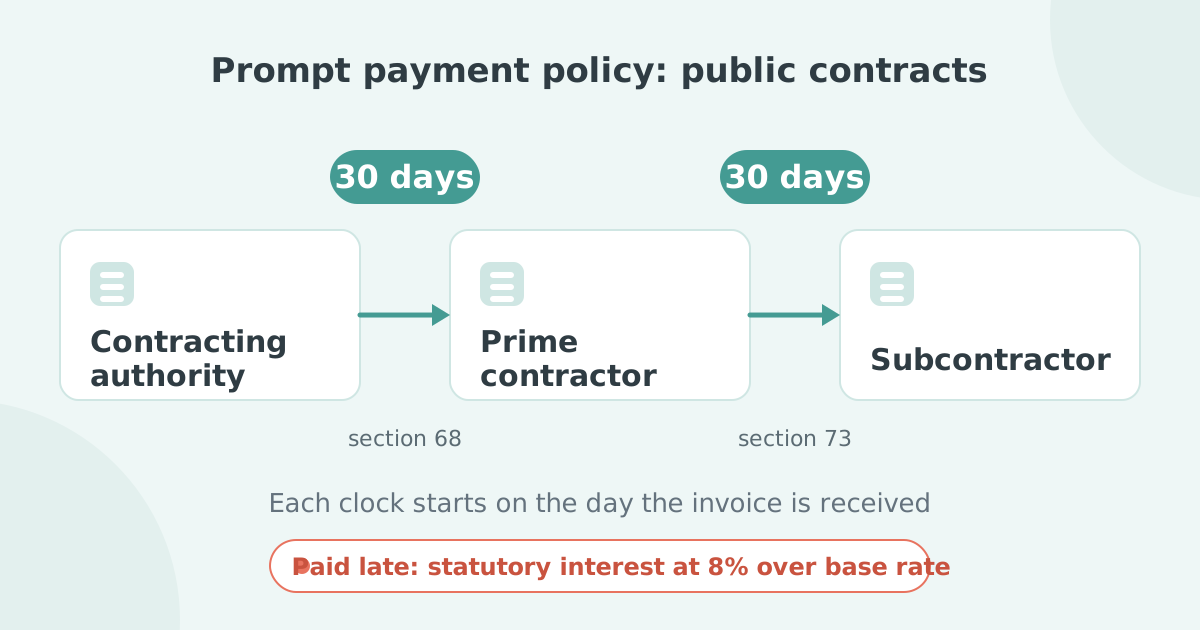
The 30-day rule applies to subcontractors on public contracts because section 73 of the Procurement Act 2023 implies the section 68 payment terms into public sub-contracts (sub-contracts under concession, private-utility and school contracts are excepted). A subcontractor's 30 days begin on the day the prime contractor receives its invoice, or the invoice due date if that is later. The subcontractor's clock does not wait for the authority to pay the prime.
The public payment chain is two separate 30-day legs, each with its own clock:
Swipe to see the full chain
- Authority to prime contractor. The prime's invoice is received on day 1 of the 30-day period, which begins with the day of receipt. The authority pays before that period ends and reports its record in its payments compliance notice.
- Prime contractor to subcontractor. The subcontractor's invoice starts a second, independent 30 days when the prime receives it. Whether the authority has paid the prime has no bearing on this due date, and the prime can take the invoice out of the 30-day term only if it considers the invoice invalid or disputes it, and it must say so without undue delay.
The subcontractor payment rule is checked. PPN 021 says central government bodies should run payment spot checks in the supply chain of public contracts worth more than £5 million a year (including VAT), at least once every six months from the award date, for contracts advertised from 1 October 2025.
What payment performance must bidders show?
Bidders for central government contracts over £5 million a year must show they pay 95% or more of their invoices within 60 days (90% with an action plan) and average 45 days or fewer across all invoices. The rule is set by Procurement Policy Note 018 and applies to procurements advertised on or after 1 October 2025.
The average moved in October 2025. Under PPN 015 the average was 55 days.
| Test | Until 30 September 2025 (PPN 015) | From 1 October 2025 (PPN 018) |
|---|---|---|
| Share of invoices paid within 60 days | 95% (90% with an action plan) | 95% (90% with an action plan) |
| Average days to pay, all invoices | 55 days or fewer | 45 days or fewer |
| Contracts covered | Over £5 million a year | Over £5 million a year |
Large companies already publish their average days to pay, and the share of invoices paid within 30 and 60 days, twice a year under the payment practices reporting duty, so the figures a bidder claims are checkable.
What has replaced the Prompt Payment Code?
The Fair Payment Code replaced the Prompt Payment Code in December 2024. The Fair Payment Code is a voluntary code of practice for companies of any size, according to the GOV.UK prompt payment policy guidance, and the Office of the Small Business Commissioner runs it with Gold, Silver and Bronze awards for firms that pay suppliers on time.
| Fair Payment Code award | Payment standard |
|---|---|
| Gold | 95% of all invoices in 30 days |
| Silver | 95% in 60 days, and small suppliers in 30 days |
| Bronze | 95% of all invoices in 60 days |
A Fair Payment Code award is free and lasts two years, and public sector bodies cannot apply. The Fair Payment Code page explains the three tiers and how to apply.
How long do you legally have to pay an invoice in the UK?
Outside public contracts, a UK business must pay a business invoice by the agreed date, and where no date is agreed the Late Payment of Commercial Debts (Interest) Act 1998 sets a default of 30 days. Business buyers can agree longer terms, but a term over 60 days is cut back to 60 unless the longer period is not grossly unfair to the supplier.
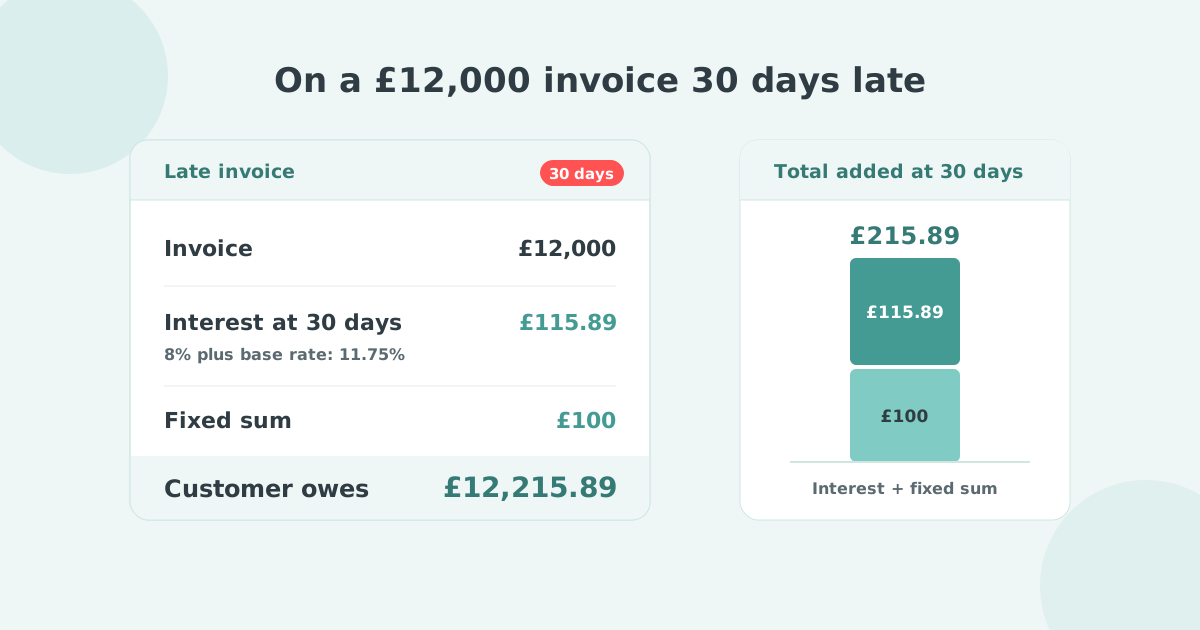
From the day after the due date the debt carries statutory interest at 8% over the Bank of England base rate, 11.75% for invoices that fall overdue in 2026 (8% plus the 3.75% reference rate set on 31 December 2025 and 30 June 2026), plus a fixed sum of £40, £70 or £100 per invoice. The Commercial Payments Bill would tighten these rules but is a Bill, not law, with no commencement date. The late payment law page covers both.
Charging private customers is covered in the late fees hub. How long UK customers take, by industry, is on the UK payment times page; what the delay costs is in the cost of late payments section.
What can a supplier do when a public contract pays late?
A supplier paid after the 30 days by a public body or prime contractor can claim statutory interest at 8% over the Bank of England base rate (11.75%) plus a fixed sum of £40, £70 or £100 per invoice. GOV.UK states the interest is not paid automatically: the supplier has to ask.
- Fix the receipt date. Keep proof of when the invoice reached the authority or prime. The 30 days and the interest both run from it.
- Calculate the claim. Simple interest at 11.75%, from the day after the 30 days end to the payment date, plus the fixed sum for the invoice size. The UK statutory interest calculator does the arithmetic; the UK late payment fees guide explains it; the late payment interest calculator handles contractual rates.
- Raise the interest as an invoice. A posted interest invoice enters the authority's payables. Interest asked for in an email does not. Paidnice raises that invoice for suppliers on Xero and QuickBooks, as Draft or Approved in your Xero organisation, alongside the reminders and statements that go before it; the settings are in late payment fees in Xero.
- Cite the rules. Section 68 of the Procurement Act 2023 for the 30 days, the 1998 Act for the interest and fixed sum, and the PPN 021 spot checks for a prime on a contract over £5 million a year.
- Escalate if it stays unpaid. A letter before action is the next step, and the authority's published payments compliance notice shows how often it pays within 30 days, which helps show a pattern.
A public body does not pay interest unless the supplier claims it, so raise the claim as an invoice on the first late payment. To apply the interest and send the reminders before it automatically, start free, no card needed.
What should a prompt payment policy for your own suppliers say?
A prompt payment policy for your own suppliers states the payment term, when the clock starts, how disputes are raised, and what you pay if you are late. A business that bids for public work benefits from publishing one, because the PPN 018 test measures what it actually pays: 95% of invoices within 60 days and an average of 45 days or fewer on central government contracts over £5 million a year.
Sample prompt payment policy wording a UK business can adopt and adapt:
We pay valid, undisputed supplier invoices within 30 days of receipt. We raise any query on an invoice in writing within 5 working days of receiving it. Where we pay late, we pay statutory interest at 8% over the Bank of England base rate and the fixed sum under the Late Payment of Commercial Debts (Interest) Act 1998 without being asked. We publish our payment performance every six months.
Keep a prompt payment policy to what the business will actually do. For the terms you set for customers who pay you late, see the late fee policy wording examples.

Stop chasing invoices.
Start getting paid.
Paidnice is accounts receivable automation that enforces your payment terms, trusted by thousands of businesses on Xero and QuickBooks. Credit control and debtor management, run for you.
Try it Now - It's FreeNo card required.