Late Payment Fees UK: Guide to how much you can legally charge
By Denym BirdCo-founder & CEO of Paidnice
14 min read ·
Contents▾
Late payment is the single biggest drain on UK cash flow. At any given moment the average UK business is owed on around five overdue invoices, and late payment costs the economy an estimated £11 billion a year. The good news: if you invoice other businesses, the law lets you charge for it.
The short version: on overdue business-to-business invoices you can charge statutory interest of 8% above the Bank of England base rate (11.75% for the first half of 2026), plus fixed compensation of £40 to £100 per invoice. The right is automatic under the Late Payment of Commercial Debts (Interest) Act 1998, even if your contract says nothing about late fees.
Use the calculator to see what you are owed, or read on for how it works.
Key takeaways
On overdue B2B invoices you can claim statutory interest of 8% above the Bank of England base rate, plus fixed compensation per invoice.
Fixed compensation is £40 (debt up to £999.99), £70 (£1,000 to £9,999.99) or £100 (£10,000 or more), per invoice.
The exact statutory rate is fixed for six months at a time, and which base rate applies depends on when the invoice fell overdue, not today's rate. Check the calculator for the current figure.
The right is automatic under the Late Payment of Commercial Debts (Interest) Act 1998, with no contract clause needed.
The 2026 Commercial Payments Bill is set to make statutory interest mandatory and cap payment terms.
Work out the statutory interest and late-payment compensation you can charge on overdue business invoices under UK law, using the current Bank of England base rate.
Under the Late Payment of Commercial Debts (Interest) Act 1998, UK businesses can claim:
Statutory interest: 8% plus the Bank of England base rate, on business-to-business invoices.
Compensation for recovery costs: a fixed £40, £70 or £100 per invoice, depending on the debt.
Interest from day one overdue: the right to charge from the day after payment was due.
Is it legal to charge late payment fees in the UK?
Yes, on commercial invoices. The right comes from the Late Payment of Commercial Debts (Interest) Act 1998, and it is automatic: you do not need a late payment clause in your contract to use it. It covers business-to-business and public sector invoices, but not private consumers. The only catch is that you cannot claim statutory interest if your contract already provides a substantial remedy of its own. GOV.UK sets out the basics here.
How much can you charge?
You can claim three things on an overdue commercial invoice:
Statutory interest at 8% a year above the Bank of England base rate.
Fixed compensation of £40, £70 or £100 per invoice, towards your recovery costs.
Reasonable recovery costs above that fixed sum, for example when you instruct a solicitor or a collections agency. This was added by the 2013 Regulations.
The interest rate has one twist worth understanding: which base rate you use depends on when the invoice fell overdue, not on today's rate.
UK statutory late payment interest rate 2026
For invoices that became overdue between 1 January and 30 June 2026 the statutory rate is 11.75%: the 3.75% Bank of England base rate fixed on 31 December 2025, plus 8%.
The rate for the second half of 2026 is fixed from the base rate in force on 30 June 2026 and applies to debts that fall overdue from 1 July. Debts that went overdue in the second half of 2025 keep running at 12.25% (4.25% plus 8%).
Check the Bank of England base rate on the reference date before you calculate, then add 8 percentage points: the 8% margin has not changed, only the base rate moves. The next section explains why the rate is fixed in six-month blocks rather than tracking every base rate decision.
Are you legally charging the correct rate?
Most guides stop at "8% plus the Bank of England base rate." The part that catches people out is buried in a separate piece of legislation. The Late Payment of Commercial Debts (Rate of Interest) (No. 3) Order 2002 sets which base rate you use, and locks it in for six months at a time.
It is easy to get wrong because the base rate keeps moving. The Bank of England has cut it repeatedly, so the correct statutory rate has fallen too. Charge last period's figure and you are charging the wrong rate.
Overdue 1 Jan to 30 Jun→use the base rate from 31 December the year before
Overdue 1 Jul to 31 Dec→use the base rate from 30 June that year
Here is how the correct rate has actually moved:
30 Jun2025
Base rate 4.25% → statutory 12.25%
The rate to use for invoices that became overdue between 1 July and 31 December 2025.
31 Dec2025
Base rate 3.75% → statutory 11.75% rate cut
The rate to use for invoices that became overdue from 1 January 2026. December's cut dropped the correct charge by half a point.
Each rate holds for its whole six-month block, even if the Bank of England changes the base rate in between. The next reset uses the base rate in force on 30 June.
Quick check. An invoice that went overdue in September 2025 should be charged at 12.25%, not the 2026 rate. The calculator above and Paidnice both apply the correct reference rate automatically, so you are never charging the wrong figure. For the detail, see the GOV.UK guidance.
The compensation is a flat fee per invoice, set by the size of the debt.
Fixed compensation you can claim per invoice
On top of statutory interest, you can claim a fixed sum towards the cost of recovering each overdue invoice. The amount depends on the size of the debt:
£40Debt up to £999.99
£70£1,000 to £9,999.99
£100£10,000 or more
This is a flat fee per invoice, not per reminder, and it is payable in addition to the interest. If your reasonable costs of recovering the debt are higher than the fixed sum, you can claim the difference.
When does an invoice become late?
An invoice is late the day after its agreed due date, and interest can run from that point. If you never agreed a date, the law treats payment as late 30 days after the later of two things: the customer receiving the invoice, or you delivering the goods or service. Many businesses still lead with a friendly reminder before applying anything, which often does the job on its own. In practice the statutory route earns its keep when late payment is a pattern across your ledger, not a one-off, and for a single overdue invoice a reminder is usually enough without invoking the Act at all.
Here is how the maths works on a typical invoice.
How to calculate late payment interest
Find the annual statutory rate. For the first half of 2026 that is 11.75% (8% + the 3.75% Bank of England base rate).
Work out the daily interest. Multiply the invoice amount by the annual rate, then divide by 365.
Multiply by the number of days overdue.
Add the fixed compensation for the size of the debt.
Worked example: a £5,000 invoice paid 40 days late
Invoice amount£5,000.00
Statutory rate (3.75% + 8%)11.75%
Annual interest (£5,000 × 11.75%)£587.50
Daily interest (£587.50 ÷ 365)£1.61
Interest for 40 days (£1.61 × 40)£64.40
Fixed compensation (£1,000 to £9,999.99)£70.00
Total late payment charge£134.40
That £134.40 is payable on top of the original £5,000, so the customer now owes £5,134.40. On smaller invoices the fixed compensation does most of the work, which is why it pays to claim both the interest and the fee.
How to calculate late payment interest UK gov
The GOV.UK method: take the reference base rate, add 8%, work out the daily interest on the debt, multiply by the days late, then add the fixed compensation for the debt band.
Find the base rate on the reference date: 31 December for debts overdue 1 January to 30 June, 30 June for debts overdue 1 July to 31 December.
Add 8% for the annual statutory rate.
Multiply the overdue amount by that rate and divide by 365 for the daily interest.
Multiply by the days from the day after the due date to the payment date.
Add £40, £70 or £100 depending on the size of the debt.
The GOV.UK guidance sets out this method and the Small Business Commissioner publishes a free calculator for a single invoice. The calculator at the top of this page does the same for several invoices at once. Interest is simple, not compound, and the reference rate does not change mid-block.
Late Payment of Commercial Debts Interest Act how to calculate statutory interest
Under the 1998 Act, statutory interest is simple interest at 8% over the reference base rate, running from the day after the due date, plus a fixed sum per invoice under section 5A.
Three pieces of legislation set the calculation. The Act gives the right to interest on a qualifying commercial debt and the start date: the day after the agreed due date, or 30 days after delivery or invoice where no date was agreed. The Late Payment of Commercial Debts (Rate of Interest) (No. 3) Order 2002 sets the 8% margin and the six-month reference base rate.
Section 5A, added in 2002, sets the £40, £70 and £100 sums and, since 2013, allows reasonable recovery costs above them.
Because the interest is simple, the same daily figure applies for every day the debt is outstanding within a block, and a claim can reach back six years, including on invoices since paid in full. If you would rather set your own late fee than rely on the statutory route, here is how the two compare.
Statutory interest or your own late fee: which should you use?
You have two routes to charging late payment fees in the UK, and it helps to be clear on the difference.
Best for most B2B
The statutory route
The Late Payment of Commercial Debts (Interest) Act 1998: legally backed amounts that are hard to argue with.
Fixed rate of 8% above the Bank of England base rate
Set compensation of £40 to £100 per invoice
Applies automatically, no contract clause needed
Safest option because the amounts are defined in law
More flexible
The contractual route
A late fee you write into your own terms, such as a flat admin charge or a monthly percentage.
You set the amount and structure
Often a better fit for small or consumer invoices
Must be agreed in advance and genuinely reasonable
Risks being unenforceable if it reads as a penalty
For most established businesses, the simplest approach is to index to the statutory rate and lean on the Act, which is exactly what Paidnice does automatically.
These rights were built up over more than 25 years, and the biggest change yet arrives in 2026.
The Late Payment of Commercial Debts (Interest) Act 1998 explained
The right to charge late payment fees in the UK was not always there. For years, suppliers had no automatic right to interest when a customer paid late, and smaller businesses carried the cost of the UK's late payment culture. The entitlement was built up over more than 25 years, and it is about to take its biggest step yet.
1998
A statutory right to interest
The Late Payment of Commercial Debts (Interest) Act 1998 came into force on 1 November 1998 to tackle persistent late payment. At first, only small businesses could claim interest, and only from larger companies and the public sector. From November 2000 the right was extended so small businesses could also claim from each other.
2002
Extended to every business, plus fixed compensation
The Late Payment of Commercial Debts Regulations 2002 implemented EU Directive 2000/35/EC. From 7 August 2002 any business or public body could claim statutory interest from any other, and a new fixed compensation sum of £40, £70 or £100 per invoice was introduced through Section 5A.
2013
Recovery costs above the fixed sum
The Late Payment of Commercial Debts Regulations 2013 implemented the recast EU Directive 2011/7/EU. They added the right to claim reasonable recovery costs above the fixed compensation, and set default payment terms where a contract is silent: generally 30 days for public authorities and 60 days for business-to-business.
2026
The biggest reform in over 25 years
The Commercial Payments Bill, introduced to Parliament in May 2026, makes statutory interest mandatory and impossible to contract out of, caps payment terms at 60 days for large businesses (30 days for public authorities), and gives the Small Business Commissioner new powers to fine persistent late payers.
How to claim late payment interest
Raise a separate invoice or statement showing the original amount, the interest, and the compensation.
Show your workings: the rate, the daily figure, and the number of days overdue.
Reference the Act so the charge is clearly grounded in law.
Set a clear due date for the new total.
Statutory interest is outside the scope of VAT, so raise the interest line with no VAT rather than at a zero rate.
How to add a late payment clause to your invoice
You do not need a clause to claim statutory interest, but stating one sets expectations. Keep it factual and tied to the statutory amounts:
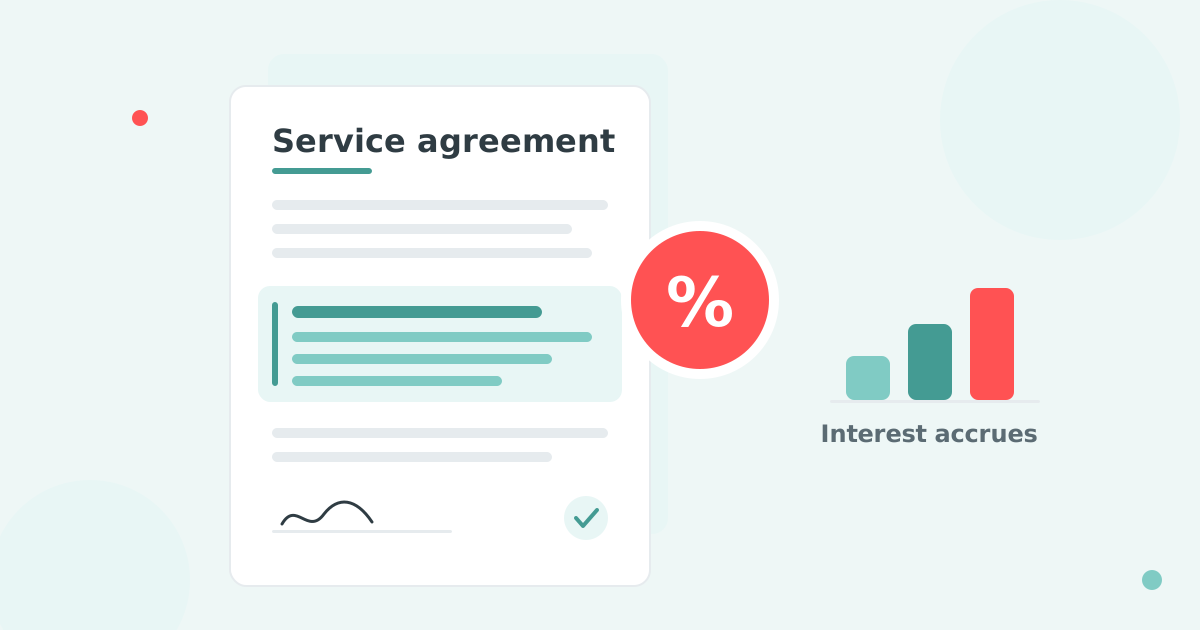
"Overdue accounts are subject to statutory interest at 8% above the Bank of England base rate, plus fixed compensation of £40 to £100 per invoice, in line with the Late Payment of Commercial Debts (Interest) Act 1998. Reasonable recovery costs may also apply."
Indexing to the statutory rate keeps you within the law. A fee set purely to punish a customer can be challenged as a penalty.
Put late fees on autopilot with Paidnice
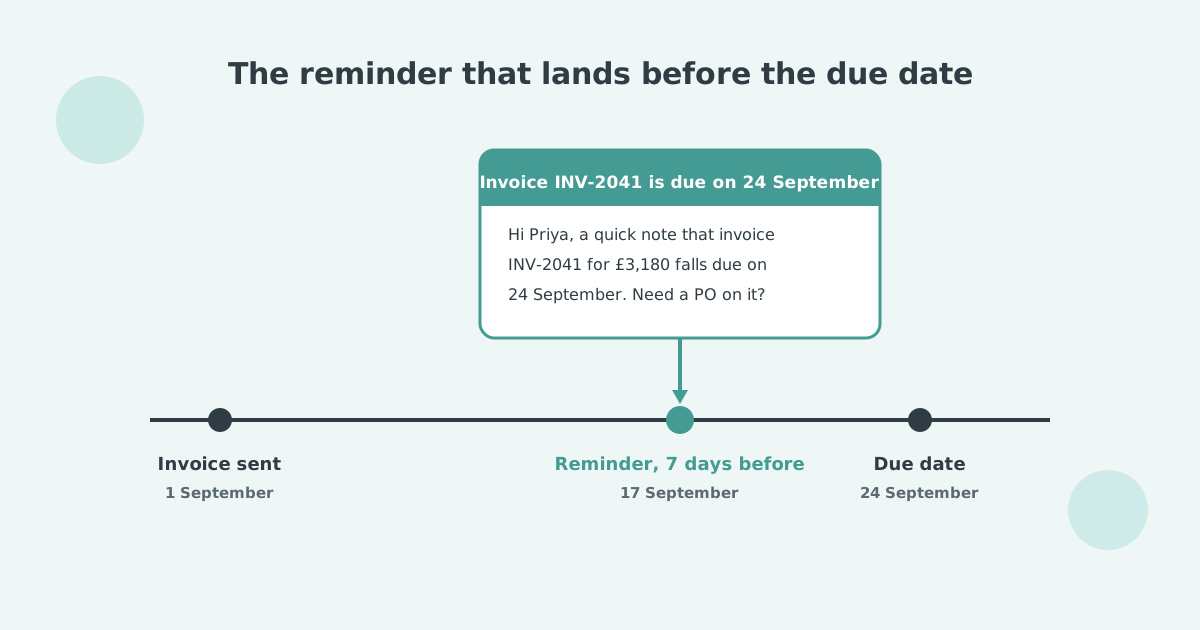
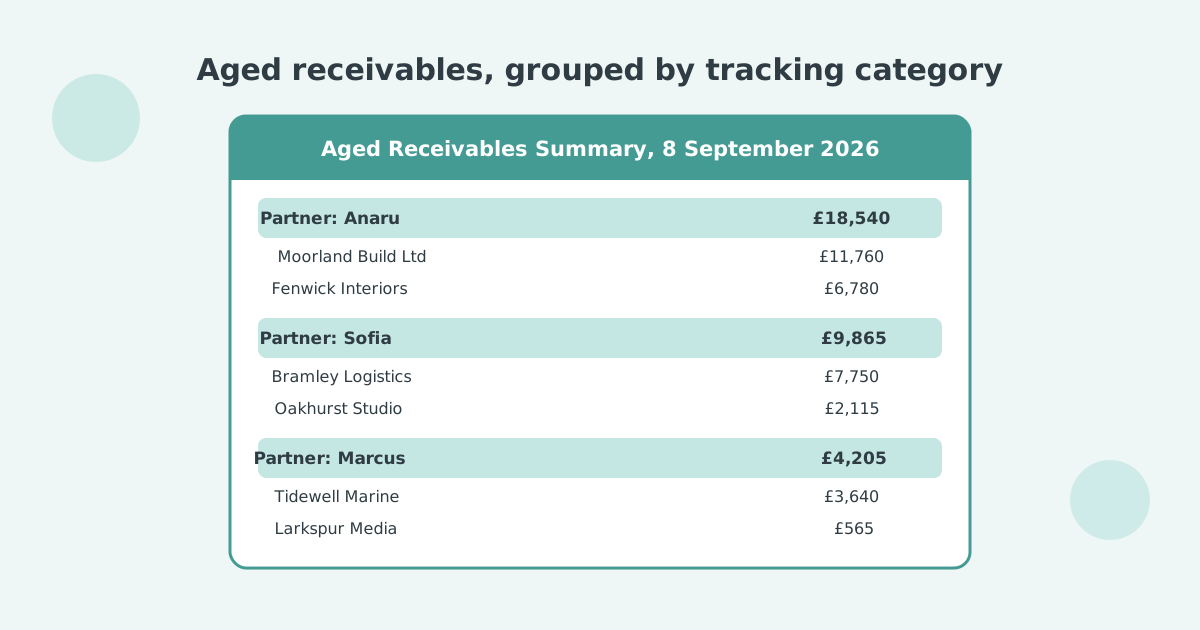
Doing this by hand for every overdue invoice is the reason most businesses never bother. Paidnice applies your interest and fees automatically in Xero and QuickBooks, indexes to the live Bank of England base rate, and sends the reminders for you. Businesses using Paidnice cut their average days sales outstanding by about 50% within 30 days.
Is it legal to charge late payment fees in the UK?
Yes, on commercial invoices. The Late Payment of Commercial Debts (Interest) Act 1998 gives you an automatic right to statutory interest and a fixed compensation fee on overdue business-to-business invoices, whether or not your contract mentions it. Charging late fees to consumers is governed by separate rules and your agreed terms.
How much can I charge in late payment fees?
Two things: statutory interest at 8% a year above the Bank of England base rate, and fixed compensation of £40, £70 or £100 per invoice depending on its size. If your reasonable recovery costs are higher than the fixed sum, you can claim the difference.
What is the statutory interest rate right now?
For invoices that became overdue between 1 January and 30 June 2026, the rate is 11.75% (8% plus the 3.75% Bank of England base rate set on 31 December 2025). The rate is refixed for the second half of the year using the base rate in force on 30 June. Always check the current base rate before you calculate.
How do I calculate late payment interest?
Add 8% to the relevant base rate to get the annual rate, divide by 365 for the daily rate, then multiply by the overdue amount and the number of days late. For example, a £5,000 invoice paid 40 days late at 11.75% earns about £64.40 in interest, plus £70 fixed compensation, so £134.40 in total.
How much is the late payment compensation fee?
It is a fixed sum per overdue invoice: £40 for debts up to £999.99, £70 for debts between £1,000 and £9,999.99, and £100 for debts of £10,000 or more. It is charged per invoice, not per customer or per reminder.
Can I charge late payment fees if my contract doesn't mention it?
Yes, for business-to-business debts. The statutory right applies automatically unless your contract already provides a substantial remedy for late payment. If your terms are silent, the statutory rate of base rate plus 8% applies by default.
When does an invoice legally become late?
The day after the agreed due date. If you did not agree a date, payment is treated as late 30 days after the later of two points: the customer receiving the invoice, or you delivering the goods or service.
Can I charge late fees to consumers, not just businesses?
The statutory route only covers commercial debts between businesses. For consumer invoices, any late fee must be set out in your terms, agreed in advance, and reflect a genuine cost of late payment rather than a penalty.
Is statutory interest simple or compound interest?
Simple interest. It accrues daily on the overdue amount and does not compound, so you do not charge interest on interest that has already built up.
Is late payment interest subject to VAT?
No. Statutory interest and compensation are outside the scope of VAT, because they are compensation rather than payment for a supply. A separate administration fee beyond the statutory compensation may be subject to VAT if you are VAT-registered.
Is statutory interest the same as HMRC late payment interest?
No. Statutory interest under the 1998 Act applies to overdue commercial invoices between businesses. HMRC late payment interest is a separate rate that applies to overdue tax. They are not connected.
What is changing for late payment in 2026?
The Commercial Payments Bill, before Parliament in 2026, makes statutory interest mandatory and impossible to contract out of, caps payment terms at 60 days for large businesses (30 days for public authorities), and gives the Small Business Commissioner powers to fine persistent late payers. The headline rates are not changing.
This guide is general information about UK late payment rules, not legal or financial advice. For your specific situation, check with a qualified professional.
Written by
Denym Bird
Co-founder & CEO of Paidnice
Denym is a software entrepreneur and writes about accounts receivables management for small business.
Paidnice is accounts receivable automation that enforces your payment terms, trusted by thousands of businesses on Xero and QuickBooks. Credit control and debtor management, run for you.