

If customers keep paying late, act in this order: chase the day after the due date, add statutory interest at 8% plus base rate and the £40 to £100 fixed sum, send a Letter of Claim at 30 days, then choose an agency or small claims.
Automate the first three steps so they happen without you. Roughly 68% of UK B2B sales are made on credit, and late payment affects about 25% of invoiced B2B turnover (Atradius UK 2026). Xero's UK data for the June 2026 quarter puts the average wait to be paid at 29.3 days, 8.3 days past due. One late payment is normal. The same customer late every month is a process gap.
The order matters. Most founders jump from a polite reminder to an angry phone call with nothing in between, and the customer learns that nothing happens. Each step below adds a cost or a consequence the customer can see.
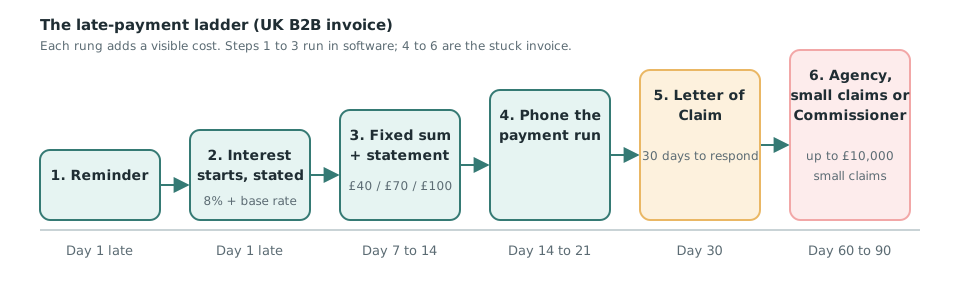
Six actions, in order. The first three fix a late-paying customer for good. The last three are for the invoice that is already stuck.
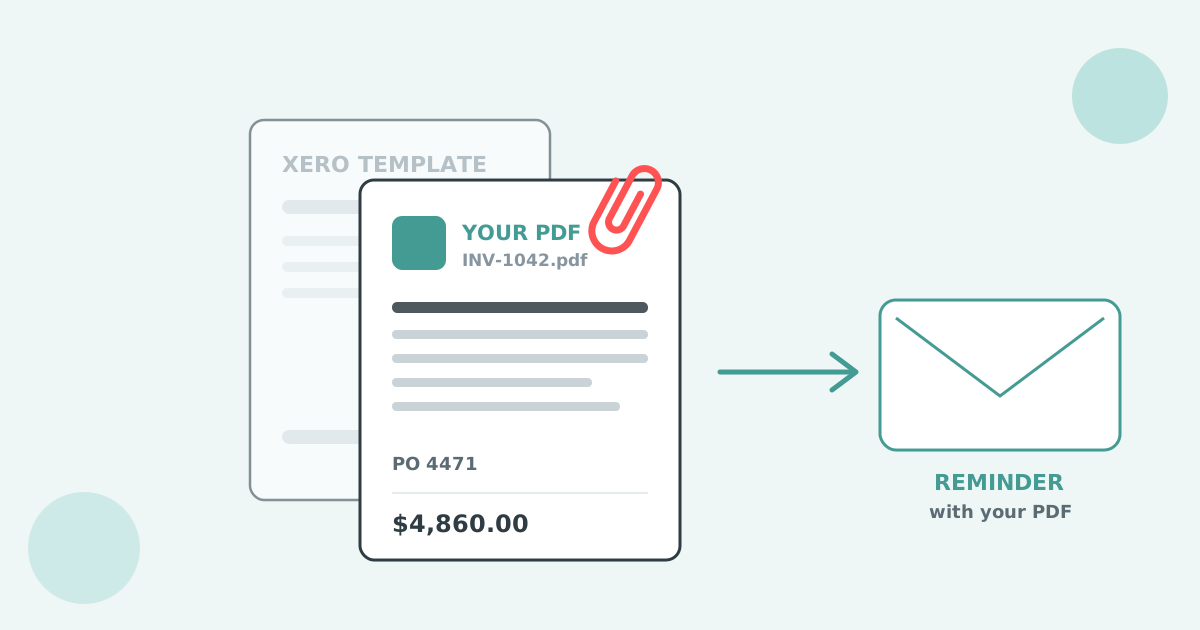
Steps one to three are the same for every customer on every invoice, so they belong in software. Xero's own reminders handle step one. Steps two and three need an add-on that posts the interest and fixed sum to the ledger and sends the statement on a schedule, which is what credit control software like Paidnice does on Xero and QuickBooks Online.
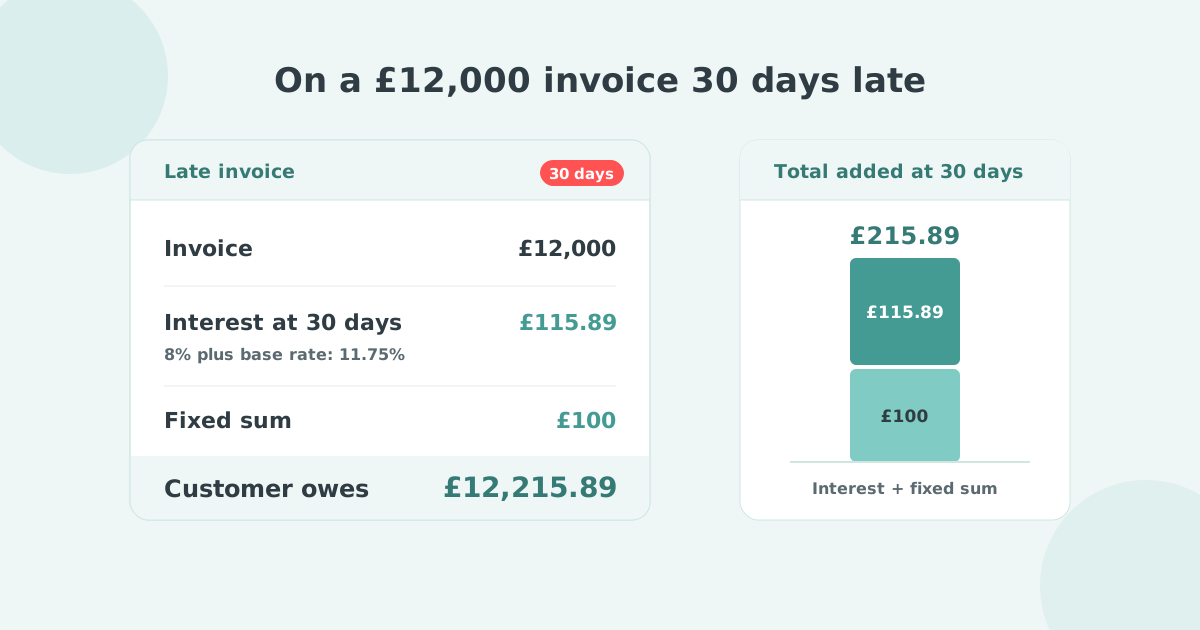
On a £12,000 invoice 30 days late, statutory interest at 8% plus base rate comes to £115.89 and the fixed sum adds £100, so the customer owes £12,215.89. The table shows three invoice sizes at 30, 60, and 90 days.
The formula: invoice value × (8% + base rate) ÷ 365 × days late, plus the fixed sum for the invoice's band. The table uses the Bank of England base rate of 3.75%, held at the 17 June 2026 meeting, so 11.75% per annum for the half-year from 1 July 2026. The statutory rate is fixed in six-month blocks; an invoice spanning two blocks uses each block's rate for its own days.
| Invoice | Fixed sum | Interest at 30 days | Total added at 30 days | Total added at 60 days | Total added at 90 days |
|---|---|---|---|---|---|
| £650 | £40 | £6.28 | £46.28 | £52.55 | £58.83 |
| £4,800 | £70 | £46.36 | £116.36 | £162.71 | £209.07 |
| £12,000 | £100 | £115.89 | £215.89 | £331.78 | £447.67 |
On small invoices the fixed sum is most of the money, and it is per invoice: ten late £650 invoices owe £400 in fixed sums before any interest. On a £12,000 invoice the interest is what grows, at roughly £4 a day.
Late fees are leverage. The number on the statement goes up every day, the customer's bookkeeper can see it, and the invoice with a visible, growing charge is the one that moves to the top of the payment run. Detail on rates and the Act: late payment fees in the UK.
Enter your invoice, the current Bank of England base rate, and the days late. Loads with the £12,000 row from the table above.
Formula: invoice × (8% + base rate) ÷ 365 × days late, plus £40 under £1,000, £70 from £1,000, £100 from £10,000. Simple interest at one rate; an invoice spanning a six-month rate change uses each period's rate for its own days. General information, not legal advice.
Insight. The businesses we see charge interest the moment they set it up in software, and almost never before. Raising an interest invoice by hand, keeping it current, and removing it when the customer pays is a monthly job nobody wants. When the charge posts to Xero on its own and the statement recalculates at send, it happens every month.
Yes, for business-to-business invoices. The Late Payment of Commercial Debts (Interest) Act 1998 gives every UK business the right to statutory interest and a fixed compensation sum on a late commercial debt, with no clause needed in the contract.
The rules in short, with the ones that most often go wrong first.
Xero has no native late fee or interest feature, so the charge is raised as a separate invoice or a line on a statement. Its own ideas board request for interest on late invoices has been open since 29 March 2012 with 1,112 votes, and Xero's latest response, 7 July 2025, describes it as early days. How to add one anyway: adding late payment fees in Xero.
Because the customer's accounts team pays the suppliers who ask, in the order they ask. Waiting a week signals the due date was a suggestion. Practitioners commonly advise chasing the day after the invoice falls due.
A due date is only a due date if something changes when it passes. Three things should change on day one: a reminder arrives, the interest clock is running and the reminder says so, and the invoice is in your overdue list with a next action. None of these are rude. A next-day reminder with the invoice attached is routine for any bookkeeper.
The cadence most guidance converges on is four to six touches: pre-due, due date, then around 3, 7, 14, and 30 days overdue. Xero's built-in reminders cover the email part, up to five per organisation with three on by default, but they send the same reminder to every customer and cannot send SMS or a scheduled statement.
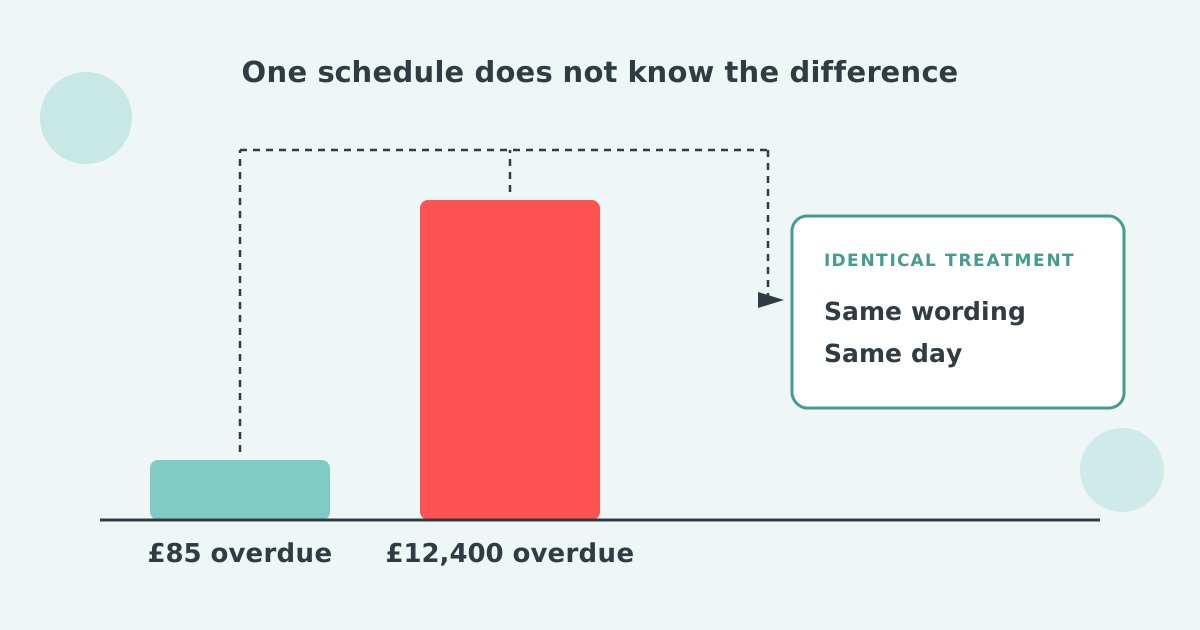
For the schedule to hold across a hundred customers it has to be automated, and it has to escalate: accounts@ on the due date, a named credit controller at 7 to 14 days, a director at 21 days and on the late fee.
Do not pause the ladder for a customer you like. It works because it is the same for everyone. A customer with a genuine reason goes on a payment plan with dates, with interest running until the plan is agreed in writing.
At 30 days overdue the debt has typically accrued a month of statutory interest plus the fixed sum, and it is time to send the Letter of Claim. From that letter the customer has 30 days to respond before you can file a claim.
Thirty days is also where your own numbers change. The DSO calculation shows how much cash a 30-day slip ties up. On the UK average of 8.3 days late, a business turning over £1m has around £23,000 sitting past due at any moment. What to do at 30 days, as a list:
What happens next if the customer still ignores you: your customer is ignoring invoice reminders: what to do next.
Late payers are not one problem. The forgetful need a reminder, the process-blocked need a PO number, the stretched need a plan, the disputer needs an answer in writing, and the deliberate late payer needs a cost.
| Type | How you spot them | What works | What wastes your time |
|---|---|---|---|
| The forgetful | Pays within a day of every reminder, never argues | Pre-due reminder plus a day-one reminder with a payment link; keep them on standard terms | Phone calls, late fees applied without warning |
| The process-blocked | "It's with approvals", asks for a PO number or a supplier form after the due date | Get the PO and the AP contact before invoicing; send the invoice to accounts@ and the buyer both; a statement, because AP reconciles to statements | Chasing the buyer, who does not run the payment run |
| The stretched | Part-payments, round numbers, "can we do it at month end" | A written payment plan with dates and auto-pay; interest keeps accruing until the plan is signed; stop new credit until caught up | Extending terms informally, which resets nothing |
| The disputer | Silence until chased, then a query about the work or the amount | Pause fees on the disputed invoice only, answer in writing within 48 hours, and issue a credit note or a confirmation; then the ladder resumes | Letting one queried line hold the whole invoice |
| The deliberate | Pays every supplier at 60 to 90 days as policy, regardless of terms | Interest and the fixed sum on every invoice from day one, statements monthly, the Letter of Claim on schedule; price the delay into the next quote or decline the work | Goodwill, discounts, and hoping the next invoice will be different |
The deliberate late payer is the one the ladder is built for. A business that pays at 90 days as policy is borrowing from you at 0%. The statutory rate makes that loan cost base rate plus 8%, and the fixed sum makes small invoices expensive to hold. Most stop, because your invoice is now the expensive one in the pile.
Insight. Segmenting by type is the step most businesses skip. In practice it means a different policy per contact group: forgetful customers get reminders only, deliberate late payers get the fee policy and monthly statements from day one. Paidnice runs those policies per group on the ledger, and in our experience the customers who see the fastest change are the ones who made that split first.
Fix the terms before the invoice, automate the ladder after it, and review the aged receivables once a month for customers drifting from one type to another. These three steps stop repeat late payment.
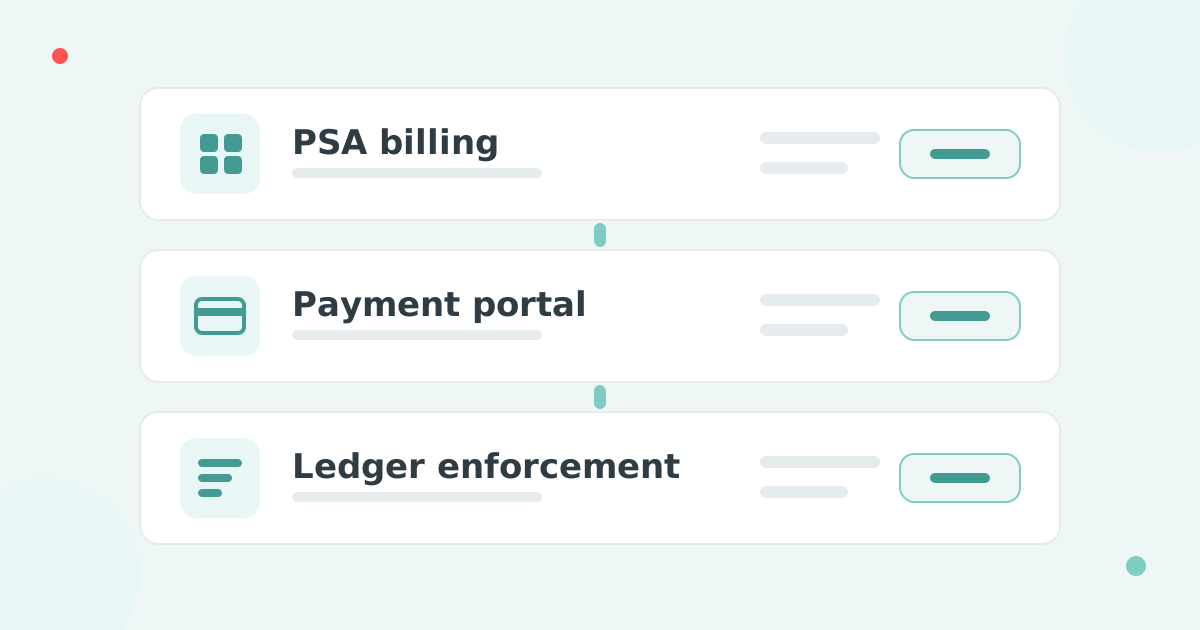
The full process is in 12 steps to better accounts receivable, and the tools that run it on Xero are compared in credit control software for Xero. On Xero and QuickBooks Online, Paidnice runs the first three rungs from the ledger:
Customers cut their average wait for payment in half, within 30 days. The UK Essentials plan is £49 a month for up to 150 invoices.
Paidnice is accounts receivable automation that enforces your payment terms, trusted by thousands of businesses on Xero and QuickBooks. Credit control and debtor management, run for you.
Try it Now - It's FreeNo card required.


Optimize your cash flow with our suite of financial tools designed for AR professionals. Calculate DSO, aging analysis, late fees, and more.