

Summary
Accounts receivable management is how a business tracks, invoices, and collects payment for goods or services already delivered on credit, covering credit checks, invoicing, monitoring, collections, and cash application. Paidnice automates the collections and monitoring stages for businesses on Xero and QuickBooks Online.
- The result: Paidnice customers see half as many late invoices in the first 30 days.
- The stack: Paidnice combines automated reminders, late fees and interest, statements, payment plans and escalation into one accounts receivable workflow.
- Fit: Paidnice suits any business from its first invoice up to $50m a year, or 50,000 invoices a year, priced by invoice volume.
You open the aged receivables report on Monday. One customer paid two invoices last week and left three unpaid. Another says they paid on Friday, but the payment sits unmatched in the bank feed, and this morning's reminder went to them anyway.
Here is what AR management covers, how to follow up, the numbers that show it works, and which steps you can automate.
What does accounts receivable management mean?
Accounts receivable management means tracking, invoicing, and collecting the money customers owe a business for goods or services already delivered on credit. It starts before the sale, with a decision on whether to extend credit, and ends when the payment is matched to the invoice in the ledger.
Accounts receivable (AR) sits on the balance sheet as a current asset until the customer pays. Managed well, a business knows at any moment who owes what, how overdue each invoice is, and what happens next. The work covers five areas:
- Credit assessment: who gets credit, how much, and on what terms.
- Invoicing: a clear, accurate invoice sent as soon as the work is delivered.
- Monitoring: every open invoice tracked against its due date on an aged receivables report.
- Collections: reminders, statements, calls, late fees, and escalation once an invoice passes due.
- Cash application: each payment matched to its invoice and closed in the ledger.
What is the goal of AR management?
AR management has one measurable output: the wait between sending an invoice and receiving payment, and every step in the process exists to shorten it.
Paidnice's own ledger data shows how far the number moves once follow-up runs on a schedule: Paidnice customers see half as many late invoices in the first 30 days. Since 2022, businesses on Xero and QuickBooks Online have collected $1 billion on time across more than 1 million invoices through Paidnice.
Which steps make up the AR management process?
AR management runs in five steps: credit assessment, invoice creation and delivery, collections, cash application, and reporting and analysis. A gap in any one of them shows up as a longer wait for payment.
| Step | What happens | The output |
|---|---|---|
| 1. Credit assessment | Check the customer, set a credit limit and payment terms, get the terms agreed before work starts. | Agreed terms on file |
| 2. Invoice creation and delivery | Raise the invoice the day the work is delivered, with due date, payment options, and late fee terms on it. | An invoice the customer can pay without a query |
| 3. Collections | Reminders before and after the due date, a statement of everything owed, calls on the larger balances, the late fee or interest the terms allow, escalation for what stays unpaid. | Payment, a payment plan, or an escalation |
| 4. Cash application | Match each payment to its invoice the day it lands, so reminders stop. | A ledger that matches the bank |
| 5. Reporting and analysis | Review the aged receivables report weekly and the average wait for payment monthly, then adjust terms or the reminder schedule. | A shorter wait next month |
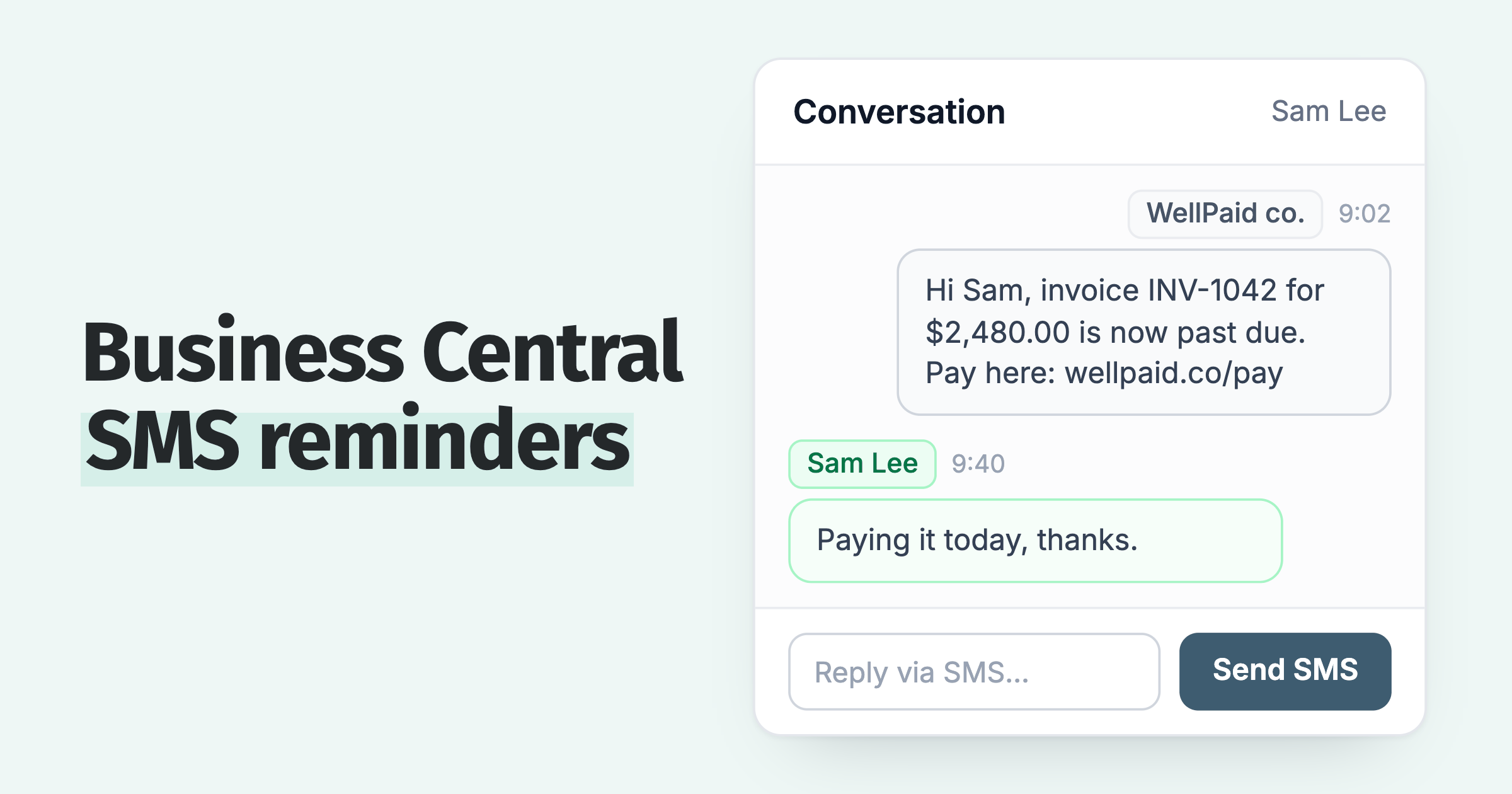
In Paidnice, steps 3 and 5 run from the Xero or QuickBooks Online ledger: email and SMS reminders, automatic statements, late fees and interest, payment plans, escalation to a named person, and an aged receivables report split into 1-30, 31-60, 61-90, and 90+ day buckets.
Which AR management approach fits your business?
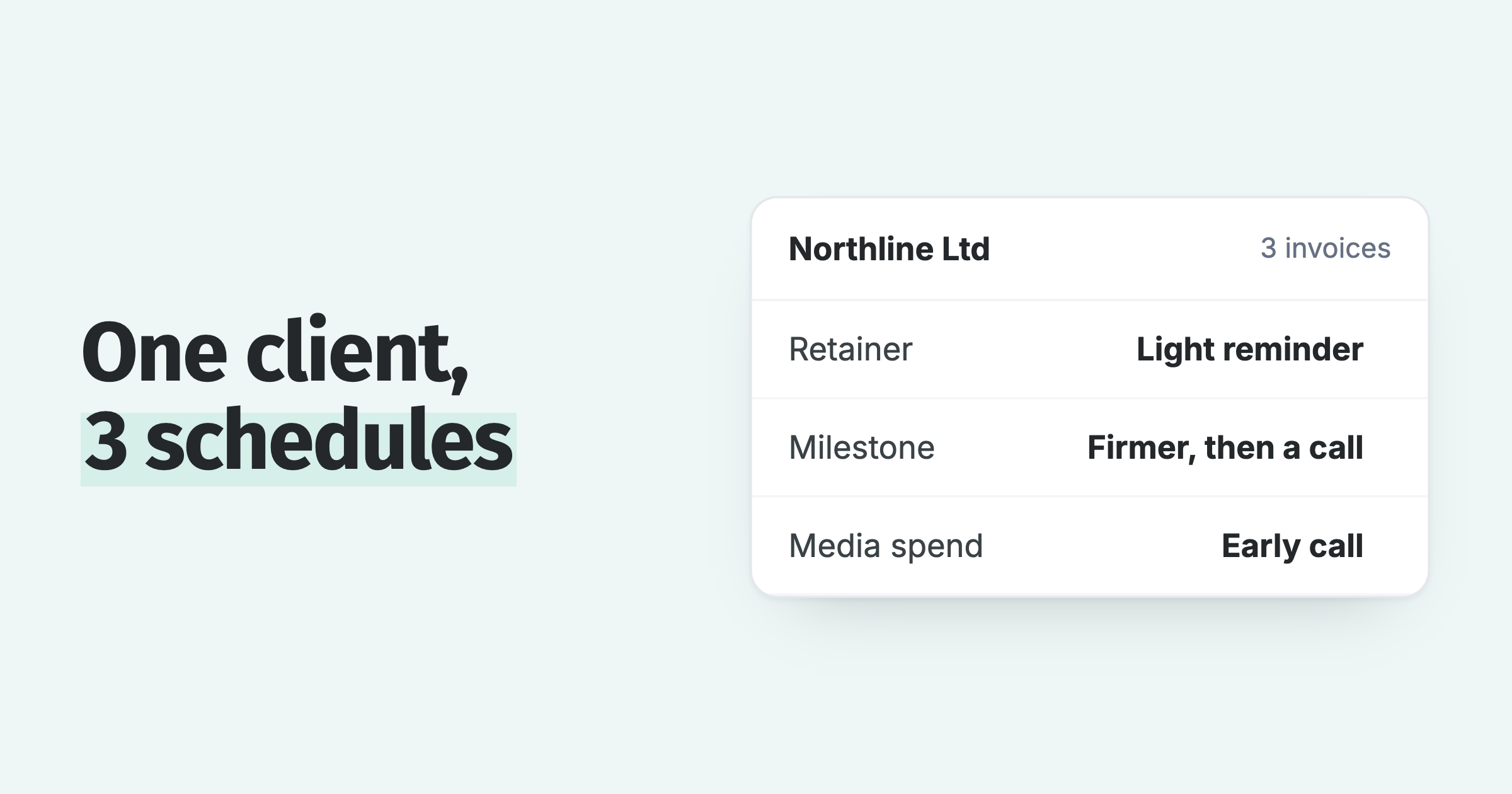
The five steps stay the same. How you run collections depends on who pays you.
| Your business | Start with | Watch out for |
|---|---|---|
| Commercial landlords | One consolidated statement per tenant across every unit. | The year-end service charge balancing charge. A tenant query pulls out only that invoice. |
| HOAs | Reminders, late fees and statements from the ledger, with the treasurer able to approve each send. | An owner who stays delinquent. A person picks the next step: a payment plan, an amenity hold or the attorney. |
| Childcare centers | Invoice each family's share after subsidy or funded hours, and chase that amount only. | Subsidy claims and funding returns. They stay in your childcare software. |
| Healthcare clinics | A polite reminder and a monthly statement for patients, and the full ladder for corporate accounts. | Insurance claims. Paidnice chases the invoices a practice raises, not the claims. |
| Automotive workshops | Chase trade, fleet and parts accounts, with insurers in their own contact group. | Retail sales and counter payments. Paidnice does not chase them. |
How many reminders should you send before you escalate?
Plan for three to five reminders after the due date, then escalate to a call or a named person. In Paidnice's ledger data, a chased overdue invoice needs 2.6 touches on average to get paid. 4 in 10 are paid after the first touch, 6 in 10 by the second, and 8 in 10 by the fourth.
Each reminder counts on the day it lands. On that day, an overdue invoice is about 3 times as likely to be paid as a comparable overdue invoice with no reminder (11.8% against 3.7%). 1 chased invoice in 10 is still unpaid at 180 days, and that group is what an escalation ladder is for.
What do you send a customer who pays some invoices but not others?
Send one statement that lists every open invoice and separates the overdue ones, instead of a reminder for each invoice. Five reminders for five invoices are easy to ignore. One statement shows the customer which invoices they skipped. Xero cannot send a statement of only the overdue invoices, and the Xero product idea for it has 347 votes.
Paidnice sends statements on a schedule that group invoices into Due now and Not yet due, with the overdue age of each. You can send them only to customers with an overdue invoice. A disputed invoice can come out of the policy by its reference, or the policy can skip it while the query is open.
Xero has no way to flag a sales invoice as disputed. The Xero product idea for that flag has 538 votes. The guide to handling a disputed invoice covers the reply.
How do you stop reminders to a customer who has already paid?
Match each payment to its invoice on the day it lands, because a reminder tool can only see what the ledger shows as paid. A payment left unmatched in the bank feed still looks overdue, so the next reminder goes to a customer who paid.
Paidnice reads the open balance from Xero or QuickBooks Online, so a payment matched in the ledger stops the reminders. When a customer says they have paid, set an expected payment date. Paidnice pauses follow-up until then, and starts again if the invoice is still unpaid. Customers can also send a promise to pay from the payment portal.
What does an accounts receivable manager do?
An accounts receivable manager owns invoicing, payment monitoring, collections, dispute resolution, and cash application for a business, and reports on AR performance to finance leadership. In a small business the role usually sits with the owner, the office manager, or the bookkeeper.
The daily routine is fixed: review the aged receivables report, send or approve the reminders due that day, call the largest overdue balances, resolve disputes, match the payments that arrived, and report outstanding and overdue totals. Software that reads your Xero or QuickBooks ledger takes the parts that repeat, so the person's time goes on the calls and the disputes.
What are the 5 Cs of accounts receivable management?
The 5 Cs of accounts receivable management are character, capacity, capital, collateral, and conditions: the five factors a business checks before extending credit to a customer. They belong to the credit assessment step, before an invoice is raised. Credit here means trade credit: you deliver now and the customer pays later.
| C | What it measures | Where a small business finds it |
|---|---|---|
| Character | Payment history and reputation | Trade references, a credit report, your own ledger |
| Capacity | Ability to pay from cash flow | Turnover, existing debts, years trading |
| Capital | Financial reserves behind the business | Filed accounts, net assets |
| Collateral | Security offered against the debt | A deposit, a personal guarantee, retention of title |
| Conditions | Industry and economic conditions affecting repayment | Sector payment norms, interest rates, the customer's own customers |
The 5 Cs decide whether to extend credit, how large the limit should be, and whether to ask for a deposit. Paidnice can trigger an escalation when a customer's total balance passes their credit limit, the point where credit assessment and collections meet.
What is the 10% rule for accounts receivable?
The 10% rule for accounts receivable flags an account for review when one customer owes more than 10% of total receivables, or runs more than 10% over their agreed credit limit. It stops one slow-paying customer from putting a large share of your cash flow at risk.
Check it with the aged receivables report. A customer at 10% of receivables who pays on time is a concentration to watch. The same customer at 60 days overdue is the first call of the week.
Which customers should you follow up first?
Follow up first with customers who paid their last invoice late, because one late payment predicts the next. In Paidnice's data, after an on-time payment the next invoice is on time 82% of the time. After a payment 1 to 7 days late, that falls to 28%.
The first invoice is the earliest signal. Customers who pay their first invoice on time pay 73% of later invoices on time. Customers whose first invoice is 1 to 14 days late pay 39% on time. Paidnice turns this history into a credit score for each customer, so your call list starts with the lowest scores.
Why does AR management matter?
Good AR management turns revenue into cash on a schedule you can plan around, with less bad debt and fewer awkward conversations. Revenue is recorded when the invoice is raised, but wages, suppliers, and tax are paid from cash. AR management controls the gap between the two.
When every invoice carries the same terms, the same reminders arrive on the same days, and the stated late fee is applied, paying on time becomes the customer's easiest option. You no longer have to choose between the relationship and the money.
Which numbers show that AR management is working?
Three numbers show whether AR management works: days sales outstanding (DSO), the collection effectiveness index (CEI), and the share of receivables more than 90 days overdue. Check the aged receivables report weekly and these three numbers monthly.
| Number | How to calculate it | How to read it |
|---|---|---|
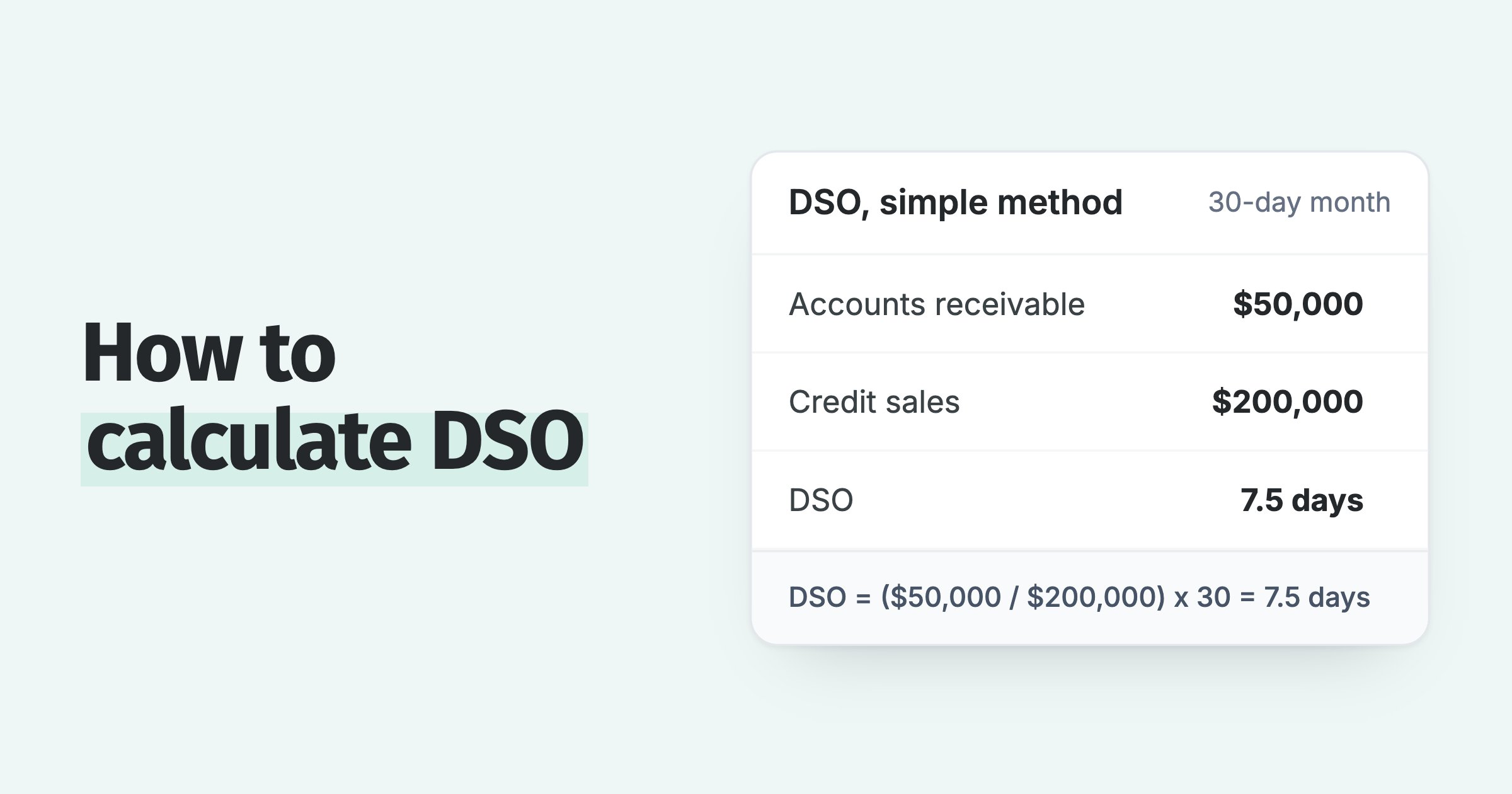
| DSO | Accounts receivable ÷ credit sales for the period × days in the period | Lower means customers pay sooner |
| CEI | (Opening AR + credit sales − closing AR) ÷ (opening AR + credit sales − closing current AR) × 100 | Closer to 100% means more of what fell due was collected |
| 90+ day share | Receivables more than 90 days overdue ÷ total receivables | A rising share means debt ages faster than you collect it |
DSO can rise in a month of large sales even when customers pay on time, so read it next to CEI. The DSO calculation guide and the collection effectiveness index entry give full examples.
When should you stop chasing an invoice?
Keep chasing through the first 90 days, because the chance of payment drops as an invoice ages. In Paidnice's data, of invoices 7 days overdue, 1 in 5 is still unpaid at 180 days. Of invoices 30 days overdue, 2 in 5 are. Of invoices 90 days overdue, 3 in 4 are.
When an invoice passes 90 days with no reply, send a final notice or a letter of demand. Then choose between a collection agency and a write-off. A write-off removes the debt from receivables and records it as a bad debt expense. Check the tax rules in your country before you claim it.
What are the common AR management challenges?
The most common AR management challenges are late payments, invoice disputes, manual follow-up processes, and inconsistent communication with customers. Each lengthens the wait for payment in a different way.
- Late payments: an invoice paid 30 days after its due date ties up that cash for a full extra month, funded from reserves or an overdraft.
- Disputes: a query about a line item stops the clock until someone answers it.
- Manual follow-up: reminders sent manually go out when someone has time, which is rarely the day they are due.
- Inconsistent communication: one customer gets a call at seven days overdue and another gets nothing for 60, so nobody learns what the terms mean.
What are AR management best practices?
The core AR management best practices are automating reminders and cash application, setting clear credit policies up front, offering more than one payment method, and reviewing the process on a schedule. The pattern behind all four is the same: decide the rule once, then apply it to every invoice.
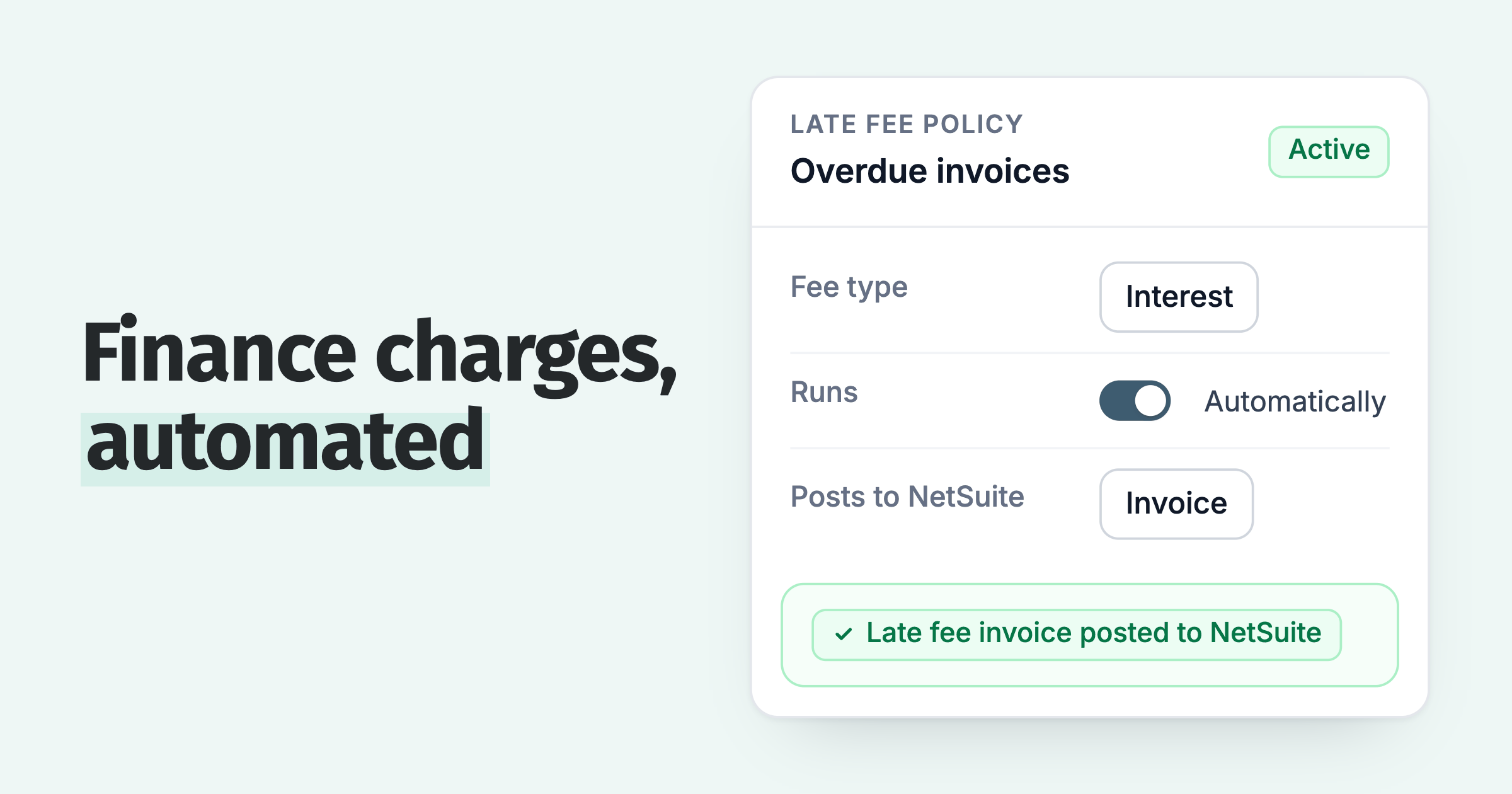
- Automate the routine. Reminders before and after the due date, a monthly statement, and the late fee or interest the terms allow run from the ledger without anyone pressing send. In the UK, statutory late payment interest is Bank of England base rate plus 8% a year (11.75% for the half-year from 1 July 2026, from the 3.75% base rate on 30 June; the base rate rose to 4% on 5 November 2026), and Paidnice can lock that rate for each six-month period or follow the base rate as it changes. Xero has no native late interest: the product idea for it, open since 29 March 2012, has 1,114 votes and no committed plan.
- Set credit policies up front. Payment terms, credit limits, and late fee terms go on the quote and the invoice, agreed before work starts.
- Offer more than one way to pay. Card, bank transfer, direct debit, and a payment plan for larger balances each remove a reason to delay.
- Review on a schedule. The aged receivables report weekly, the average wait for payment monthly, and the terms each quarter. Paidnice adds a credit score from 0 to 100 per customer, so the accounts most likely to pay late are followed up first.

Paidnice runs the collections and reporting steps on Xero and QuickBooks Online, priced by invoice volume, from a business's first invoice up to $50m a year. Sign-up is free with no credit card, and the first 20 actions are free. The AR collections process guide covers the collections step in full.
Paidnice features in this article
About the editorial team
Denym started Paidnice in 2022 after customers paying late left his own business short on payroll. He has led it to $1 billion collected on time across more than 1 million invoices, and writes about credit control, late fees and getting paid on Xero and QuickBooks.

 App of the Year