

 Read by Denym Bird10 min
Summary
A credit hold is a block on a business customer's account that stops new orders, shipments, or invoices on credit until an overdue balance is paid or a breached limit is fixed. It is the supplier's call, separate from a card hold or a credit freeze.
- The triggers: An invoice 30 or more days overdue, a balance over the customer's credit limit, a returned payment, or a broken promise to pay.
- The warning: Send one written notice with a date, and make one call, before the hold starts, so the customer can fix it first.
- The release: Lift the hold the same day cleared funds land or a written payment plan is agreed, and tell the customer and the salesperson together.
A customer who owes you $8,400 across three overdue invoices has just emailed a new purchase order, and sales wants to ship it. Under the Uniform Commercial Code (UCC 2-702), a US seller who finds the buyer insolvent may refuse delivery except for cash, and most suppliers draw the line well before that. Here is what a credit hold is, when to use one, and how to lift it without losing the customer.
What is a credit hold in business?
A credit hold is a block on a customer's account that stops new orders, shipments, or invoices on credit until the overdue balance is paid or the breached credit limit is put right.
Two other meanings share the name. A card authorization hold is the amount a merchant reserves on your card before a charge settles. A credit freeze is a security lock you place on your own file at a bureau. The supplier's credit hold covered here is a decision about trade credit, and in the UK it is often called putting an account on stop.
Accounting systems describe it the same way. NetSuite's help says a credit hold restricts entry of a new sales transaction, triggered by a reached credit limit, delinquent payments, or a manual setting. Dynamics 365 Business Central lets you block a customer at three levels: Ship, Invoice, or All.
Free: Payment reminder email templatesCopy the reminder emails for before, on and after the due date.When should you put a customer on credit hold?
Put a customer on credit hold when an invoice is well past due (30 days is the common line), the balance goes over their credit limit, a payment is returned, or a promised payment date passes with no money and no reply.
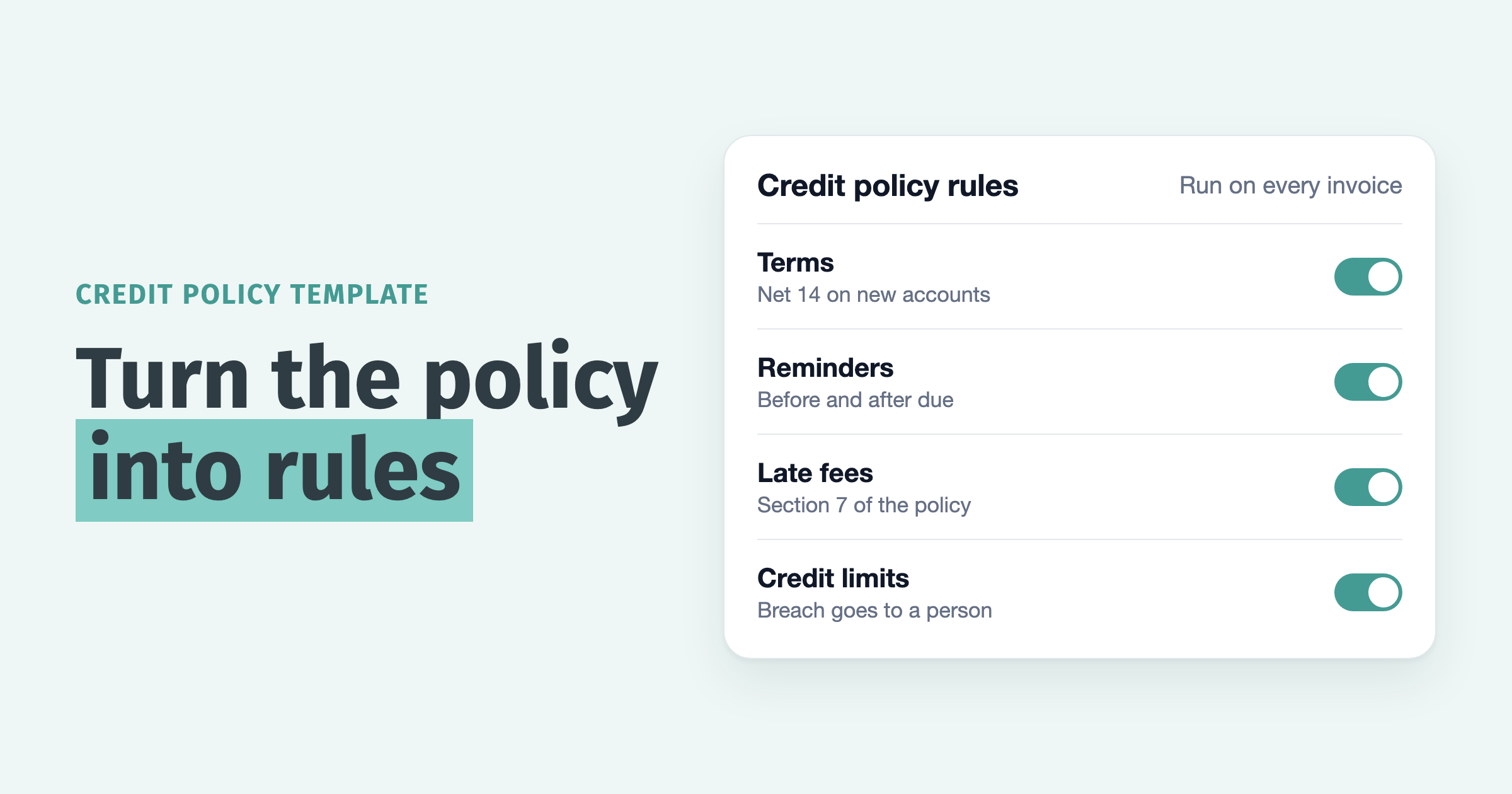
Write the thresholds into your credit policy so the hold is a written rule that sales can read before the order lands. Here is one example set a small team can copy. Change the numbers to fit your terms.
Credit hold triggers: check them against one customer
Tick each trigger that applies to the customer in front of you. The verdict updates below.
- Days overdueThresholdAny invoice 30 or more days past due.Before the holdWarn at 14 days, hold at 30.
- Over the credit limitThresholdThe open balance plus the new order is above the limit on the account.Before the holdHold the new order and leave the account open.
- Returned paymentThresholdA check bounces or a bank debit is returned.Before the holdHold until a cleared replacement lands. This trigger is your call: it is a common supplier choice, and no rule sets it for you.
- Broken promiseThresholdA promised date passes with no payment and no reply.Before the holdSee what to do when a promise to pay is broken.
- Account statusThresholdInsolvency or administration.Before the holdHold now. The table below gives the next step.
No trigger ticked. Keep shipping on terms.
Example thresholds for a small team. Change the numbers to fit your terms and write them into your credit policy.
Days overdue, account status, terms of payment, and an expired credit limit are four of the blocking rules Dynamics 365 Finance uses to send an order to its credit management hold list.
A fixed rule misses the slow slide. The better signal is the customer's own payment history with you: a customer whose average days to pay drifts from 28 to 45 over a quarter, or whose score keeps falling. Paidnice gives every customer a 0 to 100 credit score built from how they pay you, on every plan, so the drop shows before the 30-day line is crossed.
One late payment is a warning on its own. In Paidnice data, after an on-time payment, the next invoice is on time 82% of the time. After a payment 1 to 7 days late, it is on time 28% of the time.
When should you not put a customer on credit hold?
Do not hold a customer over a single invoice in dispute, a payment that is in transit, or a balance that is under the limit and only a few days late.
| Situation | Hold? | What to do instead |
|---|---|---|
| One invoice disputed, rest paid on time | No | Fix the dispute. Keep shipping. |
| Payment sent, not yet matched to the invoice | No | Check unapplied cash first, then decide. |
| Under the limit, 10 days late, usually pays | No | One reminder and one call. |
| Over the limit, nothing overdue | Partial | Hold the new order. Ship against payment of the oldest invoice. |
| New order from a customer 45 days overdue | Yes | Hold new orders. Offer cash on delivery for this one. |
| Returned payment or broken promise | Yes | Hold until cleared funds land. |
| Insolvency or administration | Yes, all | Cash only. Take advice on the open balance. |
What do you say to a customer on credit hold?
Tell the customer in writing before the hold starts, name the balance and the date, say exactly what lifts it, and copy the salesperson so nobody promises a shipment you will not make.
A hold the customer first learns about from a rejected order is the version that loses the account. Send a warning first, then the notice.
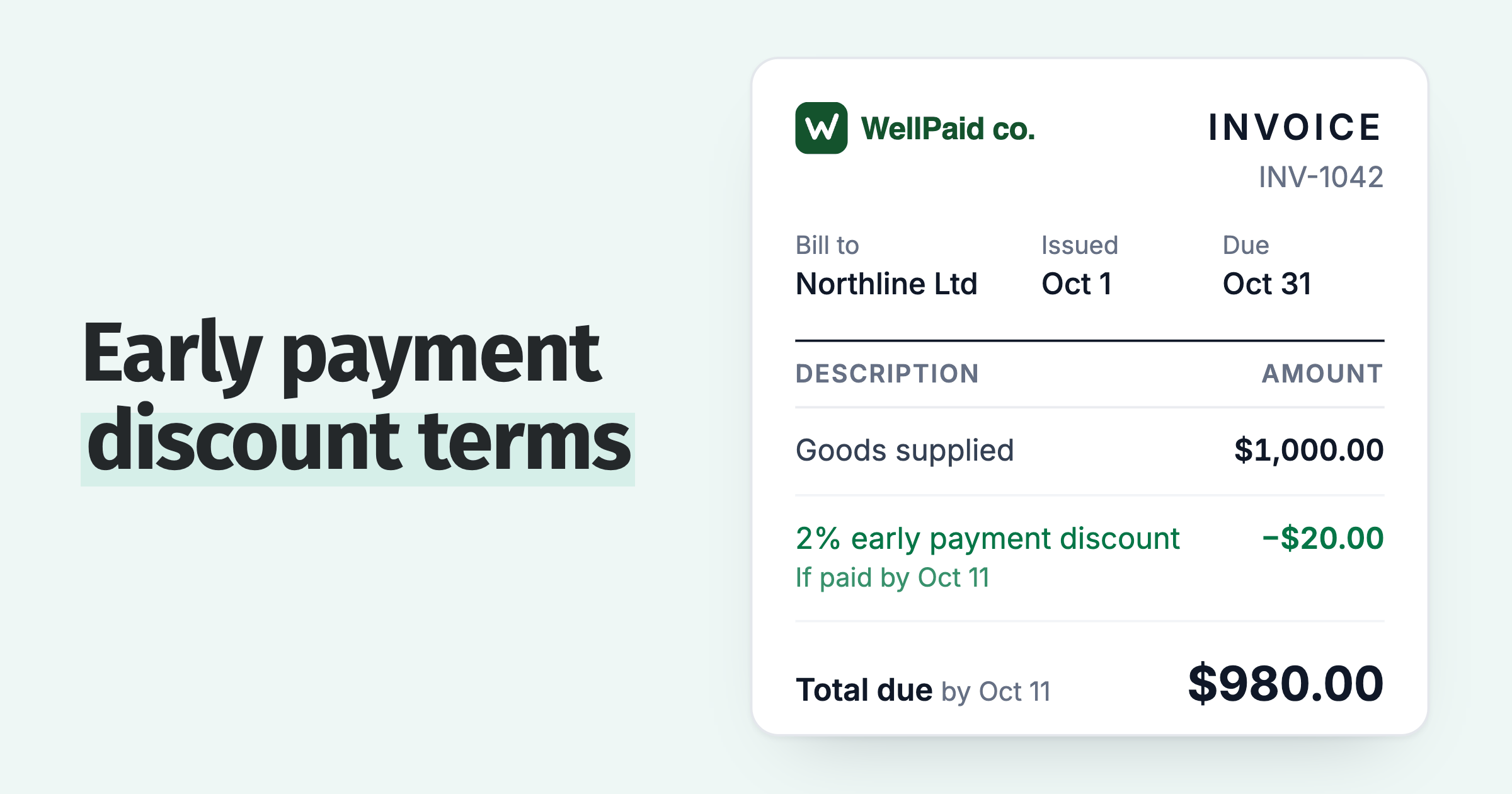
Warning (14 days overdue): "Hi Sam, invoice INV-1042 for $3,200.00 was due on September 15 and is now 14 days overdue. If it is not paid by October 13, we will need to pause new orders on credit until the account is brought up to date. If a payment is already on its way, reply and let me know."
Hold notice: "Hi Sam, your account is now on credit hold. The overdue balance is $8,400.00 across INV-1042, INV-1067 and INV-1081, so new orders are paused on credit terms, though we can still ship on payment in advance. The hold lifts the day cleared payment arrives, or when we agree on a payment plan in writing. Call me at this number if you want to talk it through."
Make the call as well. The call is where you find out whether the cause is cash, a lost invoice, or an approver on leave, and each has a different fix.
How do you release a credit hold?
Release a credit hold the same day cleared funds are matched to the invoices, or a written payment plan is agreed, and tell the customer and the salesperson in one message.
Warn before the hold, hold new orders only, release the day the trigger clears.
- Confirm the money has cleared and is applied to the right invoices. An apparent overdue balance is sometimes a payment that has not been matched yet.
- If the customer cannot pay in full, agree on a plan in writing: amounts, dates, and what happens if a date is missed. Payment plans with set dates keep the plan out of one person's inbox.
- Review the credit limit. A customer who reached a hold may need a lower limit or shorter terms for the next quarter. How to set a credit limit covers the method.
- Lift the hold in your system and note the date and reason on the customer's record.
- Tell the customer and the salesperson the same day, in the same message, so sales can take the next order with confidence.
A credit manager can also lift the hold by hand when the customer is still trading well. Note who approved the release on the customer's record.
How do credit holds work in Xero and QuickBooks?
Xero has a per-customer credit limit that can block invoices over the limit in new invoicing, with no credit hold or stop flag. QuickBooks Online does not block invoices over a limit, so the hold itself lives in your process.
In Xero the limit sits on the contact. A banner on a new invoice shows the remaining credit, and invoices over the limit can't be sent or approved when the block is on, while repeating invoices move to draft. The block works on the limit only, so a customer 90 days overdue but under the limit is not blocked.
A stop or hold flag for Xero contacts has been a user request since June 2023, and a commenter on the thread reports Xero has said it does not plan to build it. For QuickBooks Online, an Intuit staff reply says it has no credit limit option that automatically prevents invoices or orders being created, and suggests the customer notes field instead.
In both ledgers the hold is a decision a person makes and records, and the order desk needs to see it.
How does Paidnice help with credit holds?
Paidnice watches each customer's payment behavior and credit limit for you, and raises a Stop Credit escalation to a named person when a hold is due, so the hold is decided on time with the full account in front of you.
- Every customer has a 0 to 100 credit score built from how they pay you, with bands from Excellent to High risk, on every plan.
- Set a credit limit per customer. Going over it can trigger an escalation, alongside the days-overdue triggers.
- Escalation types include Escalate to call, Escalate to stop credit, and a template legal letter. The case goes to a person with the credit score, average days to pay, past escalations, and email history attached.
- On the Custom plan, Creditsafe bureau checks add outside data to your own.
The hold itself stays a step your team takes: Paidnice flags the account, assigns the decision, and keeps the record, and it does not write a hold into Xero or QuickBooks. See credit scoring in Paidnice and escalations.
In Paidnice data on 6.9 million invoices, an invoice 7 days overdue has a 1 in 5 chance of still being unpaid at 180 days. At 30 days overdue the chance is 2 in 5, and at 90 days it is 3 in 4. By the time a 30-day hold rule fires, the odds have already doubled, so the warning before the hold does most of the work.
Questions about credit holds
A credit hold pauses credit terms while the relationship carries on: warn first, hold new orders only, and lift it the day the trigger is cleared.
How long should a hold on a business account stay in place?
As long as the trigger does. A hold for an overdue invoice ends when the invoice is paid, usually within days. A hold for insolvency lasts until the customer can trade on terms again, which may be never.
Is a credit hold the same as a credit freeze?
A credit hold is a supplier's block on a customer's account for unpaid invoices or a breached limit. A credit freeze is a lock an individual places on their own file at a credit bureau so no new lender can pull it.
Can a customer on credit hold still buy from you?
Yes, on cash terms. A hold stops orders on credit. Payment in advance or on delivery keeps the goods moving while the balance is cleared.
Should a new customer start with a hold?
No. Start with a small limit and short terms from a signed credit application, judge them on the 5 Cs of credit, and raise the limit as the payment record grows.
About the editorial team
Denym started Paidnice in 2022 after customers paying late left his own business short on payroll. He has led it to $1 billion collected on time across more than 1 million invoices, and writes about credit control, late fees and getting paid on Xero and QuickBooks.
 App of the Year