

Summary
When a customer promised to pay and didn't, follow up the next business day. First check the payment is not still in transit, then ask what happened and get one new dated promise in writing. Call on the second miss. Send a formal letter or hold credit on the third.
- Check first: About 80% of ACH Network volume settles in one banking day or less, so allow a day before you call a promise broken.
- Ask for one new date: Ask what happened, then agree one new date and amount in writing, in the same email thread as the promise.
- Count the misses: The second miss gets a phone call from a named person, and the third gets a formal letter or a credit hold.
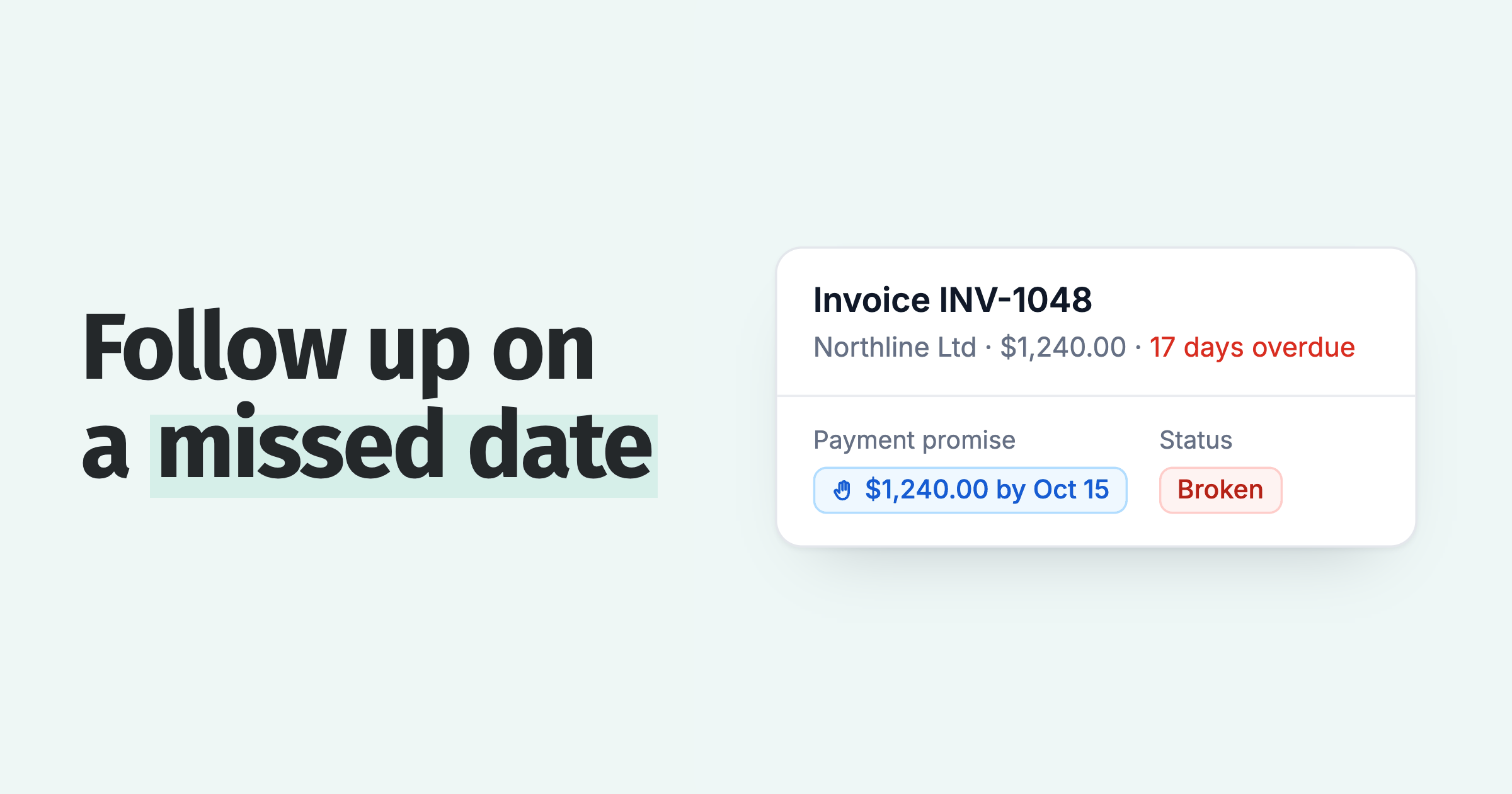
Your customer said the payment goes out Friday. Friday has passed, Monday's bank feed is in, and nothing has landed. You have company: US small businesses waited 29.3 days on average to be paid in Xero's June 2026 quarter data, and invoices ran 8.5 days late. Here is what to do from the morning after the promised date.
What counts as a broken promise to pay?
A broken promise to pay is a dated commitment on a named invoice that passes without the money arriving, after any grace period you allow. The promise to pay itself is the customer's word on a date and an amount. "Soon" or "next week" is not a promise, because there is no date to miss.
A missed date takes one of two shapes, and each needs a different message:
- Nothing arrives. The common case.
- Part arrives. The customer paid less than the invoice. Thank them, then ask for a date on the balance.
Has the payment failed, or is it still in transit?
Check your bank and the customer's remittance first, because a payment sent on the promised date can legitimately land a banking day or two later. Nacha reports that approximately 80% of ACH Network volume settles in one banking day or less, and an ACH credit can settle the same day, the next banking day, or in two banking days.
So when a customer says they paid by bank transfer, allow one to two banking days before you treat the promise as broken. Ask for the payment reference and the date it was sent, and look in your bank feed for a matching amount.
If it is in transit, say thank you and note the expected date on the invoice. If the explanation keeps changing, work out whether it is a dispute, a delay or a cash problem: what to do when a customer is not paying covers that.
How soon should I follow up after a missed promise?
Follow up the next business day, in the same email thread as the promise, because a quick, specific message shows the date mattered and the customer still remembers agreeing to it.
Keep the tone neutral on the first miss. A missed date can come from a payment run that slipped or an approval that sat in an inbox.
If the invoice carries a late fee, it stays on while you talk. The fee applies automatically under your terms, and you can waive it deliberately once the new date is kept. Waive it earlier and the customer has less reason to keep the second promise.
What should I say to a customer who broke a promise to pay?
Name the invoice, the date they promised and the amount, ask what happened, and ask for one new date and amount, all in two or three sentences.
Hi Sam, invoice INV-1042 for $2,480.00 was promised for Friday, October 9, and I can't see it in our bank. Has it been sent? If not, what date can you commit to? I'll note it on the invoice.
Four rules apply. Ask for the reason without accusing. Ask for one date, not "as soon as possible". Confirm their answer in writing, in the same thread. Never threaten on a first miss, because a warning you do not act on weakens every later one.
The second miss moves to the phone. Open with the count, then ask for money today:
Sam, this is the second date we've agreed on INV-1042. Can you pay $1,000 today and set a date for the rest?
More call scripts cover the full conversation. If the promise came as a reply to your reminder, what to do when a customer replies to a payment reminder covers that first exchange.
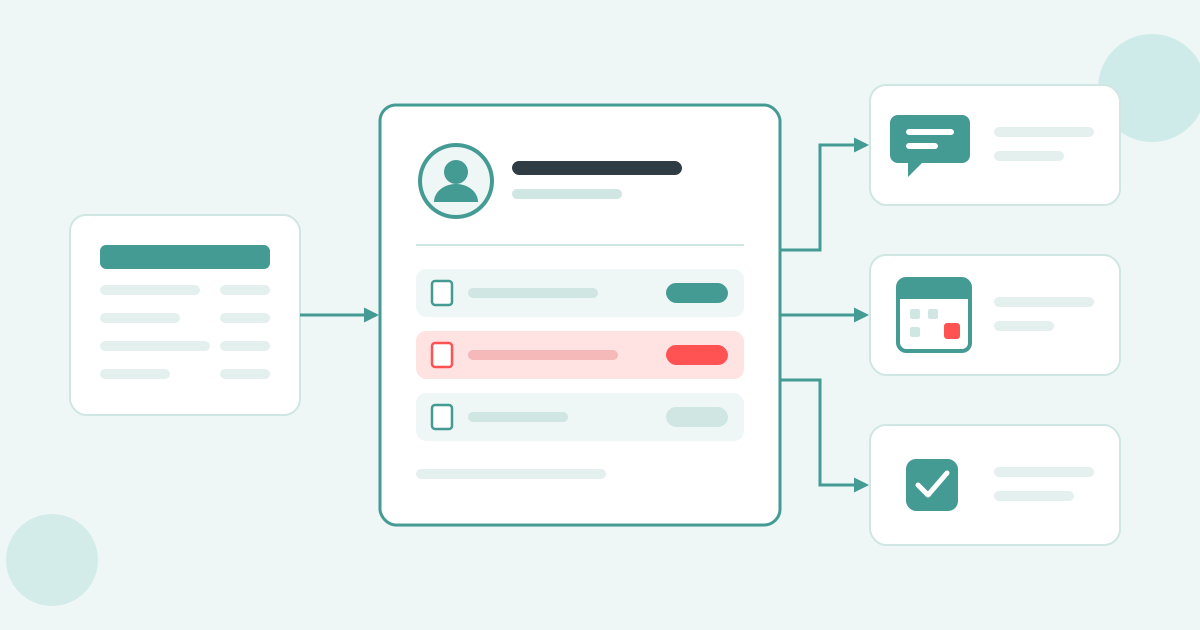
When a customer replies to a reminder with a new date, Paidnice reads the reply and drafts the answer. A person on your team approves the draft before it goes, unless that reply type is one you have pre-approved. Your team records the promise against the invoice.
How many broken promises should I accept before escalating?
Accept one broken promise with a written follow-up, make a phone call on the second, and move to a formal letter or a credit hold on the third. Each step changes the person, the channel and the ask.
| Miss | Who and how | What to ask for |
|---|---|---|
| First miss | The invoice owner emails or texts, in the same thread | The reason, and one new date and amount |
| Second miss | A named person phones | A part payment today, and a dated plan for the rest |
| Third miss | A manager or finance lead sends a formal letter, or holds further credit | Full payment by a final date, in writing |
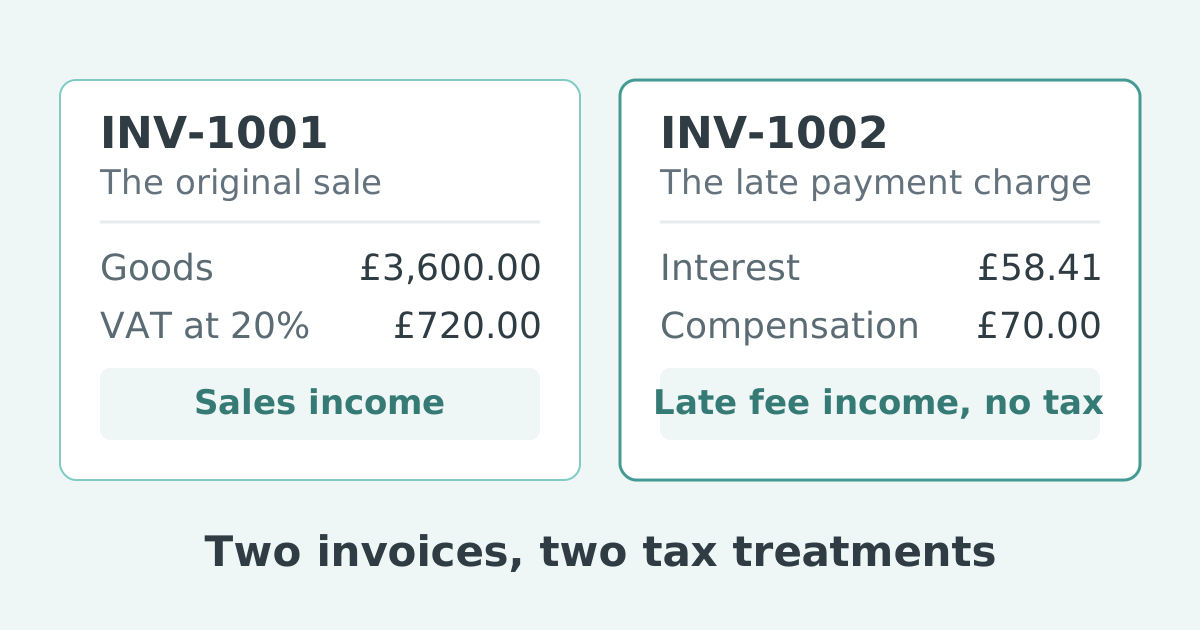
For UK business customers, each miss adds leverage. Claim statutory interest and the fixed sum of £40, £70 or £100 per invoice under the Late Payment of Commercial Debts (Interest) Act 1998 (the UK statutory interest calculator gives the figure), send a letter before action on the third miss, then claim through Money Claim Online. If the debtor is an individual or a sole trader, the Pre-Action Protocol for Debt Claims applies: they have 30 days to reply to your letter of claim before you start proceedings.
A customer with years of clean payments gets the benefit of the doubt on a first miss. A customer whose promises never turn into payments needs the third step sooner: that is where a letter of demand belongs, and the escalation ladder sets out what sits above it.
There is one exception. If the missed date reveals a disagreement about the invoice itself, stop counting misses and handle it as a dispute. Pressing for payment on a disputed invoice does not settle the disagreement.
In Paidnice, escalations can follow that table without a spreadsheet: an escalation can raise a call for the invoice owner, with a script, and can be set to wait while a payment is promised.
When should I ask for a written promise or a payment plan?
Ask for it after the first miss on a large invoice, or whenever the customer cannot pay in full, because a written date and amount, or a dated plan, is easier to hold someone to than a spoken promise.
A written promise covers one date for the whole balance: use the promise to pay agreement and letter when the invoice is large enough that you want it signed. A payment plan splits the balance into dated installments. A missed installment is a broken payment arrangement, with its own follow-up.
How do I track promises so a missed date gets noticed?
Record each promise with the date, the amount and who made it, and put the expected payment date on the invoice in your accounting system, so a missed date shows up without anyone having to remember it.
A "promised" column in a spreadsheet goes stale quickly when the person who took the call is not the person who checks the sheet. Give every overdue invoice one owner, and log phone promises as carefully as email ones. The day after the promised date, anything still unpaid lands on that owner's list.
Customers can promise a date from the invoice page in the customer payment portal, and your team can log one from a call. A policy can pause reminders until the promised date. If the date passes, the invoice owner can get an email.
Broken promise to pay questions
How do I politely ask a customer to pay after a missed promise?
Keep it factual. Name the invoice number, the amount and the date they gave you, ask whether the payment has been sent, and ask for one new date if it has not. No blame and no threats on a first miss.
How long should I wait before treating a promise as broken?
Check the payment method first. For a US bank transfer, allow one banking day and two at most. No payment reference and no sent date means the promise is broken.
Can I still charge a late fee after a customer broke a promise to pay?
If your payment terms provide for a late fee, yes. The promise moves the date you expect the money. The payment terms the customer agreed to stay in force. Apply the fee as normal, and waive it deliberately if the new date is kept. This is general information, not legal advice.
What happens if a customer does not pay by the date they promised?
Treat the missed date as the first miss. Follow up the next business day in the same thread, ask whether the payment has been sent, and get one new date and amount in writing. A second miss gets a phone call, and a third gets a formal letter or a credit hold.
How do I email a customer about an outstanding payment?
State the invoice number, the amount, the original due date and the date they promised, then ask for a payment date or a payment reference. Keep it to a few lines and send it from the person who owns the invoice. The payment reminder email templates cover each stage.

 App of the Year