

Xero does not alert you when an invoice goes overdue. It lists overdue invoices in the aged receivables report and the invoice list, and its automated reminders email the customer, not you. Nothing in Xero pushes a notification to your team the moment an account tips from current to overdue.
Xero does not alert you when an invoice goes overdue. The aged receivables report and the invoices list both flag what is overdue, and you can sort and filter to put the oldest or largest balances on top, but you only see the change when you open the report. There is no setting that says "email me the moment an account moves from current to overdue".
The gap is about timing. A report that contains the answer is not the same as a message that reaches you on the day the answer changes. If your habit is a weekly check, an account can be overdue for up to seven days before anyone in your business knows.
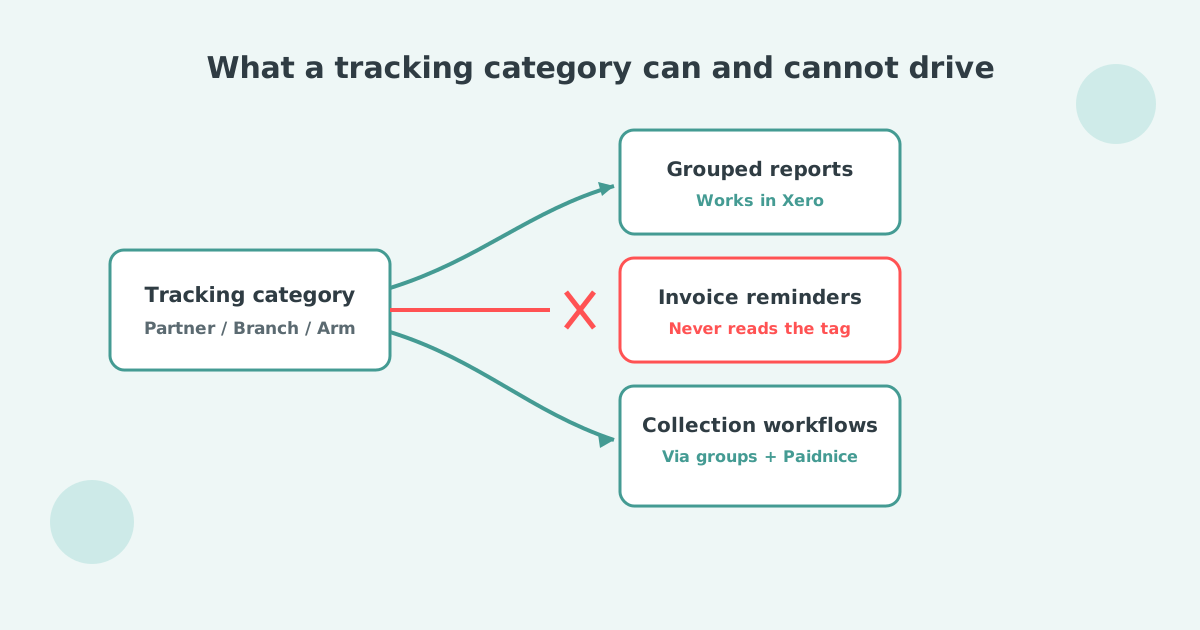
Xero's automated invoice reminders notify the customer, not you. They fire on overdue invoices according to the organisation's reminder schedule, and every email goes to the contact on the customer record. They are a nudge to the debtor, and they do not tell you that a particular account has crossed the line for the first time.
An internal overdue alert is a different thing: a message to the person in your business who owns the account, separate from anything the customer sees. Xero has neither a setting for it nor a notification channel to send it through.
The first overdue day matters because a customer who always pays on time and is suddenly a few days late is usually telling you something changed on their side: a cash-flow squeeze, a dispute they have not raised, or an approval stuck upstream, which is common in construction and not-for-profits. Plenty of other overdue invoices mean nothing. A customer runs a payment run every Thursday, an invoice falls due on Wednesday, and it clears a day late.
Caught on day one, the reliable payer's slip is a friendly call that often fixes the whole thing. Caught at day 60, when the balance is large and the relationship is tense, it is a harder and more expensive conversation. The window where a quick word would have fixed it is exactly the window Xero does not tell you about.
The manual method is a weekly calendar reminder to open the aged receivables report, and at higher volume, an export of the report to a spreadsheet each week so you can compare this week's tab with last week's and find any customer who is newly overdue. At low volume it is fine.
It depends on one person remembering, every week, without fail. It is always up to a week behind. And it fails in exactly the week you are slammed, which tends to be the week an account quietly slips, because that is when nobody has time to run the comparison.
You get an overdue alert from Xero by connecting a credit control layer such as Paidnice, which tracks each account's status and notifies your team on the change, separate from the reminders the customer receives. Here is the difference, side by side.
| Overdue alerting | Xero (native) | Paidnice (credit control layer) |
|---|---|---|
| Alert when an account first goes overdue | None, you check the report | Triggers the first time an invoice crosses into overdue |
| Who gets the alert | Reminders go to the customer | An internal alert to you, not the customer |
| Routed to the account owner | Not available | Sent to the person or team that owns the account |
| Threshold control | Fixed report | Day one overdue, or any threshold you set |
| Where the alert lands | Nowhere, it is a manual check | Email, in-app, or a webhook into Slack, Teams or Zapier |
| Attach an action | None | A follow-up task, phone-call task, credit stop or legal letter |
| See the portfolio risk | Owed and owing only | DSO, aging and payment-risk reporting |
In Paidnice the first-overdue alert runs as an escalation: connect Xero, create a rule that triggers when an invoice crosses into overdue, and set the threshold at day one to catch the first slip or later if you only care once something is genuinely late. Setting it up takes a couple of minutes.
You choose who hears about it and how. Send the alert to yourself, or route it to the team or person who owns that customer, so the right people get the accounts that are theirs. Pick where it lands: an email, a notification inside Paidnice, or a webhook that pushes it into Slack, Teams or Zapier, so it shows up where your team already works.
The trigger does not have to be a single invoice. An escalation can also fire on a customer's total overdue balance, or when the customer breaches a credit limit you have set, so one rule can cover "any invoice slips" and another "this account is now carrying too much".
Because the alert is internal, it is separate from the reminders going to your customer. The debtor gets your normal, polite reminder. You get a quiet heads-up that this account is one to watch.
An overdue alert should trigger a named next step, because an alert with no action attached collects nothing. It moves the worry from the report to your inbox, and you still have to remember to act, which is the thing that was already failing.
In Paidnice the rule that flags the account is the rule that does something about it. The same escalation can open a follow-up task, raise a phone-call task with instructions for whoever makes the call, place a credit stop, or hand off to a templated legal letter, each routed to the right person, while a separate late fee policy applies the fee your terms allow. Notes and call outcomes sync back to the invoice in Xero. You can see how this works on the Paidnice escalations page.
A weekly look at aged receivables is enough when you invoice a handful of customers who almost always pay on time. Set the calendar reminder and save your money.
In Paidnice a first-overdue alert is one rule inside a fuller credit control layer, not a standalone alarm. It earns its place when the alert is the front door to the rest of the process: the reminders, the late fees, the statements and the escalations that act on what the alert just told you. If you only ever wanted the ping, native Xero plus a weekly habit will do, or a Zapier build against Xero if you are handy with it.
If catching problems on day one matters to you, and you want the alert to come with an action attached, sign up to Paidnice (free, no credit card) and connect Xero in about five minutes, or book a demo.
How do I find out which customers have just gone overdue in Xero?
Either review the aged receivables report manually and track the changes week to week, or connect a credit control layer like Paidnice that watches each account's status and alerts you the first time one tips into overdue.
Can I get the overdue alert sent to me instead of the customer?
Yes. In Paidnice the first-overdue alert is an internal notification to you or the account owner, separate from the reminders that go to the customer. You can also push it into Slack or Teams with a webhook.
Does this work if I send thousands of invoices a month?
Yes. You set the overdue threshold and route alerts to the team or person who owns each account, so the right people get the accounts that matter to them. Paired with Paidnice's AR reporting, you also get a portfolio view of where the risk is concentrated.
Can Paidnice do something about the overdue account, not just alert me?
Yes. The same rule that flags the account can create a follow-up task, raise a phone-call task, place a credit stop, or escalate to a templated legal letter, each one routed to the right person.
Paidnice is accounts receivable automation that enforces your payment terms, trusted by thousands of businesses on Xero and QuickBooks. Credit control and debtor management, run for you.
Try it Now - It's FreeNo card required.


Optimize your cash flow with our suite of financial tools designed for AR professionals. Calculate DSO, aging analysis, late fees, and more.