



Summary
Dunning recovers failed card payments through automatic retries. It never reaches invoice-terms accounts with no card on file, so B2B SaaS books need a separate credit control layer for enterprise customers on 30 or 60-day terms, the accounts that are usually the largest contracts on the ledger.
- The gap: Stripe's Smart Retries run up to two months on card failures only; invoice-terms accounts have nothing to retry.
- The fix: Paidnice reads the ledger, not the payment processor, so it follows up invoice-terms accounts, applies late fees, and escalates.
- Price: Paidnice starts at £49 a month for 150 invoices, with unlimited users on Pro.
What is credit control (and what is it not)?
In business, credit control means the day-to-day work of deciding which customers get credit and making sure every invoice is paid on time. See the definition of credit control.
- Credit control is not card dunning. Card dunning retries a payment on a stored card. Credit control follows up invoices where no card payment was ever attempted.
- Credit control is not debt collection. Credit control ends when the money lands or the account goes to a collection agency.
- Credit control is not the ledger. Accounts receivable is the money owed. Credit control is the work that gets it paid.
This matters for a SaaS book because card retries cover subscriptions on cards and nothing else. Enterprise accounts on 30 or 60-day invoice terms need credit control, and the sections below show what that layer adds after the retry window.
Free: Payment reminder email templatesCopy the reminder emails for before, on and after the due date.What does dunning cover in a SaaS payment stack?
Dunning in a SaaS payment stack means automatic card retries plus failure emails, run by Stripe, GoCardless or a billing platform such as Chargebee, inside a retry window that ends with a status change. It is good at the failure modes it was built for, and each vendor's own documentation is clear about the edges.
Stripe. Smart Retries pick retry timing with machine learning inside a window you choose, capped at two months; Stripe's recommended default is eight tries inside a fortnight. When the window closes you pick one of three outcomes: cancel the subscription, mark it unpaid, or leave it past due.
The subtlety is payment method. Retries for bank rails are off by default and run to fixed schedules when enabled, such as two retries across 30 days for Bacs Direct Debit, and only for insufficient-funds failures.
GoCardless. The vendor publishes an overall failure rate of 2.2% across its merchants, with insufficient funds as the dominant cause. Its retry product, Success+, claims recovery of up to 70% of initially failed payments. A failed mandate payment without that product waits for a manual resubmission.
Billing platforms. Chargebee and similar layers add richer retry configuration and better failure emails on top of the processor, and their dunning explicitly excludes one-off charges and the direct-debit rails in several configurations. The end state is the same: an invoice marked not paid, a subscription cancelled or left running.
What revenue does dunning never reach?
Dunning never reaches revenue with no stored payment method behind it: enterprise accounts on 30 or 60-day invoice terms, cancelled direct debit mandates, disputed usage charges, and invoices waiting on a purchase order number. Every retry engine assumes a payment method existed and a charge was attempted, and the expensive gaps are the ones where that assumption breaks.
The pattern is that dunning handles payment failures and cannot handle payment absences. The invoice-terms accounts are the sharpest case: they are typically the largest contracts, they pay by bank transfer against a PO, and to the billing stack they are simply an invoice that nobody has paid yet. Getting the PO confirmed before the due date is half of collecting them.
What does a credit control layer add after the retry window?
A credit control layer reads the ledger rather than the payment processor, so it sees every open invoice in Xero or QuickBooks Online whether or not a payment method exists. From there the sequence is the same one a good finance person would run manually.
- Sequenced reminders under a named sender. From your own domain, quoting the invoice number and amount, timed around the due date rather than around a failed charge.
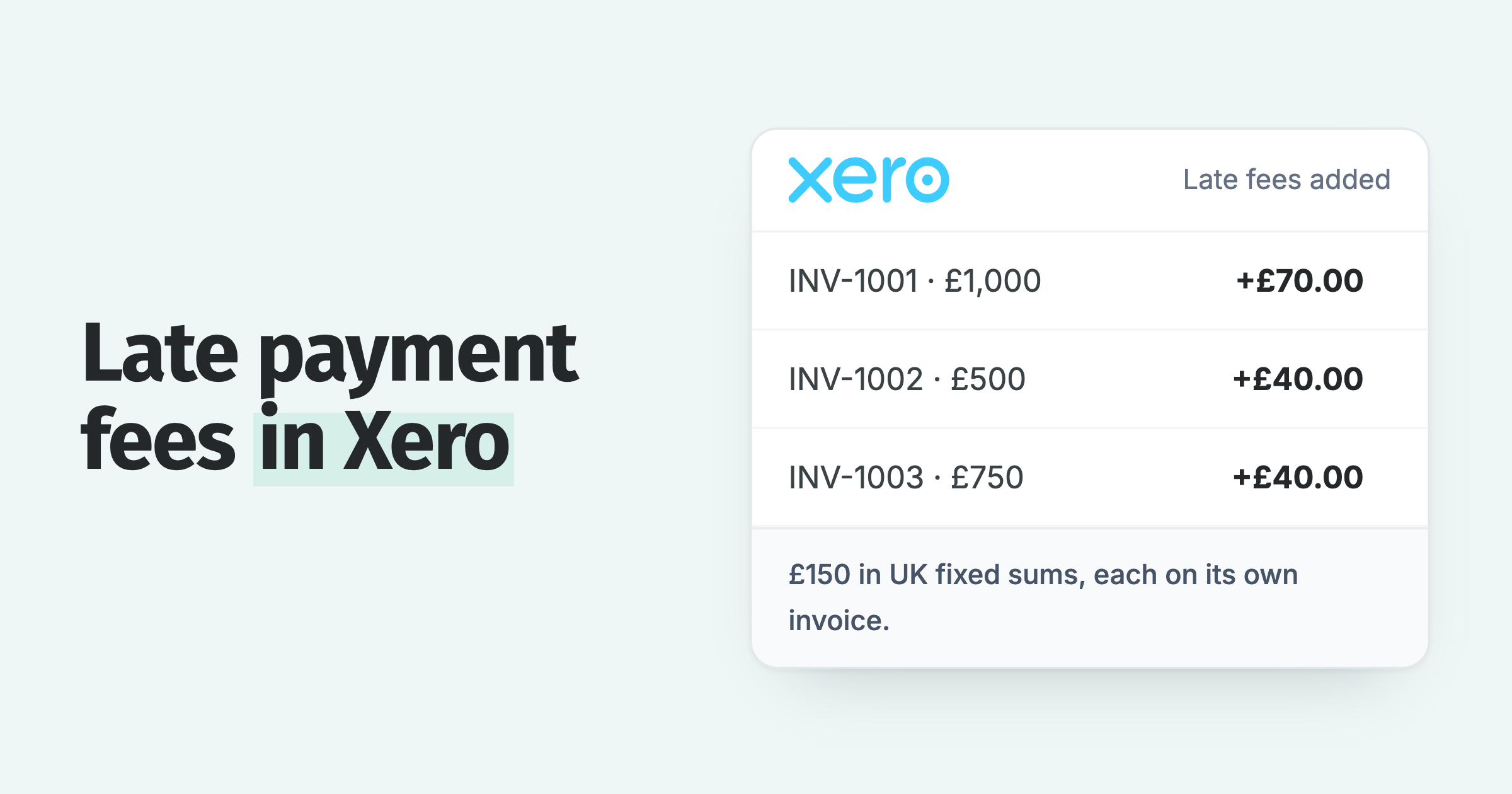
- A cost to lateness. A late fee or statutory interest raised onto the ledger moves the invoice up the customer's payables queue. In the UK the statutory rate is Bank of England base rate plus 8%, with a fixed sum of £40, £70 or £100 per invoice by size.
- Escalation with a record. When finance goes quiet, the relationship owner is alerted and each warning, stop-credit step included, is logged against the invoice.
How does Paidnice run collections for a B2B SaaS book?
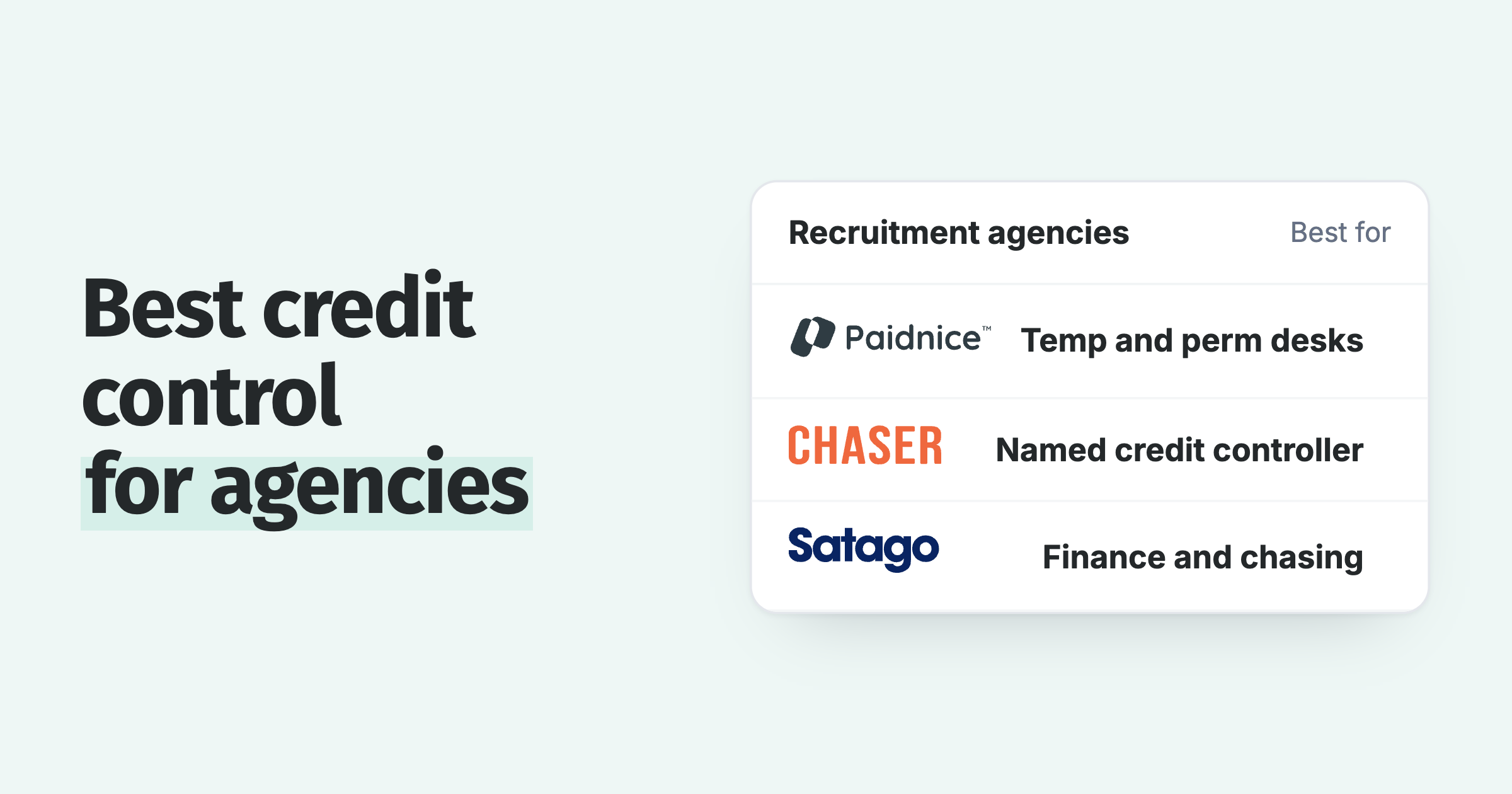
Paidnice sits on Xero or QuickBooks Online and does invoice dunning for the invoices your payment stack cannot charge: reminders, statements, late fees, payment plans and escalation, each set per customer group. Policies belong to customer groups, so the card-paying self-serve base, the invoice-terms enterprise accounts and each product line can run separate sequences with their own timing, wording and sender.
Reminders and statements send from your own domain through sender profiles, so the chase carries a real person's name instead of a billing alias. Late fee and statement interest policies put a real cost on lateness, raised straight onto the ledger. Stripe and Pinch payment links sit inside every reminder and statement, with deposits, instalments and auto-pay where a conversation ends in a payment plan.
Escalations carry the access-restriction step most SaaS teams improvise. An escalation can fire on days overdue, on a customer's total balance or on a credit-limit breach, and email the instruction, such as a stop-credit warning, to the account owner with the invoice history attached.
For the inbound side, Paidnice reads replies to chasers with AI, drafts responses and escalates what needs a human, with approval before any reply sends. Nothing about the card stack changes: Stripe keeps retrying cards, and Paidnice chases the money retries cannot reach. Pricing starts at £49 a month on Essentials, which covers 150 invoices and 600 emails a month, with Pro from £74 and unlimited users on Pro; the wider market's pricing models are compared separately.
How does a small SaaS finance team set this up?
A small SaaS finance team with mixed billing runs four customer groups: self-serve accounts on card, mid-market accounts invoiced monthly, enterprise accounts on 60-day terms with purchase orders, and accounts that are disputed or on a payment plan. A one-person finance function with three products typically lands on the arrangement below.
| Segment | What runs |
|---|---|
| Self-serve, card on file | Stripe Smart Retries plus failure emails. Credit control stays out of the way. |
| Mid-market, invoiced monthly | Pre-due heads-up, due-date note, then chasers at 3, 7 and 14 days overdue from the finance lead's address. |
| Enterprise, 60-day terms with POs | PO confirmation before the due date, statements monthly, escalation to the account manager at 14 days overdue. |
| Disputed or on a plan | Standard sequence paused, instalment schedule with auto-pay, owner assigned. |
The segments live as groups, so a customer moved between them changes sequence automatically. The same structure carries automatic statements and the late-fee policy, and it is the arrangement described by teams comparing the wider credit control market.
Common questions about credit control for B2B SaaS
Does Stripe do credit control?
Stripe retries failed card payments and emails customers about failures. It does not chase invoice-terms accounts, request purchase orders, apply late fees or escalate to a second contact, which is the credit control layer.
What happens when Stripe's retries run out?
You choose one of Stripe's three end states for the subscription: cancelled, unpaid, or left past-due. Collection stops in all three; recovering the money from there is manual or handled by a collections tool.
Why do B2B SaaS companies still have overdue invoices if billing is automated?
Because the largest accounts are usually on invoice terms with no stored payment method, and because disputes and cancelled mandates need a conversation. Automation in the payment stack only covers attempted charges.
Should a SaaS business charge late fees?
On invoice-terms accounts, a published late-fee policy moves invoices up the customer's payables queue and gives your terms teeth. In the UK the statutory entitlement is interest at Bank of England base rate plus 8% a year.
Can credit control software restrict a customer's account access?
The software runs the warning sequence and issues the stop-credit instruction to your team on schedule; the restriction itself happens in your product. The value is that every warning is logged and nothing depends on someone remembering.
Do I need credit control software and a billing platform?
They do different halves. The billing platform charges stored payment methods and retries failures; credit control chases the invoices no charge can settle. Most B2B SaaS books past a few hundred customers have both problems.
About the editorial team
Denym started Paidnice in 2022 after customers paying late left his own business short on payroll. He has led it to $1 billion collected on time across more than 1 million invoices, and writes about credit control, late fees and getting paid on Xero and QuickBooks.
 App of the Year