Paidnice is financial relationship management software for B2B businesses on Xero and QuickBooks. Every reminder, statement and late fee follows each customer's payment history, so you collect on time and keep the customer.
No credit card. Your first 20 actions are free.


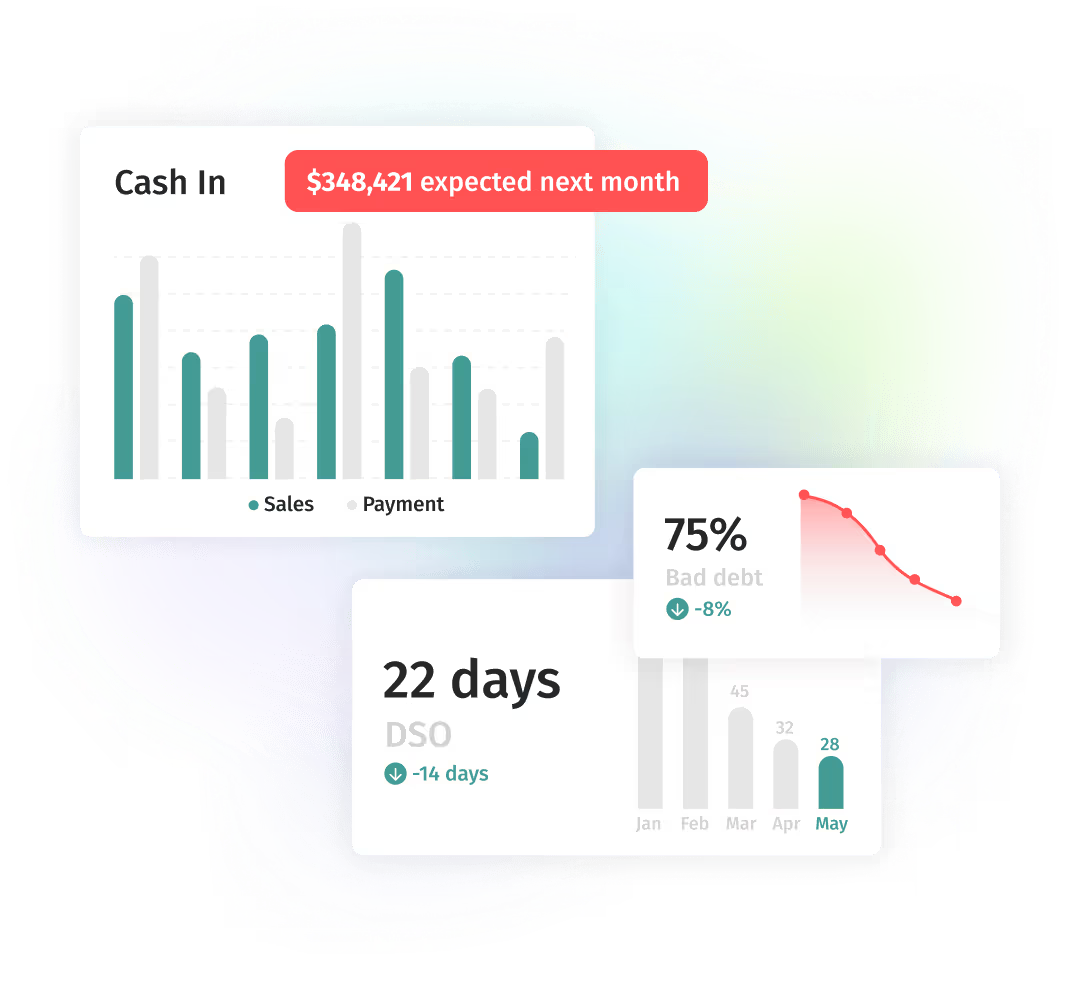
Each contact carries a payment-history score from 1 to 100, next to the payment history, overdue balance, messages sent and notes on calls and disputes. An expected payment date sits on the invoice or the customer.

"It’s helped us issue late fees consistently and given us much better visibility over our debtors and overall debt tracking."
Group customers by payment behavior, size or risk, and run several policies at the same time. The message changes with the age of the invoice.

"The app is working perfectly! The grouping system has really made the difference."
Reminders go by email and SMS, every action has an approval step, and collection pauses until an expected payment date. One disputed invoice comes out of a policy by its reference.
"One of the biggest advantages for me is being able to send all communications directly from my own domain, everything looks fully branded and professional, with delivery tracking built in."
Escalations go to a named person, mentions notify teammates, and late payment, an early sign of churn risk, reaches Slack or Microsoft Teams by webhook. Every message logs to HubSpot, Pipedrive or Salesforce by BCC.
"First round of late penalties and everyone magically paid their bill. Amazing."
A CRM manages the relationship before the sale. Financial relationship management manages it after the invoice, until the cash is in the bank. Most B2B businesses need both. Paidnice can log its messages to your CRM by BCC.
| CRM | Financial relationship management | Paidnice | |
|---|---|---|---|
| Primary focus | Winning the sale | Collecting the invoice | Collecting the invoice |
| Core user | Sales and marketing | Finance and credit control | Finance and credit control |
| Data it holds | Leads, deals, contacts | Invoices, payment history | Ledger, score, notes |
| Goal | More revenue booked | Revenue paid on time | Revenue paid on time |
| Terms enforcement | None | Not part of the definition | Late fees, interest, statements and escalation applied by rule |
And accounts receivable automation? It sends the reminders, statements and fees. Financial relationship management decides which customer gets which treatment, and Paidnice runs both from the same ledger connection. Read financial relationship management vs accounts receivable automation, how to pick a financial relationship management system or what an accounts receivable CRM does.
Results across Paidnice customers
Paidnice also enforces your terms: late fees, interest, statements and escalation apply by rule after the grace period, the same way for every customer in a group. You can waive or credit a fee inside Paidnice.
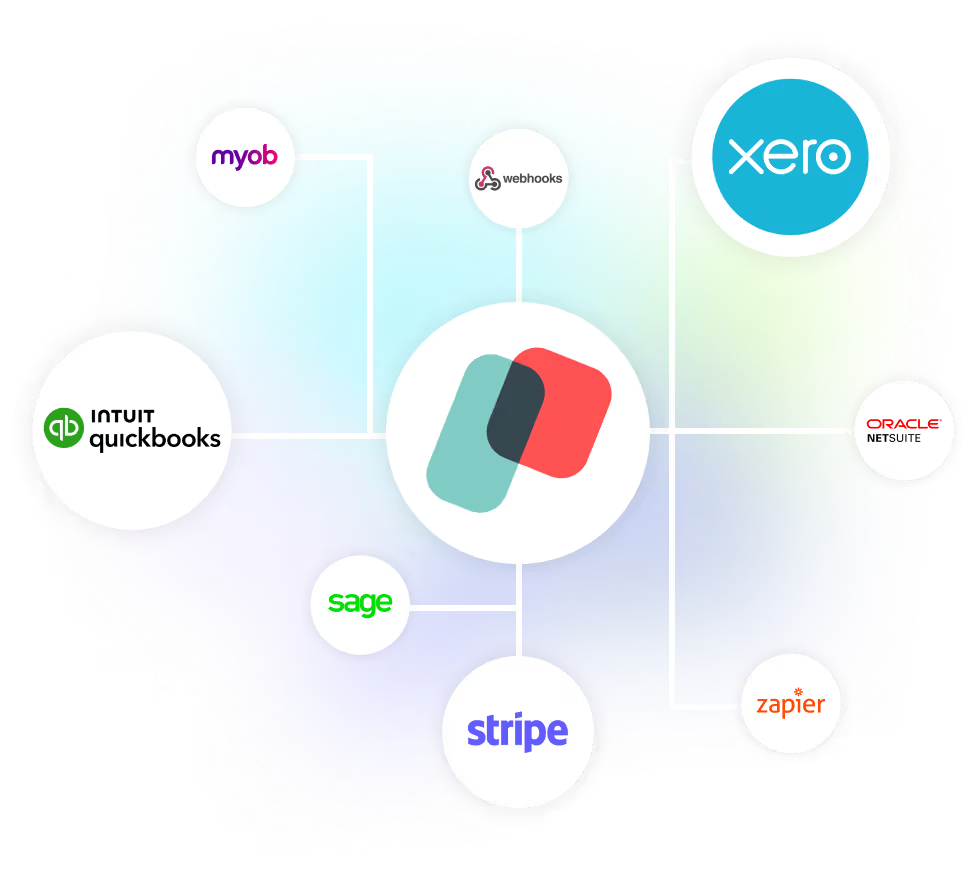
Nothing changes in Xero or QuickBooks unless a rule you set makes it happen. Paidnice connects through the official Xero and QuickBooks integrations, so we never see your accounting password.
It’s the debt collection system I’ve been looking for, for the last 15 years.


Within the first month of implementing Paidnice, we saw late customer payments decrease from over 20% to zero.
Alex Hamilton, Paintvine, New Zealand
Read the case study →
The biggest impact from using Paidnice has really been man hours for me. Just by using Paidnice, it's freed up loads and loads of time. We're talking five hours already of admin per month, and we're a scaling business. In a year, that could be 15 to 20 hours a month.
Jon Murphy, Salt Silo, United Kingdom
Read the case study →
Before Paidnice, over 25% of our payments were late, which we were manually chasing up. With Paidnice automating this for us, that has dropped to less than 5%
Louis Fourie, Venture Workspace, South Africa
Read the case study →Financial relationship management is the way a B2B business manages customers after the invoice is sent. It has four parts: customer context, segmentation, adaptive workflows, and finance, sales and support working from the same record. Paidnice adds enforcement of terms: late fees, interest, statements and escalation applied by rule.
A finance CRM holds what the finance team needs to know about each customer: open invoices, payment history, notes, call outcomes and promised payment dates. A sales CRM holds leads and deals. In Paidnice, every contact also carries a payment-history score from 1 to 100.
A CRM manages the relationship up to the sale. Financial relationship management starts at the invoice and ends when the invoice is paid. The user is the finance team, the data is the ledger, and the goal is revenue paid on time.
If you sell on credit terms, you need both. Automation sends the reminders, statements and fees. Financial relationship management decides which customer gets which treatment. Paidnice does both from one connection to Xero or QuickBooks.
No. Keep your sales CRM. Add a BCC address to a Paidnice sender profile and every reminder and statement is logged in HubSpot, Pipedrive or Salesforce, so sales can see the payment conversation.
Yes. Paidnice connects to your Xero organisation or QuickBooks Online company. It picks up the invoices that are already open at connection, and every action has an approval step.
Your first 20 actions are free, with no credit card. Paid plans start at US$69 a month and are priced by invoice volume, not revenue. There are no contracts and no lock-ins. See <a href="/pricing">pricing</a>.
Financial relationship management
No credit card. Your first 20 actions are free.