
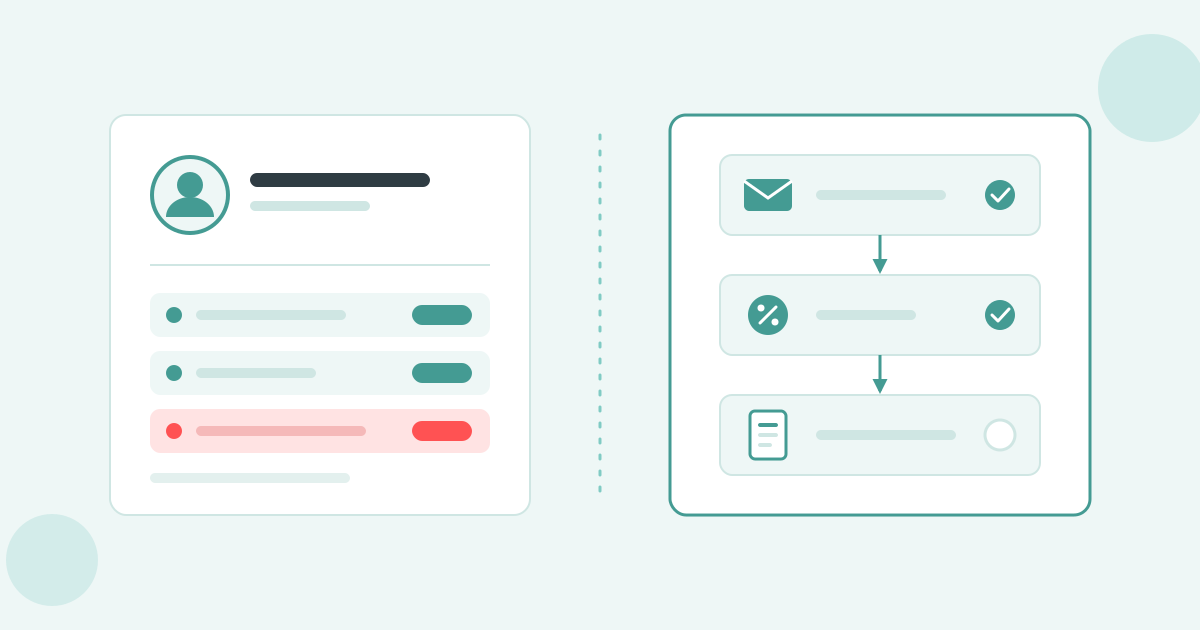

Financial relationship management (FRM) organizes what you know about each customer who owes you. Accounts receivable automation does the collection work: reminders, late fees, statements and escalation. Most businesses need the automation first.
The two terms appear on the same software shortlists, and vendors use them for products that overlap. Compare the two below, then use the decision list for your invoice volume.
If the first term is new to you, start with what financial relationship management is and how to pick an FRM system, then come back here.
Financial relationship management (FRM) is the way a B2B finance team runs accounts receivable as a customer relationship: every reminder, statement and fee follows what you know about that customer's payment history.
A sales CRM records the deal. FRM records what happens after the invoice goes out. It answers questions a sales record cannot: does this customer pay on time, who did we speak to last, what did they promise, and is one invoice in dispute while the rest are fine?
The four parts of financial relationship management are:
The financial relationship management page shows how each part maps to a feature.
Accounts receivable automation is software that does the repeat work of getting invoices paid: it sends reminders and statements, adds late fees and interest, and escalates overdue accounts by rule.
The software connects to your accounting system, reads the open invoices and acts on a schedule you set. A typical policy sends a reminder before the due date, another on the due date, and more after it. It then adds a late fee, sends a statement and gives the account to a person for a phone call.
The value is consistency. Every customer gets the same terms, applied the same way, on the same day. Nobody has to remember to chase. Our guide to AR automation covers the full workflow, and the accounts receivable software page covers the product category.
FRM is about knowing the customer. Accounts receivable automation is about acting on the invoice. The table shows the difference line by line.
| Financial relationship management | Accounts receivable automation | |
|---|---|---|
| Primary focus | The customer relationship | The overdue invoice |
| Main job | Record and organize | Send, charge and escalate |
| Core user | Finance team, credit controller | Owner, bookkeeper, finance team |
| Data it holds | Notes, call outcomes, promises, payment history | Invoices, due dates, policies, fees |
| What triggers work | A person reviews the account | A rule fires on a date or a balance |
| Terms enforcement | Not part of the definition | Late fees, interest and statements by rule |
| Result you measure | Fewer disputes, better conversations | Lower DSO, fewer overdue invoices |
| Breaks down when | Nobody has time to act on the record | Every customer gets identical treatment |
Up to about 150 invoices a month, automation alone covers most of the need. The relationship layer starts to matter as invoice volume and the number of key accounts grow.
Invoice volume is the most useful measure, because it sets the amount of collection work. A business with 40 large invoices has less chasing to do than a business with 900 small ones.
These bands match how Paidnice plans are sized: Essentials covers 150 invoices a month, Pro runs from 300 to 4,000, and Custom covers more than 4,000. Paidnice is priced by invoice volume, not revenue. See pricing for each band.
They overlap wherever a fact about the customer changes what the automation does: a promised payment date, a disputed invoice, a key-account group, or a poor payment record.
Four examples show the overlap in practice:
When the two sit in different tools, a person has to carry each of these facts across by hand. That is where reminders go to customers who already promised to pay, and where trust gets damaged. Teams that want the record side in more depth can read what an accounts receivable CRM is and how to evaluate one.
Paidnice does both. It is accounts receivable automation for Xero and QuickBooks Online, with the relationship record built into the same place the automation runs.
On the automation side, Paidnice sends reminders by email and SMS, sends statements, and adds late fees and interest as a flat amount, a percentage or compounding interest. Late fees are leverage: Paidnice applies them automatically, and you waive them deliberately. Escalations assign a phone call, a stop-credit step or a template legal letter to a named person.
On the relationship side, every contact carries a payment-history score from 1 to 100. Notes and call outcomes sync to the invoice in Xero. An expected payment date pauses collection until that date. Customer groups run different policies at the same time, and an invoice-reference filter takes one disputed invoice out of a policy.
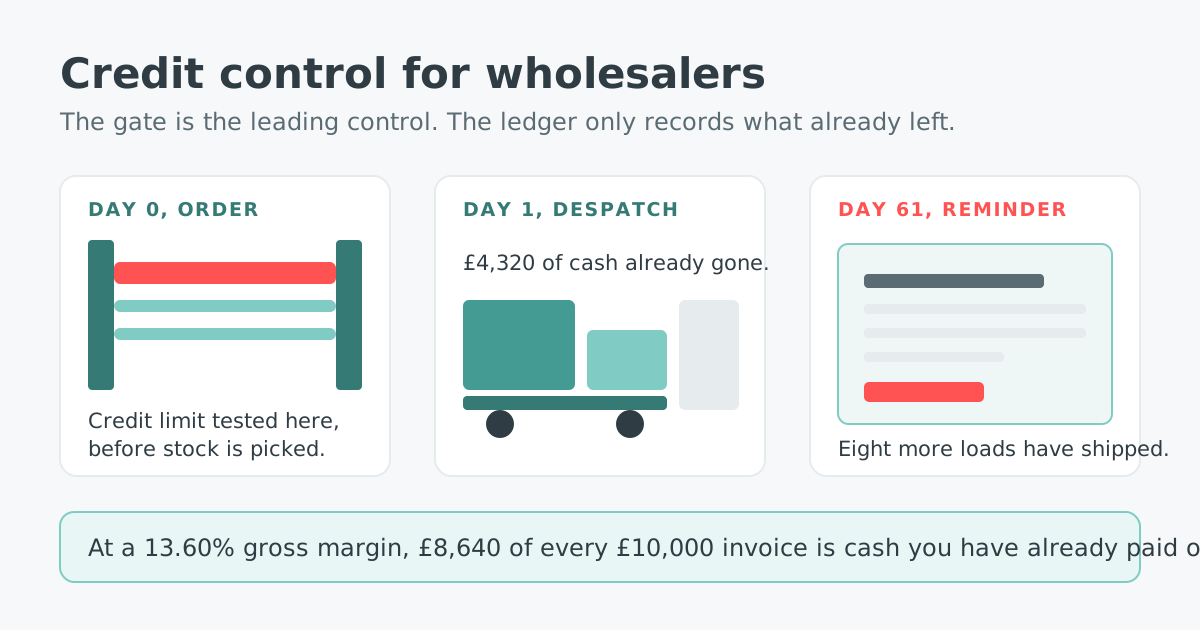
Control features connect the two. You can put an approval step in front of every action. Escalations can trigger on days overdue, on a customer's total balance, or on a credit-limit breach. A BCC address on outgoing mail logs each message to a CRM such as HubSpot, Pipedrive or Salesforce, so the sales team sees the same history.
If your need is closer to managing the credit you have already given, with credit limits, credit holds and a payment-history score, see credit management software. If your need is to run a fee policy, with exemptions, approvals and a report of fees charged against fees collected, see the late fee manager.
No, the two are different, and most businesses should buy accounts receivable automation first. Paid plans for Paidnice start at US$69 a month.
No. Financial relationship management organizes what you know about a customer's payment behavior and your conversations with them. Accounts receivable automation sends the reminders, statements and late fees. They work best together, because customer facts should change what the automation does.
It is close to one. A sales CRM follows a customer up to the signed deal. FRM follows the same customer after the invoice: payment record, promises, disputes and notes. Some teams call the software an accounts receivable CRM or a finance CRM.
Accounts receivable automation. A small business usually knows its customers well and loses time on the repeat work of chasing. Reminders and statements alone are a full use case, and late fees are optional. Add the relationship features when more than one person handles collections.
Paid plans start at US$69 a month and are priced by invoice volume, not revenue. Your first 20 actions are free, with no credit card. There are no contracts and no lock-ins. Sign up and connect your Xero organisation or QuickBooks Online account, and Paidnice picks up your open invoices at connection.
Paidnice is accounts receivable automation that enforces your payment terms, trusted by thousands of businesses on Xero and QuickBooks. Credit control and debtor management, run for you.
Try it Now - It's FreeNo card required.

Optimize your cash flow with our suite of financial tools designed for AR professionals. Calculate DSO, aging analysis, late fees, and more.