


A Claude Skill is a folder holding a written procedure, and often a script, that an AI assistant loads when the task matches. For accountants it means the firm's method for a bank reconciliation, a month-end close, or a debtor review gets written down once and then runs the same way for everyone, every time. Skills work in Claude, Claude Code, Codex and Cursor, and they read your ledger through a Xero or QuickBooks connection or a plain CSV export.
The accounts receivable skill described in this article, in the open. Aged receivables, DSO, late fee schedules, customer statements, a ranked call sheet and verified chase briefs. Every figure is computed by a bundled script, never by the model.
Get the skill on GitHubWorks in Claude, Claude Code, Codex and Cursor. Setup for each platform is in the repository.
Interest went from nothing to serious in under a year. Searches for "claude skills" were negligible in September 2025 and now run in the tens of thousands a month, with accounting-specific variants growing every month behind them. The finance team at Anthropic reports running around 150 of them internally.
This article covers what a skill is, how it differs from an MCP server, what accountants are genuinely using them for, and the one design rule that decides whether the output is safe to put in front of a client. For the wider picture of where AI for accountants helps in a practice and where it does not, start there and come back here for the skills detail.
A skill is a folder. Inside it sits a file called SKILL.md holding instructions in plain English, plus optional scripts and reference notes.
When you ask a question the skill covers, the assistant loads those instructions and follows them. Nothing else changes. There is no model training, no data upload, no new platform.
The practical effect is that a procedure stops living in one person's head. Your best preparer writes down how your firm does a debtor review, and every other person on the team runs that exact review. New staff inherit the method on day one instead of month six.
These get used interchangeably and they are not the same. The distinction matters when you are working out why something does not work.
| Thing | What it is | Kitchen analogy |
|---|---|---|
| MCP server | The connection to your data. Xero and Intuit both publish one. | The ingredients and the equipment |
| Skill | The written procedure the AI follows. | The recipe |
| Agent | The assistant running the procedure against the data. | The cook |
You need all three. An MCP connection with no skill gives you an assistant that can reach your ledger but has no method, so it improvises differently every time you ask. A skill with no connection gives you a method with no data, which still works fine on a CSV export.
The pattern is consistent. Skills are used for the recurring, documented jobs that eat a morning and produce a document somebody reviews.
None of these are exotic. That is the point. The work that suits a skill is the work you already do to a written standard.
This is the difference between a skill you can rely on and one that will embarrass you.
Language models are poor at arithmetic over a real ledger. They handle twenty numbers well and a hundred badly, and the failure is quiet: the total comes back looking entirely reasonable and wrong by a few hundred pounds. You find out in front of the client.
The fix is not a better prompt. It is to move every calculation into a script the skill runs. The model reads the request, runs the script, and explains the result. The arithmetic happens in code, so it is right, and it is the same every time you ask.
Three things follow from that rule, and they are what you should look for in any skill before you trust it with a client file.
What a trustworthy accounting skill looks like
The numbers come from a script, not from the model. If the skill's instructions say "calculate the total", the model is doing it. If they say "run this script", the code is doing it.
Every output shows its workings. The source file, the as-at date, the row count, and a control total the reader can check. A figure with no provenance cannot be reviewed.
Exceptions get surfaced, not swallowed. Three invoices with no email address and one with no due date are part of the answer, not a detail to quietly drop.
That last point is the one people miss. AI mistakes are hard to spot because they are not the mistakes a human would make, and a clean-looking report with two rows silently excluded is worse than no report. The skill should tell you what it could not process.
Being straight about the ceiling saves a lot of wasted setup.
They cannot watch your ledger. Nothing fires when an invoice goes overdue. Neither the Xero API nor the QuickBooks API can trigger on it. Every run starts because a person asked.
They mostly cannot send. There is no email tool in the Xero connection at all, so chase emails and statements come out as drafts for a human to send. QuickBooks can send invoices and overdue reminders through its connector, currently for United States organizations only.
They handle one organization at a time. Every connector holds a single company. A bookkeeper with twenty clients reconnects twenty times, which is why the CSV export route is the one that actually scales across a book.
None of this makes skills less useful. It defines what they are: analysis and drafting on demand, not enforcement.
We published our accounts receivable skill as open source under the MIT license, because the fastest way to show what a well-built one looks like is to hand over the code.
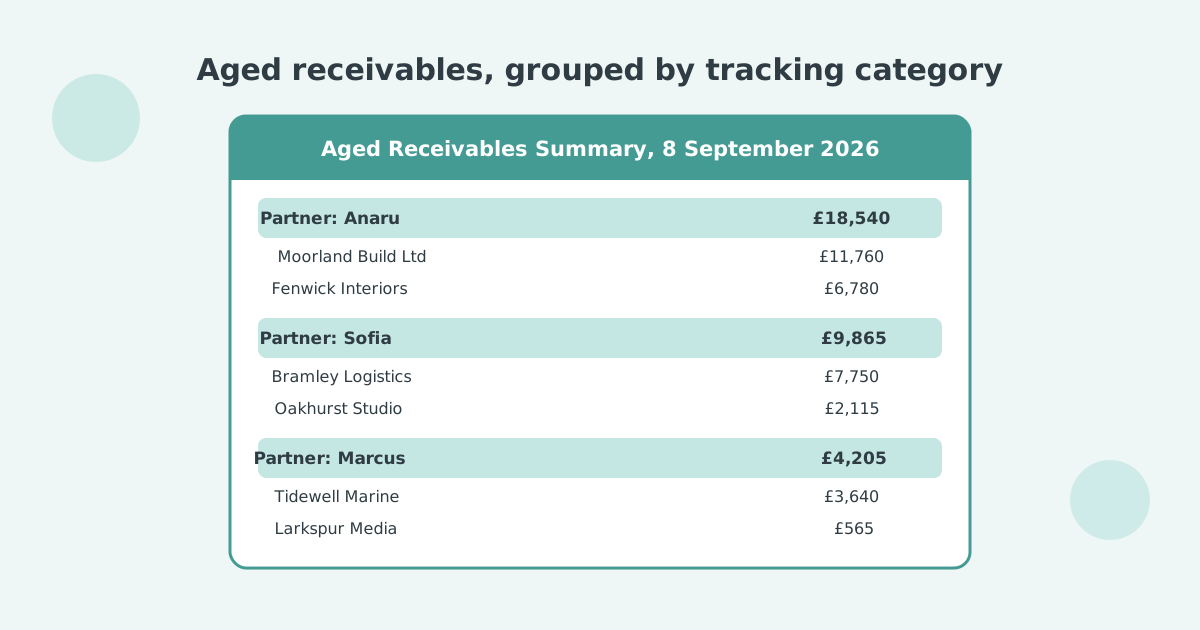
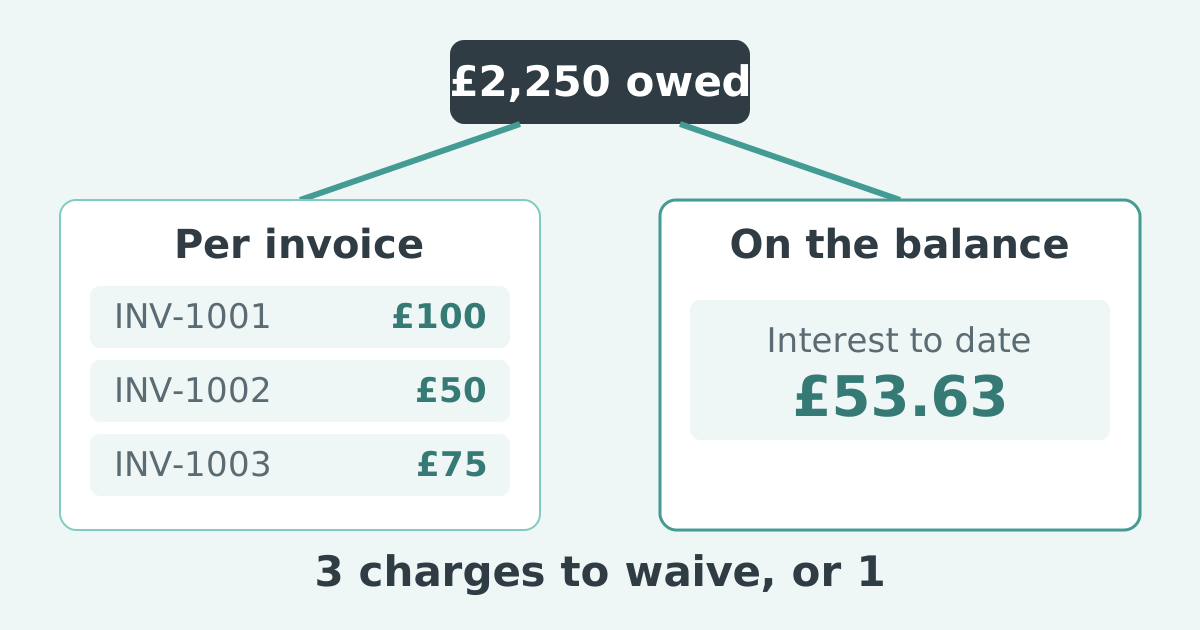
It gives you aged receivables, DSO and payment behavior, late fee schedules, customer statements, a ranked call sheet, and verified fact sheets for chase emails. It reads Xero, QuickBooks or a CSV export. Every figure is computed by a bundled Python script with no dependencies to install, and the calculations are covered by 59 tests against a fixture ledger with hand-computed answers, so you can check the arithmetic yourself in about two seconds.
It is on GitHub at accounts-receivable-skills. Setup instructions for each platform are in the repository, and there are dedicated guides for connecting Claude to Xero and connecting Claude to QuickBooks Online.
A skill is a very good analyst who only works when you are in the room. Ask it who to chase and it will tell you, with the workings. Ask it to draft eleven chase emails and it will, in your tone, with the right escalation on each.
What it will not do is notice on Saturday that an invoice has gone twenty days past terms, apply the fee your contract allows, send the reminder, and escalate when that reminder is ignored. That is not a limitation of the skill. It is a limitation of the connection underneath it, and it applies to every AI accounting integration available today.
💡 Paidnice insight
We built the skill and we still run the chasing through automation, because the two jobs are genuinely different. Judgment on demand is what an AI assistant is good at. Doing the same thing to every invoice, on time, without being asked, is what software is good at. Customers using Paidnice cut their average wait for payment in half within 30 days, and none of that came from someone remembering to run a report.
Use the skill for the thinking. Use accounts receivable automation for the doing: reminders that go out on schedule, late fees that apply themselves under your rules, statements that arrive without a person triggering them, and escalation that happens whether or not anyone opened the ledger that morning.
To use one, no. You install a folder and ask questions in plain English. To write one, you need to understand the finance well enough to know when the output is wrong, which is a different skill from writing code.
Check the terms of the specific plan you are on, because they differ between consumer and business tiers. If the question matters for your engagement letters, the CSV route keeps the scope tight: you send one aged receivables export rather than granting access to the whole ledger.
A saved prompt is text. A skill is a folder that can carry scripts, reference files and templates, so the deterministic parts run as code rather than as instructions the model may interpret differently on Tuesday.
Technically some connections allow writes, but the working convention across every credible finance skill is draft and approve. Nothing irreversible happens without a person saying yes, and that is the right default when the subject is money.
No, and they solve different halves of the problem. The skill answers questions and drafts documents when you ask. The software applies your policy to every invoice without being asked.
Paidnice is accounts receivable automation that enforces your payment terms, trusted by thousands of businesses on Xero and QuickBooks. Credit control and debtor management, run for you.
Try it Now - It's FreeNo card required.


Optimize your cash flow with our suite of financial tools designed for AR professionals. Calculate DSO, aging analysis, late fees, and more.