


Summary
In our analysis of invoice data from over 1,000 Paidnice customers, three customers moved from 54, 25 and 57 invoices in every 100 paid on time before they started to 83, 60 and 67 after. Invoices still unpaid at 75 days fell for all three. These single-business results were picked because they were strong.
- Farrier business, Australia: Invoices paid on time went from 54 to 83 in every 100. Invoices still unpaid at 75 days went from 1 in 100 to none.
- Technology services, South Africa: Invoices paid on time went from 25 to 60 in every 100. Invoices still unpaid at 75 days went from 17 to 6 in every 100.
- IT support, Australia: Invoices paid on time went from 57 to 67 in every 100. Invoices still unpaid at 75 days went from 7 to 1 in every 100.
You are reading a software vendor’s results page and wondering which of the numbers would hold up if you saw the invoices behind them.
This page shows three Paidnice customers measured the same way: invoices due in the 90 days before they started, against invoices due 31 to 120 days after. The three businesses are anonymized and were picked because their results were strong, so they are not typical.
Free: Payment reminder email templatesCopy the reminder emails for before, on and after the due date.What changed for Paidnice customers after they started?
For all three customers, more invoices were paid on time, fewer were still unpaid 75 days after the due date, and the average days late of invoices paid after the due date fell.
| Customer | Paid on time, in every 100 invoices | Still unpaid 75 days after the due date, in every 100 | Average days late of invoices paid after the due date |
|---|---|---|---|
| A Paidnice customer in farrier services in Australia | 54 before, 83 after | 1 before, 0 after | 17 before, 10 after |
| A Paidnice customer in technology services in South Africa | 25 before, 60 after | 17 before, 6 after | 59 before, 52 after |
| A Paidnice customer in IT support in Australia | 57 before, 67 after | 7 before, 1 after | 26 before, 19 after |
In Paidnice invoice data, three customers moved from 54, 25 and 57 invoices in every 100 paid on time before go-live to 83, 60 and 67 after, and the share still unpaid at 75 days fell for all three.
Source: our analysis of invoice data from over 1,000 Paidnice customers.
Paid on time is the share of invoices paid on or before the due date. Unpaid at 75 days is the share still open 75 days after the due date. Days late is the average for invoices paid after the due date. It leaves out invoices paid on time.
Farrier services, Australia
Before go-live, about 54 in every 100 of this customer’s invoices were paid on time. After go-live, about 83 in every 100 were. The average days late of invoices paid after the due date was 17 before and 10 after, and no invoice in the after period was still unpaid at 75 days.
Technology services, South Africa
This customer started from the lowest point of the three: about 25 in every 100 invoices paid on time, and 17 in every 100 still unpaid 75 days after the due date. After go-live, about 60 in every 100 were paid on time and 6 in every 100 were still unpaid at 75 days. The average days late of invoices paid after the due date stayed high, at 59 before and 52 after. Most of the change here is in the on-time and 75-day figures.
IT support, Australia
About 57 in every 100 invoices were paid on time before go-live and about 67 after. The bigger change is in the tail: invoices still unpaid at 75 days went from 7 in every 100 to 1 in every 100, and the average days late of invoices paid after the due date went from 26 to 19.
What does Paidnice do about overdue invoices?
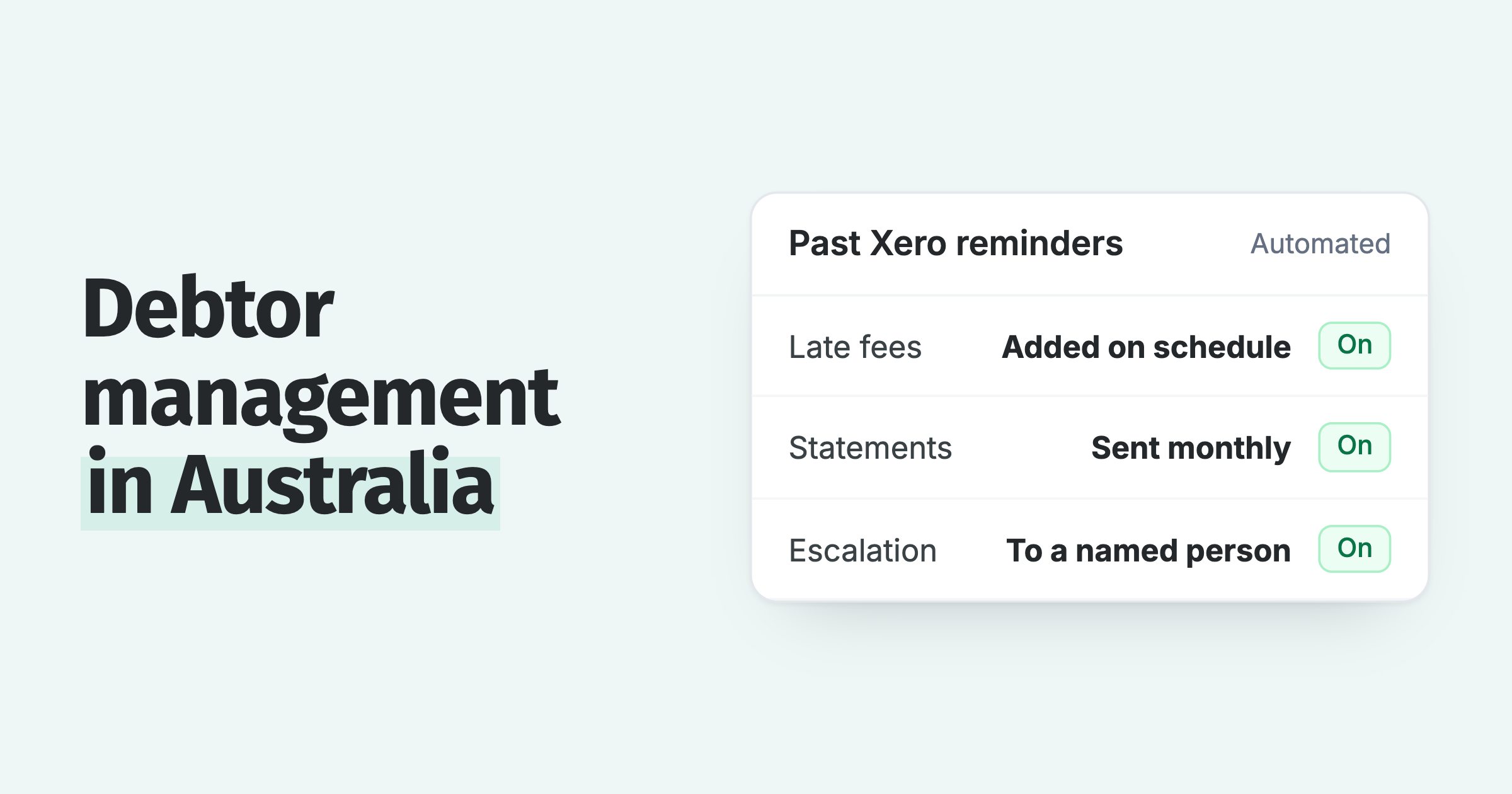
Paidnice sends automated reminders by email and SMS, adds late fees and interest where the business has chosen to, sends statements, and escalates overdue invoices. This data does not show which of these each customer used.
How many payment reminders to send, and when, is covered in its own post, and do late fees work covers what the invoice data says about fees. The credit control statistics hub holds the full set of figures from the same data.
If you want to see how your own invoices compare, book a demo and we walk through your numbers.
How we measured these customer results
Every figure on this page comes from our analysis of invoice data from over 1,000 Paidnice customers, measured on the same base and the same two periods for each business.
- Go-live: the day Paidnice took its first action for the business, such as sending a reminder or a statement.
- Before: invoices due in the 90 days before go-live.
- After: invoices due 31 to 120 days after go-live. The first 30 days are left out so that invoices already overdue at go-live do not sit in either period.
- Base: credit invoices only. Payment terms of 1 day or more, and not paid on or before the invoice date.
- Measures: paid on time means paid on or before the due date. Unpaid at 75 days means still open 75 days after the due date. Days late is the average days late of invoices paid after the due date, and leaves out invoices paid on time.
- Limits of this analysis: these are before-and-after results for single businesses. They show what changed around go-live, not proof that Paidnice alone caused it. The three businesses were picked because their results were strong, so they are not typical.
FAQ
These answers cover how typical the three results are, why the customers are anonymized, and what the comparison can and cannot show.
Are these Paidnice customer results typical?
No. The three businesses were picked because their results were strong. For figures across the whole customer base, use the credit control statistics hub.
Why are the customers not named?
The invoices behind these figures belong to the customers and their payers, so the page names the industry and country only. The numbers come from the invoice data, not from a testimonial.
Does this prove Paidnice caused the change?
No. A before-and-after comparison on one business shows what changed around go-live. It does not rule out other causes, such as a new person chasing invoices or a change in the customer mix.
About the editorial team
Denym started Paidnice in 2022 after customers paying late left his own business short on payroll. He has led it to $1 billion collected on time across more than 1 million invoices, and writes about credit control, late fees and getting paid on Xero and QuickBooks.

 App of the Year