


QuickBooks Online can record an early payment discount manually as a credit or adjustment, but it does not automatically offer or apply a time-based discount (like 2/10 net 30). An app such as Paidnice applies the discount rule for you.
Here is the gap. QuickBooks Online is good at the parts either side of the discount. It can hold a payment term against a customer, print that term on the invoice, and record a discount once you tell it one happened. What it will not do is the middle bit: notice that a customer paid inside the discount window, calculate the 2%, and take it off the amount owed without you touching anything.
So an early payment discount in QuickBooks Online is a manual step, not an automatic rule. That is fine when you have a handful of invoices a month. It gets missed when you have hundreds, which is usually when the discount was supposed to be pulling cash forward for you.
If you are weighing this against Xero, the behavior is similar. We wrote the sibling version for that platform: how to apply early payment discounts in Xero.
"2/10 net 30" is shorthand for a deal: take 2% off if you pay within 10 days, otherwise the full amount is due in 30. If the term is new to you, we keep a plain-English definition here: what 2/10 net 30 means.
The setup in QuickBooks Online runs roughly like this:
QuickBooks Online updates its interface often, and the term fields differ from QuickBooks Desktop, which can store a discount percentage inside the term itself. Check the exact labels in your account before you rely on any one field.
The important part is step four. QuickBooks Online will not do it for you. Someone has to notice the early payment and apply the discount, every time, or the offer quietly does nothing.
This is the part most "how to set up a discount" guides skip. Before you turn a discount on, it is worth being clear about what each lever actually does, and who pays for it.
A prompt payment discount is a carrot you hand to everyone. Most of your customers already pay on time. Offer them 2% and a good number will happily take it, on invoices they were going to settle anyway. That is real margin gone, in exchange for cash you were largely going to get. A late fee is the opposite. It costs you nothing when invoices are paid on time, and it lands only on the customers who are slow. One rewards good behavior you already had. The other targets the behavior you want to change.
| Early payment discount | Late fee | |
|---|---|---|
| Who it affects | Every customer who pays early, including the ones who would have paid on time | Only the customers who pay late |
| What it costs you | Margin on every discounted invoice | Nothing when invoices are paid on time |
| What it changes | Pulls cash forward by a few days or weeks | Deters chronic late payment, and recovers some cost of waiting |
| How it feels to the customer | A reward | A consequence |
| Annualized cost to you (2/10 net 30) | Roughly 37% a year | 0% to you, the cost falls on the late payer |
| Best when | You genuinely need the cash sooner and your margins can absorb it | A small group of slow payers is the real problem |
That annualized number is the one to sit with. Paying 2% to be paid 20 days sooner (day 10 instead of day 30) works out near 37% a year. That is expensive money. It can still be the right call if your alternative is an overdraft, invoice factoring, or missing a supplier's own early payment discount, all of which might cost more. But if you are comfortable on cash and just want fewer overdue invoices, you are better off with a late fee and a firm reminder sequence than with a discount that pays your punctual customers to keep being punctual.
In practice: for a lot of businesses, an early payment discount is margin given away to customers who would have paid on time anyway. Run the numbers before you switch it on. Our early payment discount calculator prices the exact offer you are considering, so you can see the annualized cost against your terms before you commit.
For the wider background on how these discounts work and where they help, see what is an early payment discount.
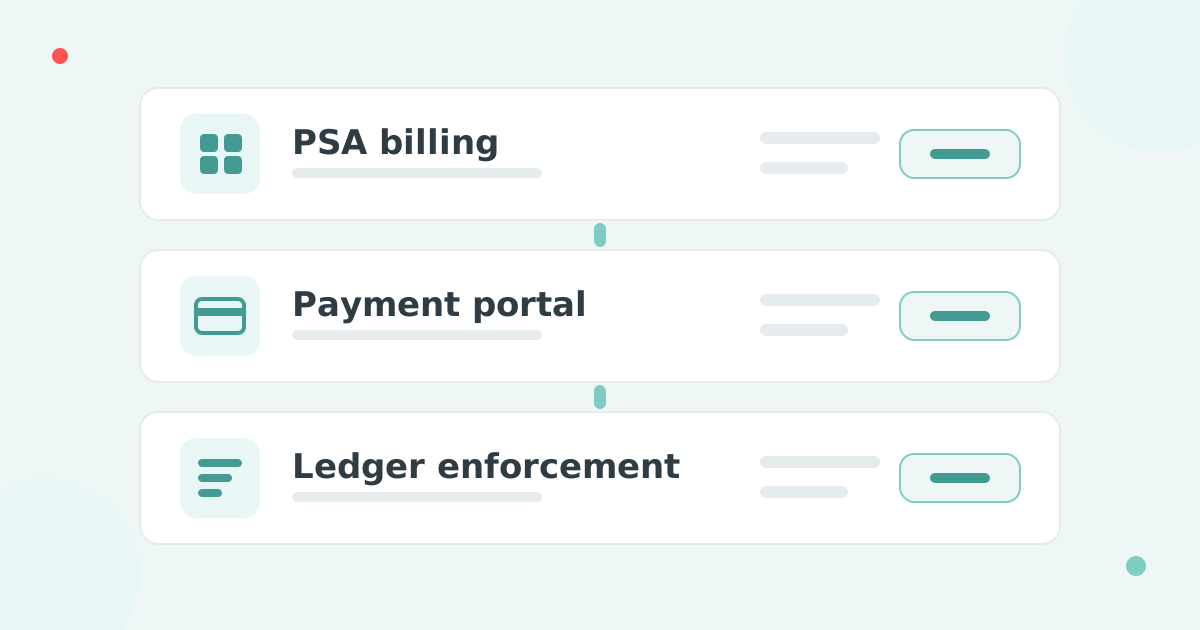
If you decide a discount is worth it, the goal is to make it automatic and targeted, not manual and blanket. That is the whole point of moving it off a spreadsheet. Here is how it goes together:
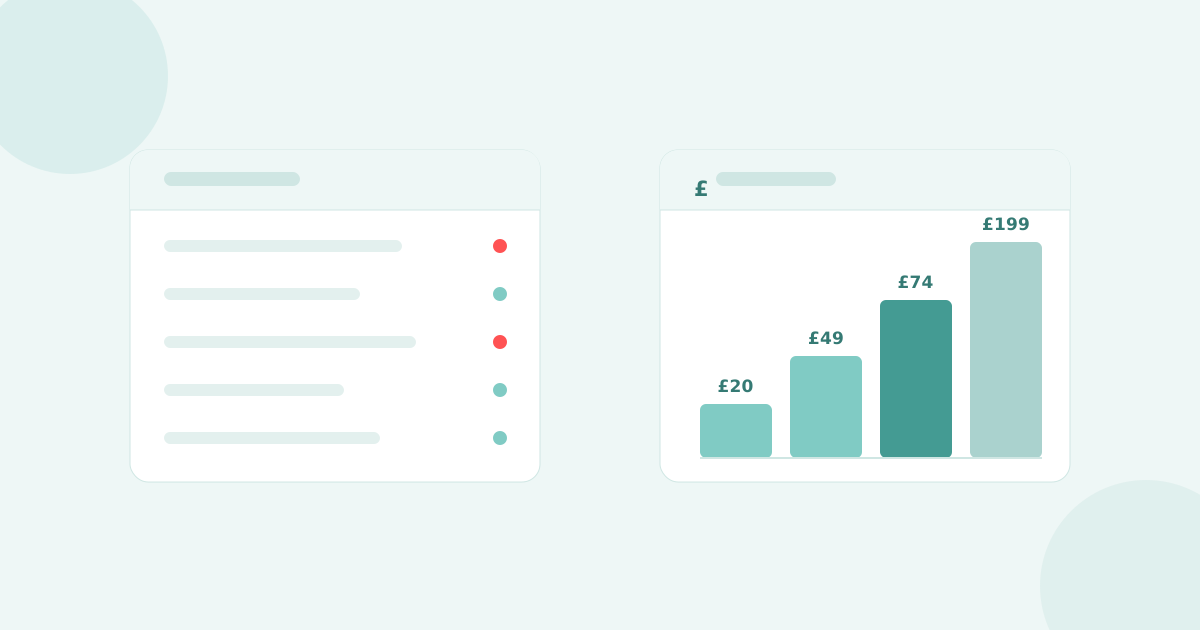
Some payment behaviors vary by accounting platform, so confirm the discount and payment settings in your own Paidnice account when you set the rule up. Illustrative example, not a screenshot of your data.
That last step is the reason we build both levers into the same product. Firm on the money, fair to the customer. A discount for the people you want to reward, and enforcement for the people who need it, running off one rule instead of your memory.
See how prompt payment discounts work
No. QuickBooks Online can show payment terms on an invoice and let you record a discount by hand when you receive payment, but it does not watch the payment date and apply a time-based discount like 2/10 net 30 on its own. An app such as Paidnice applies the discount rule for you.
Create a payment term under Settings, name it something like "2% 10 Net 30," and set the net due at 30 days. The term shows the offer on the invoice, but you still record the 2% discount manually when the customer pays inside 10 days, using the discount field on the payment or a credit memo.
Open Receive payment for the invoice, enter the amount received, and apply the difference using the discount field or a credit memo coded to a discount account. This keeps the invoice fully paid and records the discount as a reduction in income.
It depends on your problem. A discount rewards every customer who pays early, including the ones who would have paid on time anyway, so it costs you margin. A late fee only costs the customers who pay late. If a few slow payers are the issue, a late fee is usually the cheaper lever.
Offering 2% to be paid 20 days sooner works out to roughly 37% a year in annualized cost. That can still be worth it if you need the cash and your alternative funding costs more, but run the numbers before you switch it on.
Yes. Paidnice connects to QuickBooks Online, applies your prompt payment discount rule automatically, and shows the offer and deadline in reminders and the customer payment portal. You choose which customers are offered the discount, so you are not giving away margin to everyone.
Paidnice is accounts receivable automation that enforces your payment terms, trusted by thousands of businesses on Xero and QuickBooks. Credit control and debtor management, run for you.
Try it Now - It's FreeNo card required.
Optimize your cash flow with our suite of financial tools designed for AR professionals. Calculate DSO, aging analysis, late fees, and more.