

Summary
When a customer is not paying an invoice, find out whether it is a dispute, a delay or a cash problem before you chase harder. A dispute needs a fix, a delay needs a dated promise, and a cash problem needs a written payment plan.
- Three questions: Ask whether the invoice is right, what date it will be paid and whether anything stops them paying that day, and the answers sort the case.
- The legal clock: With no agreed date, a business invoice is late 30 days after the customer gets it or you deliver, whichever is later, and you can then claim interest at 8% over the Bank of England base rate.
- Match the tool to the cause: Paidnice lets a customer query an invoice or promise a date from the portal, and your policies can pause chasing until the query is resolved or the date passes.
The invoice went out weeks ago, you have sent two reminders, and the only reply is "it's with accounts". Late is normal: UK small businesses were paid 8.3 days late on average in Xero's June 2026 quarter data. Why yours is late matters more, because the reason decides your next move. Here is how to find out in one call, and what to do with each answer.
Why is my customer not paying my invoice?
A customer not paying an invoice is usually in one of three positions: they dispute it, they are slow to process it, or they cannot afford it. Silence can hide any of the three.
The Small Business Commissioner lists financial difficulties and administrative errors among the legitimate reasons a payment runs late. A dispute about the invoice or the work is a third common reason. The right next step depends on which one you have, and a harder reminder on a disputed invoice makes the disagreement worse.
How do I tell a dispute from a delay or a cash problem?
Ask the person who pays three questions: is anything wrong with the invoice, what date will it be paid, and is there anything stopping that payment? Their answers sort the case.
- "Is there anything wrong with the invoice, or the work?" A yes is a dispute. Get the reason in writing.
- "What date will it be paid, and who is approving it?" A date and a name is a delay. No date, or a date that keeps moving, is a warning sign.
- "Is there anything that would stop you paying on that date?" A yes, or an evasive answer, points to a cash problem.
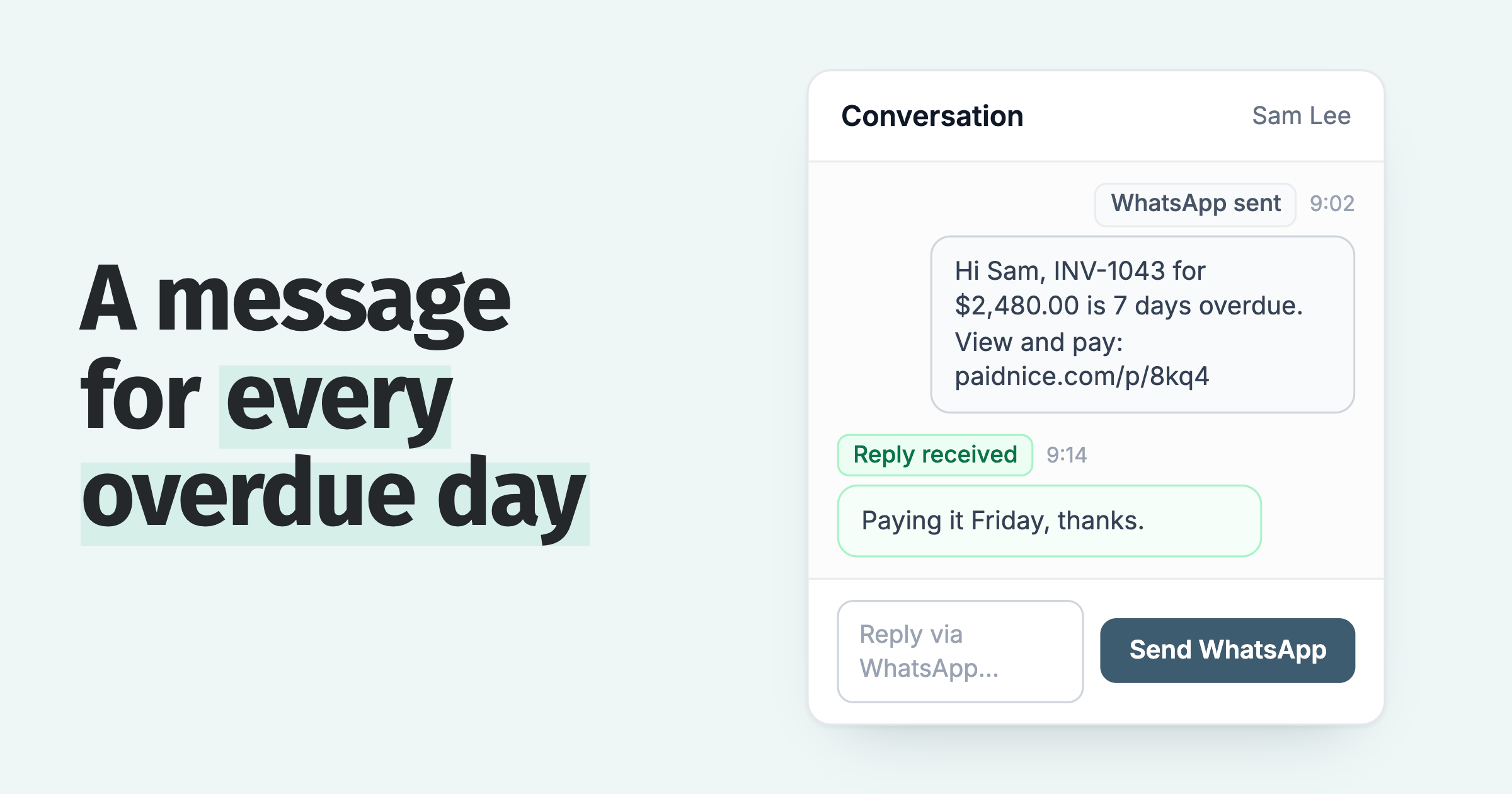
Ask by phone or in the invoice email thread, and ask the person who approves payment, not the one who ordered. Write the answers and the date on the invoice record. No answer at all is its own case, covered below. If they reply, see what to do when a customer replies to a reminder.
What should I do for each one?
Each cause has its own first move: fix the invoice for a dispute, get a dated promise for a delay, offer a written payment plan for a cash problem, and hand silence to a named person.
| What you hear | What it usually is | First move |
|---|---|---|
| "The invoice is wrong" or "we never got it" | A dispute | Record the reason, pause chasing on that invoice, fix it |
| "It's with accounts" or "next payment run" | A delay | Ask for one date from the person who approves payment |
| "We're short this month" | A cash problem | Offer a written payment plan, hold new credit |
| No reply | Unknown | A named person phones and writes to a second contact |
What if the customer disputes the invoice?
If the customer disputes the invoice, stop chasing that invoice, record the reason, fix what is wrong and tell them in writing.
Pause that one invoice, not the whole account. Find the cause: a wrong amount, a missing PO number, work not as agreed, or an invoice that never arrived. The common causes of an invoice discrepancy each have a fix. Correct and resend, or confirm in writing why it stands.
If they paid less than the invoice, that is a short payment with its own routine. The full process is in how to handle a disputed invoice; the terms are under invoice query management.
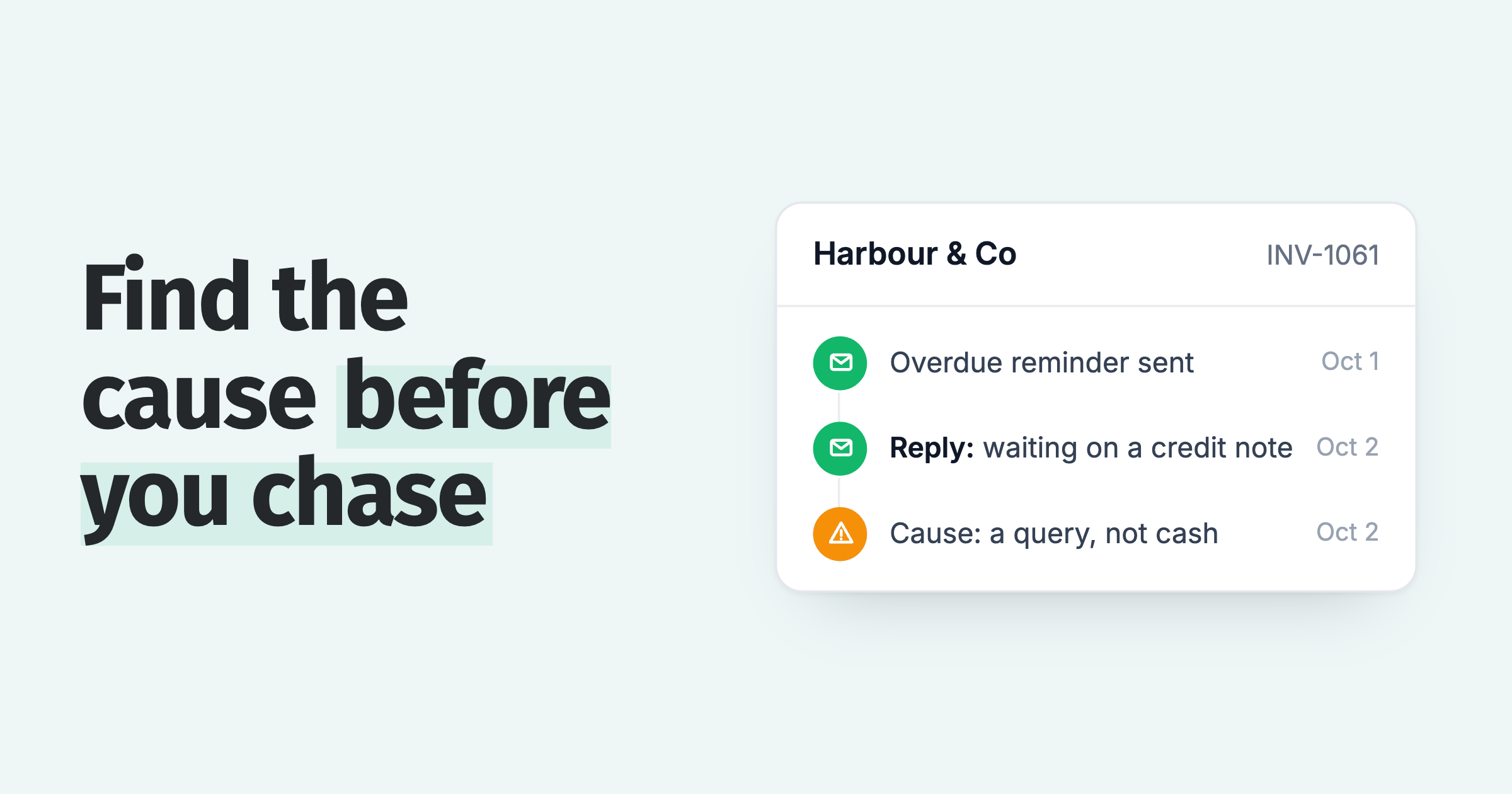
When you switch it on, a customer can query an invoice from the customer payment portal, and your team can open one with a reason such as not received or quality. Policies with the Skip while a query is open setting on pause that invoice until the query is resolved, and it shows on the invoice with a warning icon.
What if the customer is just slow?
If the customer is simply slow, resend the invoice to the person who approves payment, ask for one date and write it down, and follow up the day after if it passes.
The usual admin causes are the wrong contact, a missing PO number, an approval queue and a monthly payment run. None needs pressure. Put the invoice in front of the right person and agree one date in writing; a short promise to pay agreement does it. If the date passes, see what to do when a customer promised to pay and didn't.
A customer can promise a date from the invoice page in the customer payment portal, and your team can log one from a call. The expected payment date can sync to your accounting system. Policies with the Skip when payment promised setting on wait until that date, and the invoice owner can get a Broken Payment Promise email if it is missed.
What if the customer cannot afford to pay?
If the customer cannot pay in full, agree a written payment plan with dated instalments and hold new credit until the plan is under way.
Ask for a part payment now and dates for the rest, in writing with the invoice number, amounts and dates. A missed instalment makes the invoice overdue again, so normal reminders, escalation and late fees apply from that date. The guide to a payment plan for overdue invoices covers the amounts and the wording.
What if the customer does not reply at all?
If the customer does not reply at all, a named person should phone them and write to a second contact, because silence can be a wrong address or a dispute nobody has voiced.
Check the invoice went to the right contact. Try a second contact and call at a set time. If that fails, move up the escalation ladder, and see the guide for a customer who is ignoring your reminders.
An escalation hands the account to a named person with the call script, the email history and the customer's credit score, built from their payment behaviour with you. They choose a call, a stop on credit or a legal letter from your template. Escalations can skip invoices with a promise or an open query.
When is a business invoice legally late, and what can I charge?
With no payment date agreed, a UK business invoice is late 30 days after the customer gets it or you deliver, whichever is later, and you can then claim statutory interest and a fixed sum.
An agreed date for a business transaction must usually fall within 60 days; with none agreed, the invoice is late 30 days after receipt or delivery under the Late Payment of Commercial Debts (Interest) Act 1998. From then you can charge statutory interest at 8% plus the Bank of England base rate, unless your contract sets a different rate. Added interest goes on a new invoice.
You can also claim a fixed sum for recovery costs: £40 for a debt up to £999.99, £70 from £1,000 to £9,999.99, and £100 for £10,000 or more, once per late payment. Apply both automatically, waive deliberately. The calculator and wording are in the guide to late payment fees in the UK. This is general information, not legal advice.
What are the formal steps before court?
Before you start court proceedings in England and Wales, send the customer a letter setting out the claim, give them a reasonable time to reply, and consider negotiation or another form of dispute resolution.
The Practice Direction on Pre-Action Conduct asks for a letter with concise details of the claim, a reply within a reasonable time (14 days in a straightforward case), and for both sides to consider negotiation or other dispute resolution. A letter before action covering those points is the usual last step before a claim.
If the customer disputes the debt, settle the dispute first. For a claim of £10,000 or less, the small claims track is the normal route.
Questions about a customer not paying an invoice
Can you legally refuse to pay an invoice?
A customer can challenge an invoice they believe is wrong, but a correct invoice still falls due on the agreed date, or 30 days after they get it or you deliver, whichever is later, when none is agreed. Ask them to say what is wrong, so you can settle that first. General information, not legal advice.
How long can an invoice go unpaid?
In England and Wales, a claim on a simple contract generally cannot be brought more than six years after the cause of action arose. Chase from the first day the invoice is late.
How long should you give a client to pay an invoice?
An agreed date must usually fall within 60 days for business transactions; the default when nothing is agreed is 30 days. For a final demand before court, the pre-action practice direction treats 14 days as a reasonable reply time in a straightforward case.


 App of the Year