

Summary
A short payment is a payment smaller than the invoice, and the missing amount stays owed until you decide what it is. Record exactly what arrived, ask the customer for the reason in writing, then treat the gap as a balance to chase, a credit note to issue or a write-off.
- Record it: In Xero, the Record payment box pre-fills the full invoice amount, so type over it with what the customer actually sent; the invoice keeps the rest as an outstanding amount.
- Fix the gap: A credit note in Xero or a credit memo in QuickBooks Online reduces what the customer owes after a return, discount or billing error, so the invoice can close without a second payment.
- Watch the check: Cashing a check offered as full satisfaction of a disputed amount can discharge the rest of the debt under California Commercial Code section 3311, so read the memo before you deposit.
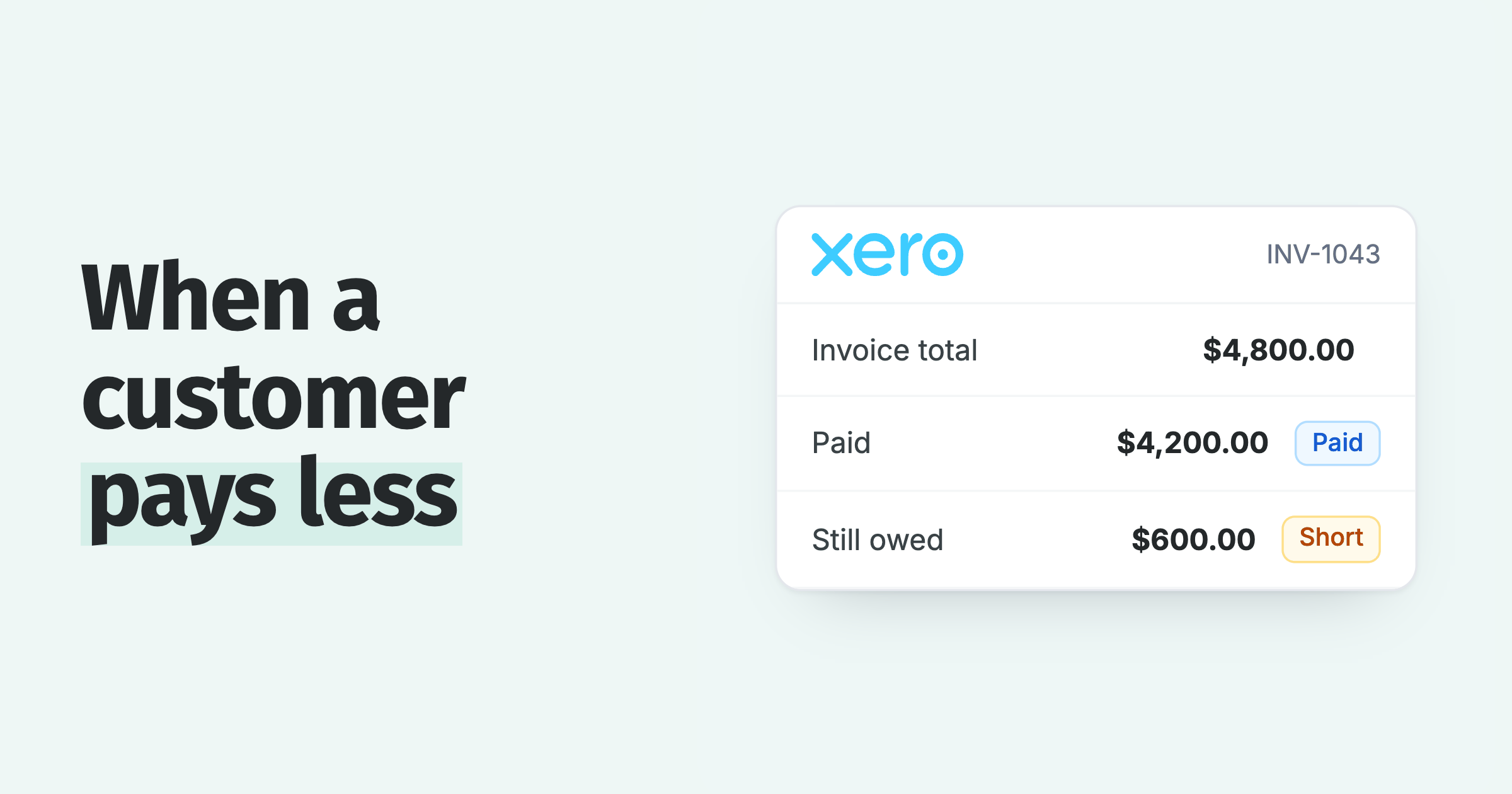
The bank feed shows $4,560 against your $4,800 invoice. The remittance note says nothing. Your books still show $240 open, because Xero keeps the outstanding amount on the invoice after a part payment. Here is what to do with a short payment, from the day it lands to the credit note.
What is a short payment?
A short payment is a payment smaller than the invoice amount, which leaves a balance open on that invoice until you settle it. It is not a late payment: the money arrived, just not all of it. It is not a partial payment you agreed in advance, such as an installment. See the short payment definition for related terms.
Why do customers pay less, and is the gap still owed?
Customers pay less for a handful of reasons, and only some of them leave the gap owed. A valid reason, such as a discount your terms allow, means it is not owed. An invalid one, such as a bank fee or an unearned discount, means it is. A dispute or an invoice error depends on what you agree. The reason decides how you record it and what you do next.
| Why they paid less | Still owed? | What to do |
|---|---|---|
| They took an early-payment discount your terms allow | No | Apply it so the invoice closes |
| They took a discount your terms do not allow | Yes | Reply with the terms and ask for the rest |
| Goods were damaged or missing, or work was not delivered | Depends on what you agree | Treat it as a dispute: how to handle a disputed invoice |
| Your invoice had a wrong price, tax or PO number | Depends on the error | Find the cause: invoice discrepancy causes and fixes |
| A bank or transfer fee came out of the payment | Usually yes | Write off a small gap or ask for it, as your terms say |
| They cannot pay all of it now | Yes | Agree a date for the rest in writing |
| No reason given | Yes, until they explain | Ask for the reason in writing, within one business day |
What should you do the day a short payment arrives?
Record exactly what arrived, compare it with the invoice and the customer's remittance advice, then ask for the reason in writing the same or the next business day. Four steps:
- Record what arrived, not what you expected. Steps for Xero and QuickBooks Online are below.
- Compare the remittance advice with the invoice. Look for a skipped line or a deduction code in the customer's note of what the payment covers.
- Ask for the reason in writing. Keep it neutral: "Your payment of $4,560 for INV-1042 leaves $240 open. Could you tell us what the $240 covers?" When the answer lands, see what to do when a customer replies.
- Chase the undisputed part now. Hold only the part in question.
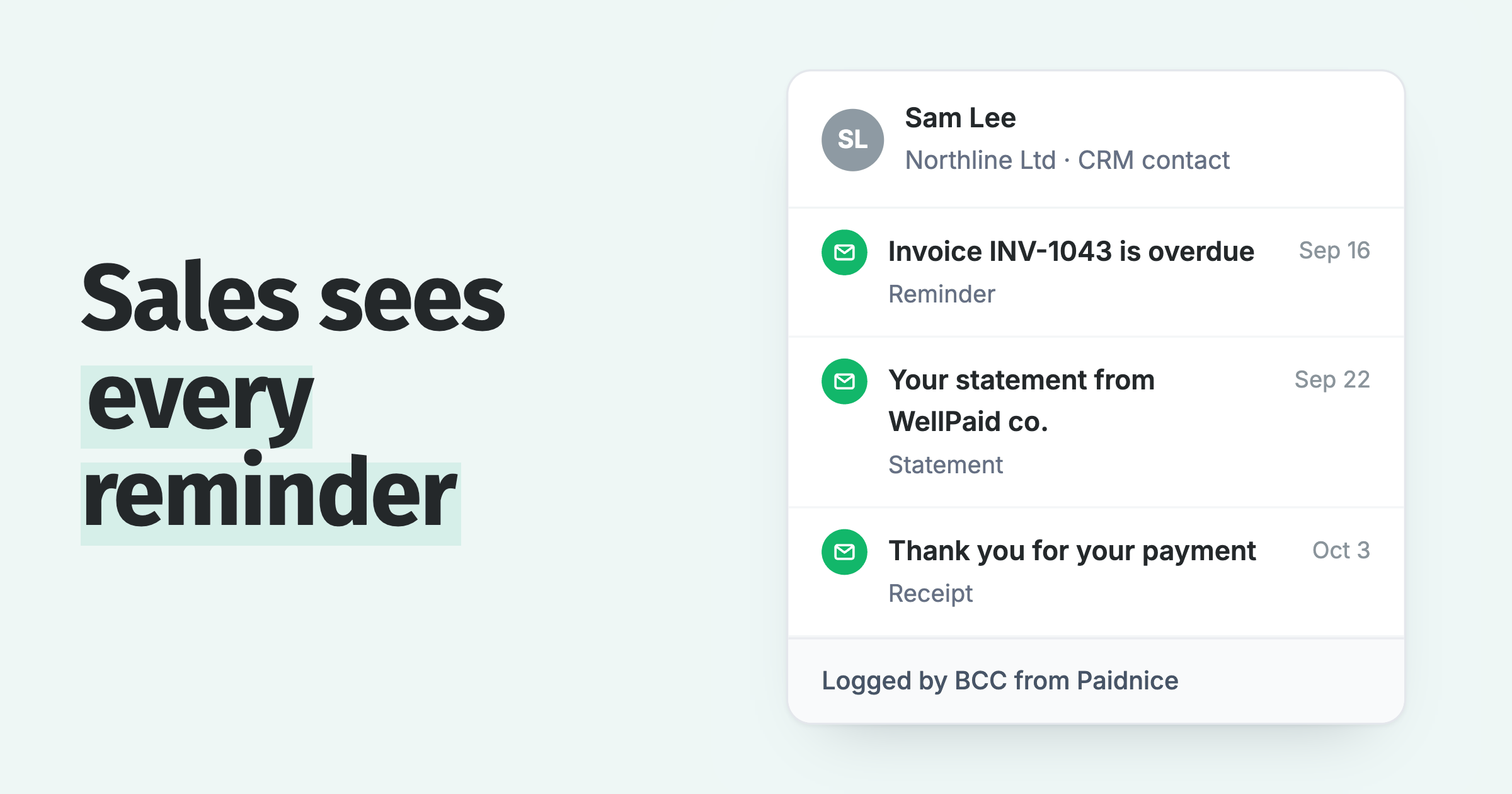
A customer who pays less can raise it from the invoice page. In the Paidnice customer portal they choose Query this invoice and say why. Reminders and late fees on a policy set to skip while a query is open wait until your team resolves it, and Paidnice uses AI to look for the reason and prepare the fix for you to approve.
How do you record a short payment in Xero and QuickBooks Online?
Enter the amount that actually arrived against the invoice, never the full total, and the invoice keeps the difference as a balance until a second payment, a credit note or a write-off clears it.
Xero. Open the invoice from the Awaiting Payment tab. Under Record payment, Xero pre-populates the full invoice amount, so type over it with what the customer sent. From the bank feed, use Find & Match, tick the invoice, click Split and enter the part amount. The outstanding amount still shows on the invoice for the next payment.
QuickBooks Online. Use Receive payment. Put what you received in Amount received and tick the invoice under Outstanding Transactions. When you save, the customer's outstanding balance falls by that amount.
Clearing the balance. If the customer was right, issue a credit note in Xero or a credit memo in QuickBooks Online and allocate it to the invoice.
If the balance will never be paid, both platforms treat it as bad debt: a credit note coded to a bad debts account in Xero, or a credit memo with a Bad debts item in QuickBooks Online. Ask your accountant about the tax treatment first.
What if the check says "payment in full"?
Cashing a check marked as full satisfaction of a disputed amount can discharge the rest of the debt. Under California's Commercial Code section 3311, tendering repayment within 90 days keeps your claim only if you did not know the check was offered as full satisfaction before you collected it.
The rule applies when the amount is genuinely in dispute, the customer tendered the check in good faith, the check or a cover letter states conspicuously that it is full satisfaction, and you cash it. Two habits:
- Before you deposit: read the check memo and the cover note on every short payment. If you know it is offered as full satisfaction and you collect it anyway, the claim is discharged.
- If you deposited without seeing a full-satisfaction statement: tender repayment of the amount within 90 days and the claim stands.
This is general information, not legal advice. Other states have their own versions of the rule, so check yours.
How do you chase the balance without souring the account?
Chase the undisputed part with a normal reminder that names the remaining amount, pause on the disputed part until the reason is settled, and fix a date in writing for anything the customer agrees to pay later.
If the customer says the rest is coming, get the date in writing with a promise to pay agreement. If the date passes, see a promised payment that does not arrive.
The customer can promise the rest from the invoice page, or your team can record the promise with the date, amount and notes. Policies set to skip when a payment is promised wait until that date, and the promise can set the invoice's expected payment date in Xero.
Silence after two reminders means moving up the invoice escalation ladder. If your terms apply a late fee to an unpaid balance, apply it as written. It is leverage, and you can waive it deliberately when the customer settles.
Credit control software keeps the reminders for the balance on schedule. If the customer has paid nothing at all, start with customer not paying an invoice instead.
How do you stop customers short paying?
State discount terms and deadlines on the invoice, put the customer's PO number on it, and give customers a route to raise a problem before they pay less.
A missing or wrong PO number on your invoice is a common cause of a skipped line. Dated discount terms on the invoice settle whether a discount was earned: see early-payment discounts in Xero and in QuickBooks Online. A customer payment portal with a query option on each invoice gives the customer somewhere to raise the problem instead of deducting it.
Short payment questions
What does "short paid" mean?
Short paid means the customer paid less than the invoice total, so a balance stays open on the invoice.
Is a short payment the same as a partial payment?
Not always. A partial payment is a smaller amount you agreed in advance, such as an installment or partial payments through Stripe. A short payment has no agreement behind it.
Should you accept a short payment?
Yes: record it against the invoice, keep the balance open, and say in writing that you have not agreed to settle the rest. A check marked payment in full on a disputed amount needs a decision before you deposit it.
What do you write to a customer who short paid?
Three sentences: the amount received, the amount still open, and the question. "Thanks for the payment of $4,560 on INV-1042. That leaves $240 open. Could you let us know what it covers, or send the rest by [date]?"
Can you charge a late fee on the unpaid balance?
Your written terms decide. If they allow late fees, the overdue balance can carry one, within the limits for your state. See how much you can charge for late fees.
 App of the Year