
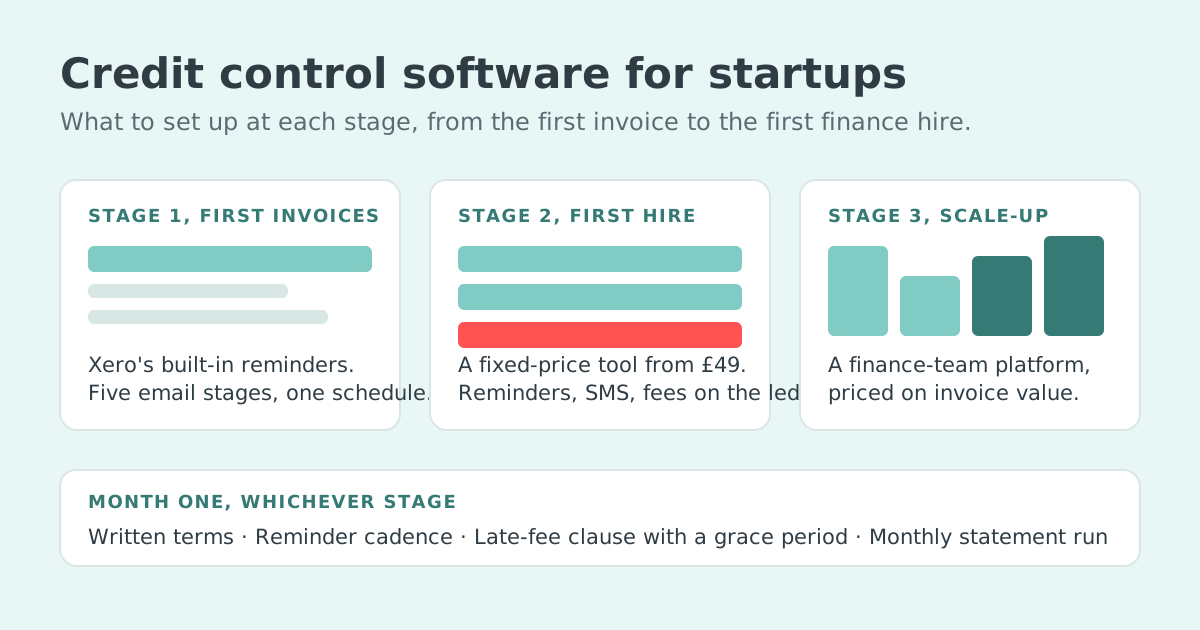

Credit control software for startups should be fixed price, connected to the ledger and running from the first invoice. Paidnice suits startups on Xero or QuickBooks Online that want reminders, statements and optional late fees in one tool, from £49 a month. Xero's built-in reminders cover the first few overdue invoices. Upflow is the scale-up option.
A startup needs credit control software once chasing overdue invoices takes founder time every week, and a reminder cadence costs less to run from the first invoice than to add after the first bad debt.
Late payment costs the UK economy an estimated £11 billion a year and contributes to around 38 business closures a day, according to the UK government's late payment reform announcement.
UK law gives the supplier the right to charge. Under the Late Payment of Commercial Debts (Interest) Act 1998, a UK business can charge 8% above the Bank of England base rate on an overdue B2B invoice, plus a fixed sum of £40, £70 or £100 per invoice, even when the contract is silent on interest. Software turns that right into a charge on the ledger.
Fees are optional. Reminders and statements on their own are a complete use of the software, and the fee policy is a setting you can switch on later.
A startup outgrows Xero's reminders when it needs more than one schedule, a channel other than email, an automatic statement run, or a late fee on the ledger.
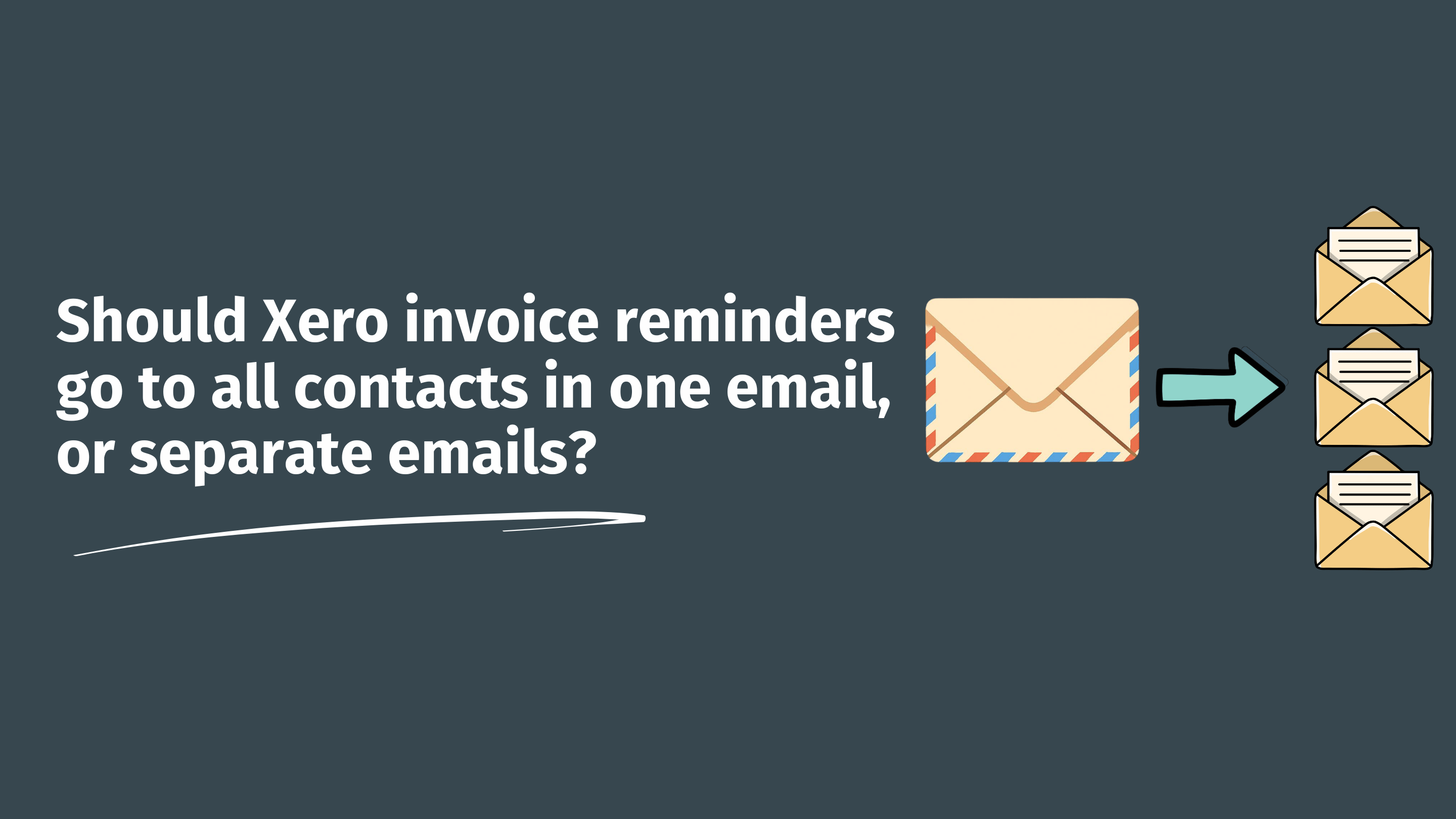
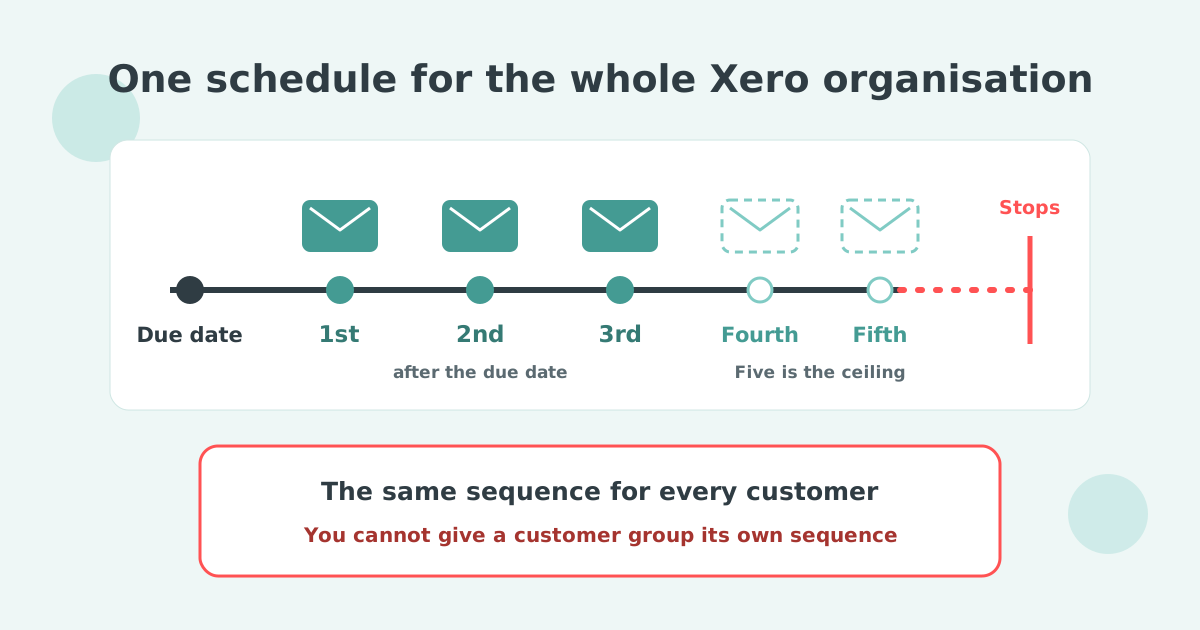
Xero's invoice reminders run up to five email stages on one schedule for the whole organisation, each a set number of days before or after the due date. Three are on by default at 7, 14 and 21 days overdue, per Xero Central. Reminders can be switched off per contact or invoice, but there is one ladder for every customer.
After stage five there is no stage six, and the automatic reminders are email only. Statements are sent by hand.
Xero has no native late fee or interest feature. The request to add interest to late invoices was posted on 29 March 2012, holds 1,114 votes with the status Accepted, and Xero's latest reply on 7 July 2025 states there are no committed plans.
See Xero reminders vs a credit control app for the trade-offs, and credit control software vs Excel if the overdue list still lives in a sheet.
Set four things before the first invoice goes out: written payment terms, a reminder cadence, a late-fee clause with a grace period, and a monthly statement run.
Set the late-fee policy before you need it and run it in Draft for the first month. Paidnice raises each fee in Xero or QuickBooks Online as a Draft or an Approved invoice, your choice, so a person reviews the first fees before a customer sees one. Switching to Approved later is one setting, with nothing rebuilt.
Paidnice fits from the first invoice on a fixed monthly price, Xero's reminders cover the first few overdue invoices, and a quote-priced platform fits a scale-up with a finance team.
| Tool | Stage fit | Best for | Price from | Ledger |
|---|---|---|---|---|
| Paidnice | First invoice to $50m a year or 50,000 invoices a year | Reminders, SMS, statements, payment plans and late fees on the ledger in one tool | £49 a month (150 invoices, 2 users); first 20 actions free, no card | Xero, QuickBooks Online |
| Xero reminders | First invoices | A few overdue invoices a month, one schedule, email only | Included with a Xero subscription | Xero |
| Chaser | Turnover up to £4m on the entry plan, larger plans past £4m | Email, SMS, letters and automated calls, with credit checks and a collection agency route | £199 a month | Xero, QuickBooks Online, Sage, NetSuite and others |
| Satago | Small UK businesses on Sage 50 or Xero | Credit scores and invoice finance alongside chasing; 100 email reminders a month on the entry plan | £25 a month inside Sage 50, £45 standalone | Xero, Sage, QuickBooks, FreeAgent, KashFlow |
| Upflow | Scale-up with a finance team | Multi-step workflows across email, SMS and letter, unlimited seats; late fees only through the ERP | Price on request (its pricing page's structured data lists Starter at $333 a month) | Xero, QuickBooks, NetSuite, Sage Intacct |
Paidnice: accounts receivable automation for Xero and QuickBooks Online, best for startups that want reminders and late fees in one tool, from £49 a month. Essentials covers 150 invoices, 600 emails and 2 users, with SMS and escalation included, priced by invoice volume, not revenue.
It picks up invoices already open when the ledger connects, and runs a late fee per invoice and interest on the statement balance with a Bank of England base-rate toggle. Paidnice customers cut their average wait for payment in half, within 30 days. Plans: pricing page.
Xero reminders: the built-in baseline, best for the first few overdue invoices a month, included with the subscription. They are enough until you want a second schedule, a second channel, or a fee on the ledger.
Chaser: one of the oldest names in UK credit control, best for established firms that want credit checks, letters and automated calls alongside chasing, from £199 a month. Priced on annual revenue: Compact covers turnover up to £4m, with larger plans for firms at £4m and more. Demo before you can buy, and one global late-fee rule.
Satago: UK credit control with credit risk data and invoice finance, best for Sage 50 or Xero businesses that want credit scores, from £25 a month inside Sage 50 or £45 standalone. The standalone Basic plan caps at 100 email reminders a month.
Upflow: accounts receivable software for finance teams, best for scale-ups with a high invoice count, price on request. Plans are segmented by gross invoice value with unlimited seats. Late fees run through the ERP, not inside Upflow.
Wider field: credit control software compared and credit control software for UK small businesses. Xero-only startups: invoice chasing software for Xero and credit control software for Xero. Category page: credit control software.
Startups ask us about credit checks more often than they end up using them. On Essentials and Pro there is no built-in credit check; credit checks through Creditsafe come with the Custom plan. Most startups already know their short customer list. The gap is the cadence.
Yes to late fees on a first invoice, no to free credit control software beyond Xero's own reminders, and reminders before fees when customers are new to you.
Can a startup charge late fees on its first invoices?
Yes. In the UK the statutory interest and fixed sum apply to any B2B invoice under the 1998 Act, whether or not the contract mentions them. The statutory interest calculator shows the figure on a given invoice.
Is there free credit control software for startups?
Xero's reminders and statements come with the subscription and are the free baseline. Paidnice is not free software: sign-up is free with no card, the first 20 actions cost nothing, and paid plans start at £49 a month. Trials: credit control software free trials.
Should a startup use reminders only, or fees as well?
Start with reminders and statements if your customers are new to you. Add the fee policy once a customer stretches terms a second time. Both are settings in the same tool, so nothing is rebuilt when the fees go on.
Paidnice is accounts receivable automation that enforces your payment terms, trusted by thousands of businesses on Xero and QuickBooks. Credit control and debtor management, run for you.
Try it Now - It's FreeNo card required.



Optimize your cash flow with our suite of financial tools designed for AR professionals. Calculate DSO, aging analysis, late fees, and more.