


The best credit control software for a wholesaler on Xero or QuickBooks Online is Paidnice from £49 a month or Chaser from £199 a month, for reminders, statements and late fees. A distributor running SAP, NetSuite or Dynamics needs an order-to-cash platform such as Esker or HighRadius that holds a sales order at the credit limit.
A wholesaler needs to know which of two categories it is buying from: an SME credit control tool that runs reminders, statements and late fees on top of Xero, QuickBooks or Sage, or an enterprise order-to-cash platform such as Esker, HighRadius or NetSuite that holds a sales order at the credit limit inside the ERP. No ranking page says this, and none of the six tools below stops an order at entry.
The stock was bought, picked and shipped before the invoice fell due, so only two controls matter: the gate that stops the next despatch, and the charge that makes the outstanding one cost something. Rank on what each tool enforces, not on feature counts.
The wait is measurable. Xero Small Business Insights puts wholesale trade more than a week above the Australian national average for time to be paid. Wholesale is the only sector-level read Xero publishes for distribution, and it is the slowest side of the ledger. See how UK wholesale and retail customers are currently paying before you pick a tool built around chasing them.
| Market | Wholesale Trade | All industries | Gap | Rank, slowest first |
|---|---|---|---|---|
| Australia | 27.6 days | 20.3 days | +7.3 days | 5th of 19 |
Source: Xero Small Business Insights, June 2026. See the full data on the Paidnice accounts receivable statistics dashboard.
Most comparison pages score reminders, dashboards and integrations. Score these two instead.
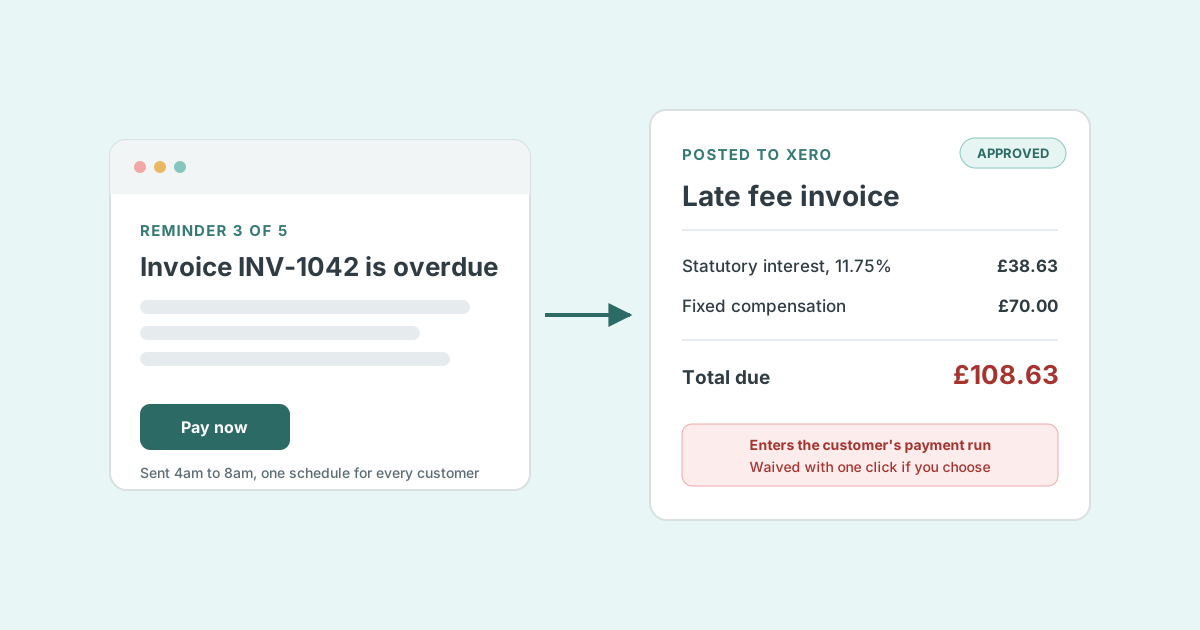
Under the Late Payment of Commercial Debts (Interest) Act 1998 s.5A you can claim £40, £70 or £100 per overdue invoice, plus interest at 8 percentage points over base under the 2002 Rate of Interest Order. The question is whether the software posts that as a transaction, or types it into an email.
Apply fees automatically, waive them deliberately with a documented reason. The statutory basics are in the guide to UK late payment fees, and what a goods supplier can charge across four markets is in charging interest on overdue invoices.
QuickBooks Online has no customer credit limit field in its documentation. Xero has one, but its block fires at invoice approval or send, after the pallet has left the yard. Xero has also declined to close the gap: on the Contacts, Automatic Credit Hold and Stop idea it stated on 8 February 2024 that it has no plans to develop it.
Neither ledger has a sales order object or a despatch event, so nothing sitting on top of the ledger can gate an order. Not Chaser, not Paidnice, not any tool here. In an SME the person releasing the pick is the gate, and the sequence for running it is in credit control for wholesalers.
"The fee is in our terms and we have never once charged it" is the most common sentence on our wholesale demo calls. The clause was drafted years ago, the arithmetic is annoying, so nobody ever raises the charge.
Only ERP-integrated software does. Esker, HighRadius and NetSuite hold a sales order at the credit limit because they own the order; no credit control tool on Xero or QuickBooks Online can, because neither ledger has a sales order object. For everyone else, credit limit management splits into three jobs: setting the limit, seeing the breach, acting on it.
For a Sage 200 site the order hold comes from Sage 200, with Credit Hound feeding the account status. For everyone else the software raises the flag and a person holds the pallet.
Paidnice, Chaser, Access Collect, Credit Hound, Satago and ezyCollect are the six credit control tools a UK wholesaler realistically shortlists, at entry prices from £20 to £300 a month. None of the six enforces a credit limit at order entry, and only Paidnice and Chaser document statutory late fees.
Two are ledger-side tools, one is a module inside the Access ledger, two are Sage-channel products and one is an Australian order-to-cash suite. Read the credit limit and statutory late fee columns first.
| Tool | Best for | Size fit | Price from | Ledger | Credit limit enforcement | Statutory late fees | Regions | Rated |
|---|---|---|---|---|---|---|---|---|
| Paidnice | Per-group late fees and statutory interest on the ledger | Any size up to $50m a year on Xero or QuickBooks Online | £49 / US$69 a month for 150 invoices | Xero, QuickBooks Online, Stripe, Pinch, HubSpot, Pipedrive | None; charges and chases on the ledger | Yes; flat, percentage or compounding, UK rate auto-indexed to the base rate | UK, AU, NZ, US, CA, ZA | 5.0 (Xero App Store); 4.9 (Capterra) |
| Chaser | Credit checks beside the chasing | Any mainstream ledger, £4m to £200m turnover | £199 a month to £4m turnover | Xero, QuickBooks, Sage, NetSuite, Dynamics 365 | No evidence found of a native order-entry block | Yes; four calculation types including a UK base rate option, one global rule | UK led, sold internationally | 4.98 (374, Xero App Store) |
| Access Collect (The Access Group) | Chasing inside the Access ledger, no connector | Wholesalers on Access Financials or Dimensions, £5m to £50m turnover | £3,600 a year (Essential), host ledger quoted separately | Access Financials, Access Dimensions 3.0 | No evidence found of a native order-entry block | Not documented publicly | UK | Not published |
| Credit Hound | Dispute logging and promise-to-pay tracking | Wholesalers already running Sage | £20 per user a month on Sage 50, on Draycir's own pricing page | Sage Accounting, Sage 50, 100, 200, Intacct, Infor SunSystems, Xero | Freezes overdue accounts; the host ledger performs the block | No evidence found in vendor documentation | UK led, Sage channel | 5.0 (11, Sage UK Marketplace); 4.5 (1, G2) |
| Satago | Chasing, credit scores and invoice finance together | Sage 50 wholesalers wanting finance alongside | £25 a month embedded in Sage 50 | Xero, Sage, Sage 50, QuickBooks, KashFlow, FreeAgent | No evidence found; supplies scores and suggested limits | Not documented | UK | Not documented |
| ezyCollect | MYOB and local ERP coverage with credit insight | Australian and New Zealand distributors | About A$275 a month plus setup, annual | MYOB AccountRight, Exo and Essentials, Xero, QuickBooks, NetSuite, SAP Business One, Pronto Xi | No evidence found; credit insight informs, it does not gate | No evidence found in vendor documentation | AU and NZ led | 4.9 (35, Xero App Store AU); 4.7 (25, G2) |
"No evidence found" means the capability does not appear in that vendor's public documentation, not that the feature is absent. Prices and ratings move often; verify current pricing on the vendor's site.
Nobody publishes what this costs
Search "credit control software" from the UK and not one page-one result tells a small wholesaler the price. Sage, Quadient, Esker, HighRadius and TreviPay all ask for a quote request rather than publishing a figure. Access Collect publishes £3,600 a year for its entry tier, but only as a module inside Access Financials or Dimensions, and the host ledger is quoted.
So the entry prices above are the point of this page. A 10 to 50 person wholesaler lands between £20 and £199 a month, not in the enterprise bracket.

Best for wholesalers on Xero or QuickBooks, any size up to $50m a year
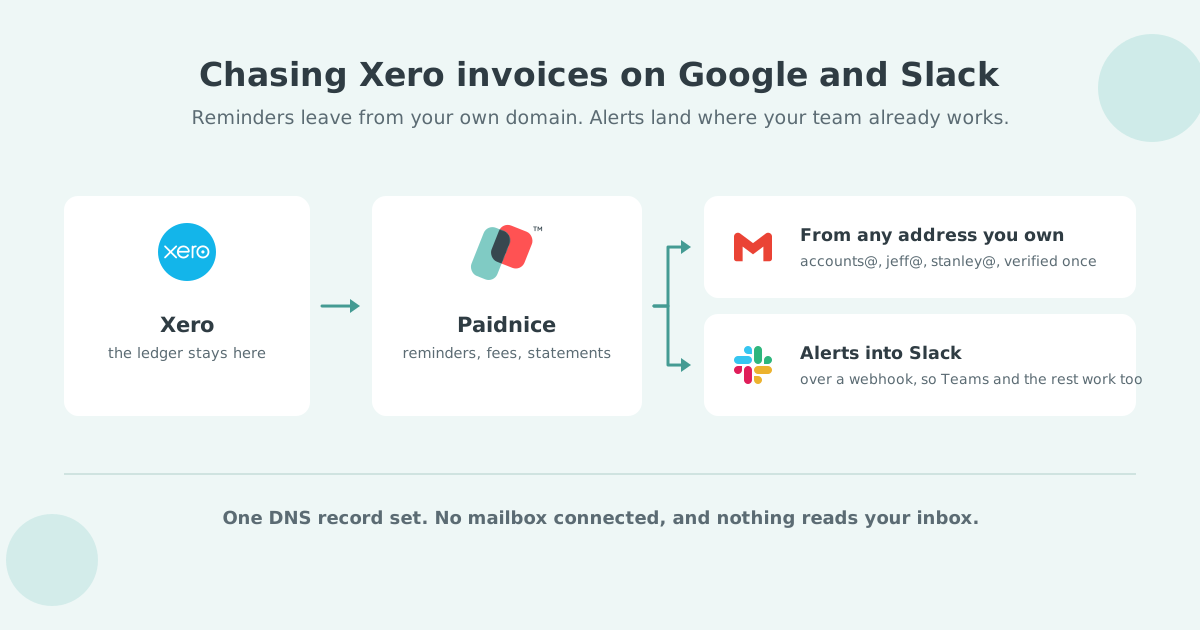
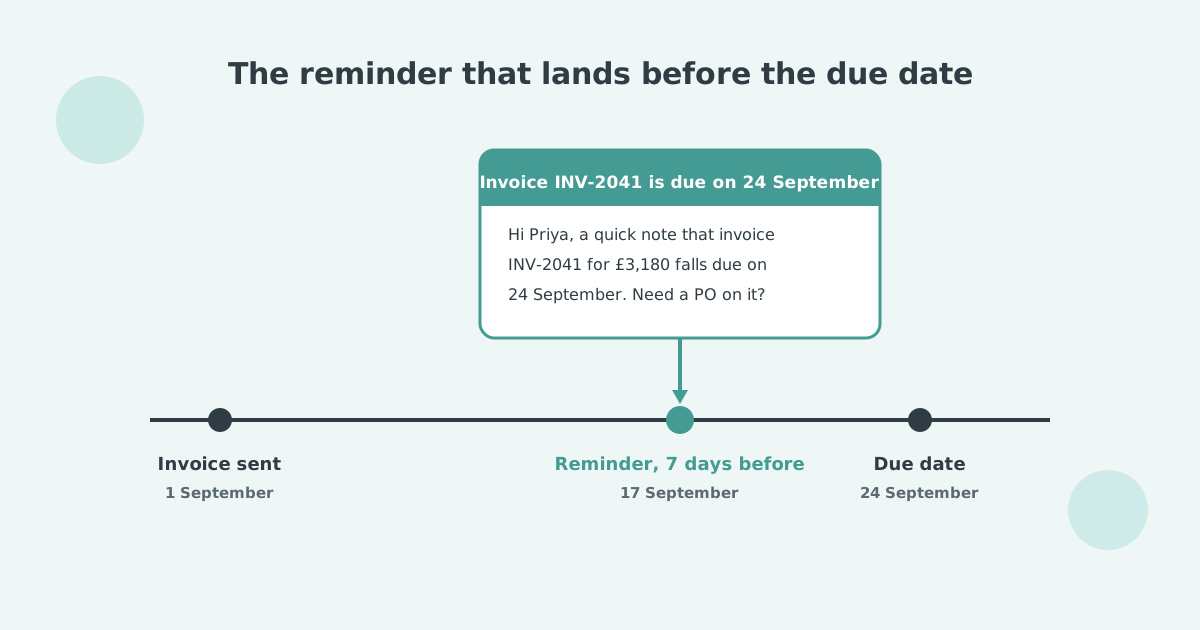
Paidnice is credit control software for wholesalers on Xero or QuickBooks Online: reminder sequences per customer group, late fees, statutory interest, statements and payment plans, posted as real transactions on the ledger, from £49 a month.


Customer groups carry their own rules, so a symbol group member on 60 days and a cash account on 30 run different policies at once. Customers cut their average wait for payment in half, within 30 days.
The limitation. It does not block an order at entry. It sits on the ledger, not the order book, so the despatch gate stays with your inventory system or a person, though a credit-limit breach or total overdue balance can trigger an escalation to that person. It is not a cash-application platform, and it runs external bureau credit checks through Creditsafe on the Custom plan only: on Essentials and Pro, payers are rated internally from their own payment history.

Best for larger wholesalers past £4m turnover, from £199 a month
Chaser is credit control software for wholesalers past £4m turnover on any mainstream ledger: email and SMS reminders, credit checks and late fees, from £199 a month.
Test the single global fee rule on the demo. A wholesaler rarely runs one policy: symbol group members, trade counter accounts and one-off buyers need different rules, and here they get the same one.
The limitation. One global late-fee rule, no fees on payment-plan or partially-paid invoices, statements monthly only on a fixed day, and an entry price four times the cheapest option here.
Best for wholesalers already on Access Financials or Dimensions, from £3,600 a year
Access Collect is the credit control module built into Access Financials and Access Dimensions 3.0: automated chasing, promise-to-pay tracking and a receivables dashboard, from £3,600 a year on the Essential tier.
Payment plans and the customer portal sit on the Professional tier, so the entry price buys chasing and dashboards.
The limitation. A wholesaler on Sage, Xero or QuickBooks cannot buy it, and no independent reviews exist to check the feature list against.

Best for wholesalers already running Sage, from £20 per user
Credit Hound is a collections and dispute workbench from Draycir for wholesalers on Sage: chase cycles, query logging and promise-to-pay tracking, from £20 per user a month.
Disputes and short payments are the wholesale collections problem, and a query log with automatic follow-up is the right shape for them. Sold through a large reseller network, which is how Sage sites buy.
The limitation. It chases, it does not charge. No QuickBooks Online, per-user pricing that scales badly past two or three controllers, and a review base of twelve across every platform.

Best for Sage 50 wholesalers wanting credit control and finance together
Satago is credit control plus invoice finance for UK wholesalers on Sage 50: automated chasing, credit risk data and a Lloyds-backed funding line, from £25 a month embedded in Sage 50.
Price it at the embedded rate, not the standalone one. A Sage 50 wholesaler is looking at £25 to £45 a month, and possibly at nothing, which changes the comparison.
The limitation. Late fees, per-group sequences and statement behaviour cannot be verified publicly, so put all three on the demo list. UK only, and the lending side is the commercial centre of gravity.

Best for Australian and New Zealand wholesalers on MYOB or an ERP
ezyCollect is an order-to-cash suite for Australian and New Zealand distributors on MYOB or an ERP: reminders, credit insight, a payment portal and payment plans, from about A$275 a month plus setup.
For a distributor on MYOB Exo or Pronto Xi it is often the only tool in this list that connects at all, and that alone usually decides it.
The limitation. No late-fee or interest capability appears in vendor documentation. That matters less in Australia, where there is no statutory B2B interest regime, and a great deal if you also invoice UK customers. Expect a setup fee and an annual contract.
A wholesaler chooses by ledger first, then by whether it needs the order gate. On Xero or QuickBooks Online the choice is Paidnice at £49 or Chaser at £199; a Sage 50 site chooses between Satago at £25 and Credit Hound at £20 per user; a distributor on SAP, NetSuite or Dynamics is in the enterprise, quote-only bracket with Esker, HighRadius and OnGuard.
Your ledger narrows the list faster than your revenue does. Start there, then check the price against the size of the credit team.
Debtor management software, credit control software and accounts receivable automation are the same category under three names. UK vendors say credit control, US vendors say accounts receivable automation, and Australian and New Zealand vendors say debtor management. The job is identical: reminders, statements, fees, escalation and a live view of who owes what.
Access Collect is only an option if you already run Access Financials or Access Dimensions; a wholesaler on Sage, Xero or QuickBooks cannot buy it.
A spreadsheet stops paying for itself at roughly 40 overdue accounts a month, or once your debtor days sit ten or more days above your terms. Below both lines it is genuinely the right tool.
The arithmetic, on stated assumptions rather than a vendor study.
The labour line. Four chase touches a month per overdue account, three minutes each to look up, draft, send and log, is 12 minutes per account per month.
40 accounts × 4 touches × 3 minutes = 480 minutes, or 8 hours a month. At £18 an hour fully loaded that is £144 of salaried time, against a £49 entry licence.
The cash line. A £3m wholesaler carries £3,000,000 ÷ 365 = £8,219 of receivables for every single day of debtor days. Ten days above terms is £82,192 sitting in other people's bank accounts.
The labour crossover arrives first, the cash line is the expensive one. The general method is in the DSO calculation formula, and the wholesale version, VAT error and all, is in debtor days for wholesalers.
Three things a spreadsheet cannot do at any size, and all three matter in wholesale.
The wholesalers who get the most from any tool on this page settle four things before they buy: who chases, on what days, what the charge is, and who may waive it. Software makes those decisions repeatable. It does not make them for you.
What does credit control software cost a UK wholesaler?
Published entry prices: Credit Hound from £20 per user a month on Sage 50 on Draycir's own pricing page, Satago from £25 embedded in Sage 50, Paidnice from £49 / US$69 for 150 invoices, Chaser from £199 covering turnover to £4m, and Access Collect from £3,600 a year inside the Access ledger. ezyCollect starts around A$275 plus setup. The enterprise names publish nothing, so treat any quote-only vendor as a several-thousand-a-year decision.
Can any of these stop an order shipping over the credit limit?
No. None of the six gates order entry, because none owns the order. QuickBooks Online has no credit limit field in its documentation, and Xero's block fires at invoice approval or send, after the goods have gone.
The gate belongs to your inventory or ERP system, or to the person releasing the pick. Sage 200 and NetSuite hold an order automatically once the limit is breached, and enterprise order-to-cash platforms such as Esker and HighRadius do the same inside SAP or Dynamics. MYOB prevents further sales, but only once someone sets the credit hold by hand. Xero and QuickBooks Online cannot do either.
Which tools can charge statutory interest and the fixed sums?
Paidnice computes flat, percentage or compounding interest with the UK statutory rate auto-indexed to the base rate, and applies the £40, £70 and £100 fixed sums as an invoice line item. Chaser offers four calculation types including a UK base rate option, under one global rule.
For Credit Hound no interest or late-fee function appears in vendor documentation, Satago's depth is not publicly verifiable, and ezyCollect has none.
Does credit control software for wholesalers include credit checks?
Only some do. Chaser and Satago pull external credit-risk data; Access Collect adds risk scoring based on internal payment behaviour, at the Professional tier. Paidnice runs external bureau checks through Creditsafe on its Custom plan; Essentials and Pro score payers internally from 1 to 100, based on their own payment history with you.
Which of these work with QuickBooks Online?
Paidnice, Chaser, Satago and ezyCollect all list QuickBooks. No QuickBooks Online connector was found for Credit Hound, which is the biggest fit gap for a wholesaler not on Sage.
Do I still need this if my inventory system already chases?
Usually yes, because the layers do different jobs. The inventory system holds the order and the credit limit. The ledger holds the invoice, and that is the only place a fee, a statement or statutory interest becomes a real transaction.
Whichever you pick, the tool executes a policy it cannot write for you. The terms, limits and escalation ladder are in the wholesale credit control guide.
Paidnice is accounts receivable automation that enforces your payment terms, trusted by thousands of businesses on Xero and QuickBooks. Credit control and debtor management, run for you.
Try it Now - It's FreeNo card required.


Optimize your cash flow with our suite of financial tools designed for AR professionals. Calculate DSO, aging analysis, late fees, and more.